CoCo Ichibanya: What the Cheapest Bowl Costs vs the Loaded One
CoCo Ichibanya is Japan's biggest curry chain, over 1,300 locations, every bowl built to order. Current pricing for the plain version and the fully loaded one, side by side.
Published on 3 min read
On this page
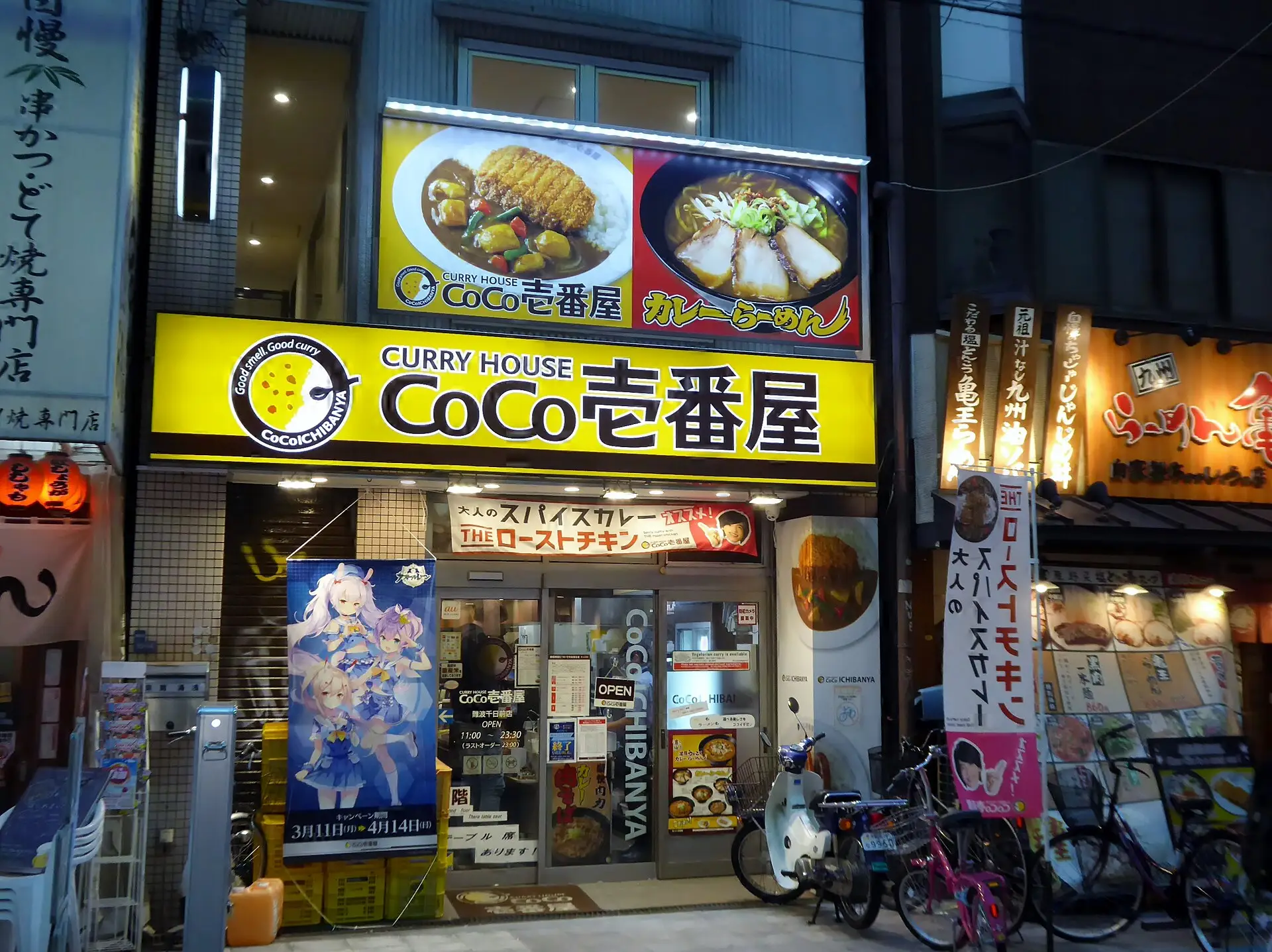
CoCo Ichibanya is Japan’s biggest curry chain by a wide margin, over 1,300 locations across the country, and the reason it works so well for a family is the same reason it’s easy to get wrong: every bowl is built to order. The cheap version and the splurge version are the same base dish, just with different choices made at the counter.
The cheap bowl
A plain curry rice with mild or standard spice, the regular 300g rice portion, no extra toppings, runs roughly 500 to 650 yen depending on the location. Mild and Standard spice cost nothing extra. That’s the entire base of the menu, and it’s a real, filling meal, not a stripped-down version missing something essential.
The loaded bowl
Add a pork cutlet (rosu-katsu, the chain’s signature topping), bump the rice portion up, and push the spice level higher, and the same base curry climbs past 1,000 yen fast, real examples from current listings show a 300g chicken cutlet curry at Level 3 spice running about 680 yen before any rice upgrade, and a world-flagship location’s beef curry listed at 1,530 yen before tax. The gap between cheap and loaded isn’t a different dish, it’s the same curry with more built onto it.
How the ordering system works
Spice runs from Mild up through Level 20, and it’s priced in small steps rather than one flat upcharge: Level 1 adds about 25 yen, Level 5 about 125 yen, Level 20 about 200 yen, tax included. Rice portion is a separate choice, a bigger 350g scoop on beef curry or hashed rice adds roughly 78 yen. Toppings vary by location but commonly include the pork cutlet, cheese (it also mellows the spice, a real trick worth knowing with kids at the table), corn, egg, and natto for anyone curious. That’s the real appeal for a family: one kid can get a plain Mild bowl, a parent can push Level 10, and it’s the same kitchen ticket either way, nobody’s ordering off a separate menu.
Real history, not as old as it feels
Tokuji and Naomi Munetsugu started a coffee shop called Bacchus in Nagoya in 1974; their curry became popular enough with regulars that they opened the first dedicated CoCo Ichibanya in Aichi Prefecture in 1978. It grew into one of Japan’s largest restaurant chains from there, over 1,300 domestic locations today, and the founding family sold its stake to House Foods Group in 2015, who’ve run it since. The chain has also spread well past Japan, close to 200 locations spread across more than a dozen countries and territories, China and South Korea carry the largest counts outside Japan, with real presence too in Thailand, Taiwan, the Philippines, and the US. A chain that feels like it’s always been part of eating in Japan is, like a lot of what feels timeless here, closer to living memory than ancient tradition.
Worth knowing before you go
Two Tokyo locations, in Akihabara and Shinjuku, offer a vegetarian plant-based curry and halal options, worth checking ahead if that matters for your trip, since it’s not standard at every branch. We haven’t eaten at a CoCo Ichibanya ourselves yet, this is researched rather than a personal account, same honest approach as our other no-visit posts. If a real stop happens, it’ll get the photos and the opinion a visit deserves.
Photo credits: Tokumeigakarinoaoshima, CC BY-SA 4.0, via Wikimedia Commons.