Moving Day in Tokyo: What a Month-Long Stay Really Costs a Family of Five
A real moving day across Tokyo led to a real question: is a monthly furnished apartment cheaper than a hotel for a longer Japan stay? Real Sakura House and Oakhouse pricing, and why a standard lease isn't an option for most visitors.
Published on 5 min read
On this page
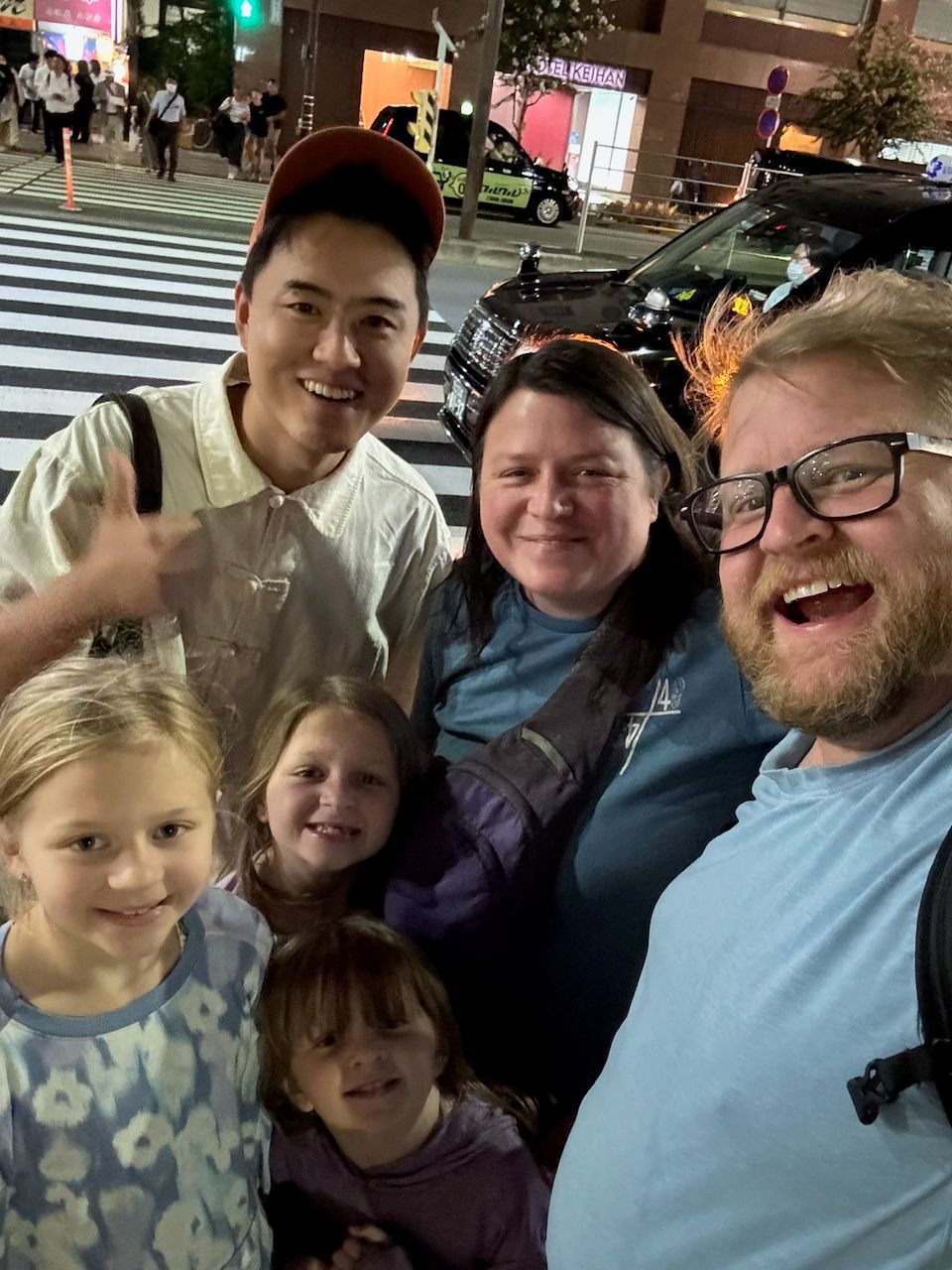
Moving day meant hauling backpacks and a stroller across Tokyo in search of our next place, a real part of traveling full-time that doesn’t show up in most people’s trip planning: we don’t book a single hotel for a week and call it done, we move between furnished apartments the same way anyone relocating within a city does. The question worth answering honestly, the one the day itself raised for us: is that cheaper, in real terms, than just staying in hotels the whole time?
Why a normal Japanese lease isn’t the comparison
A standard Japanese apartment lease isn’t really available to a family passing through for a month, and understanding why explains the whole furnished-rental industry that exists instead. A typical lease here involves a refundable deposit (shikikin, usually one to two months’ rent), separate non-refundable key money (reikin, commonly zero to two months’ rent depending on the market and region), agency fees, guarantor company fees, and fire insurance, real upfront costs that guides estimate at four to six times the monthly rent before you’ve paid for a single night. On top of that, a traditional lease has historically required a Japanese guarantor, a real barrier for a foreign family with no local co-signer, though most landlords now accept a rent guarantee company instead. None of that is built for someone staying four weeks.
What exists instead
Furnished short-and-medium-term rental services exist specifically to solve that problem, and they work on a completely different cost structure. Sakura House, one of the larger operators with more than 90 locations and roughly 1,000 rooms across Tokyo and Kyoto, advertises no security deposit, no key money, and no agency fees, with utilities and internet already folded into the stated rate. Reserving a room means paying 30% of the first month’s fee up front, or the full amount for stays of a month or less. Oakhouse, a similar operator, runs real current listings in the roughly 73,000 yen a month range for a private room in an outer ward, plus a maintenance fee and a separate resident support fee on top, with one month’s rent as key money on at least some listings, not every Oakhouse property matches Sakura House’s zero-key-money model. Broader estimates for this category put a private room around 105,000 yen a month and a shared multi-room apartment around 140,000 yen a month, plus roughly 15,000 yen a month in utilities and a one-time registration fee around 50,000 yen, numbers that move around enough by source and listing that they’re a planning range rather than a guarantee.
There’s also a real foreigner-friendly government option
Worth knowing even if it doesn’t fit most short trips: UR housing, run by Japan’s Urban Renaissance Agency, is described by multiple sources as the single most foreigner-friendly rental option in the country, no key money, no renewal fees, no agency commission, and no guarantor required. The real catch is eligibility, it requires a valid residence card with at least a year left on your visa, which rules out a tourist-visa family entirely. It’s not our situation, but worth knowing about if a longer-term move to Japan is ever on the table for a reader rather than a multi-week visit.
So is it cheaper than a hotel
For a family of five, usually yes, once you’re staying more than a week or two in one place. A hotel room built for two adults either means booking two rooms or paying a steep extra-occupancy surcharge for a third, fourth, and fifth guest, where a one-bedroom or two-bedroom furnished apartment at 100,000 to 140,000 yen a month already assumes a full household. Spread across 30 nights, a 140,000 yen monthly apartment works out to roughly 4,700 yen a night for the whole family, a real, competitive number next to, often cheaper than, a mid-range hotel room built for two that simply doesn’t fit five people without an upcharge. The math flips for a short stay: paying a reservation fee, utilities setup, and a month-minimum commitment doesn’t pay off for a three or four night visit, where a hotel’s per-night flexibility wins outright.
The real savings is the kitchen, not just the rent
A furnished apartment’s biggest cost advantage over a hotel isn’t the nightly rate, it’s having a kitchen at all. A typical family’s grocery budget in Japan runs somewhere around 72,000 yen a month as of early 2026, real recent pricing that’s risen noticeably from pre-2023 levels, against convenience store meals running 600 to 900 yen per person and set teishoku lunches landing around 900 to 1,400 yen per person per meal. Even at budget restaurant prices, feeding a family of five out for every meal adds up to real money fast, where a kitchen lets you cook some meals and treat restaurants as a choice rather than a necessity. The price gap between cooking and eating out has narrowed by a real amount in the past couple of years as grocery prices rose faster than restaurant menus in some categories, worth knowing rather than assuming cooking is automatically a dramatic discount the way it might have been a few years back, it’s still cheaper, just by a smaller margin than older online estimates suggest.
What moving day itself costs
The part a monthly rate doesn’t capture: the actual moving day, hauling bags across the city on trains, finding the new place, getting keys and wifi sorted, is a real lost afternoon or evening that a single-hotel-stay trip never has to budget for. That’s not a yen cost exactly, but it’s a real planning cost worth weighing against the savings, especially with young kids whose patience for a multi-transfer train trip with luggage has a real limit.
Was it worth it for us
Yes, by a real margin, across a trip built around weeks rather than days in any one city, the furnished-apartment model let us live more like residents than tourists, cook real meals instead of eating out every night, and spend meaningfully less per night than hotel math would have required for five people. For a family planning a shorter, denser Japan trip, a week or ten days in one or two cities, the calculation is different, and a well-chosen hotel or a shorter furnished stay both stay reasonable options worth comparing rather than assuming one format wins by default.