A Real Tokyo Oktoberfest, Filmed the Last Week of May
Tokyo runs 'Oktoberfest'-branded beer gardens at various parks across the year, not just in October. Real admission, beer, and food prices, plus why the name never meant October in the first place.
Published on 7 min read
On this page
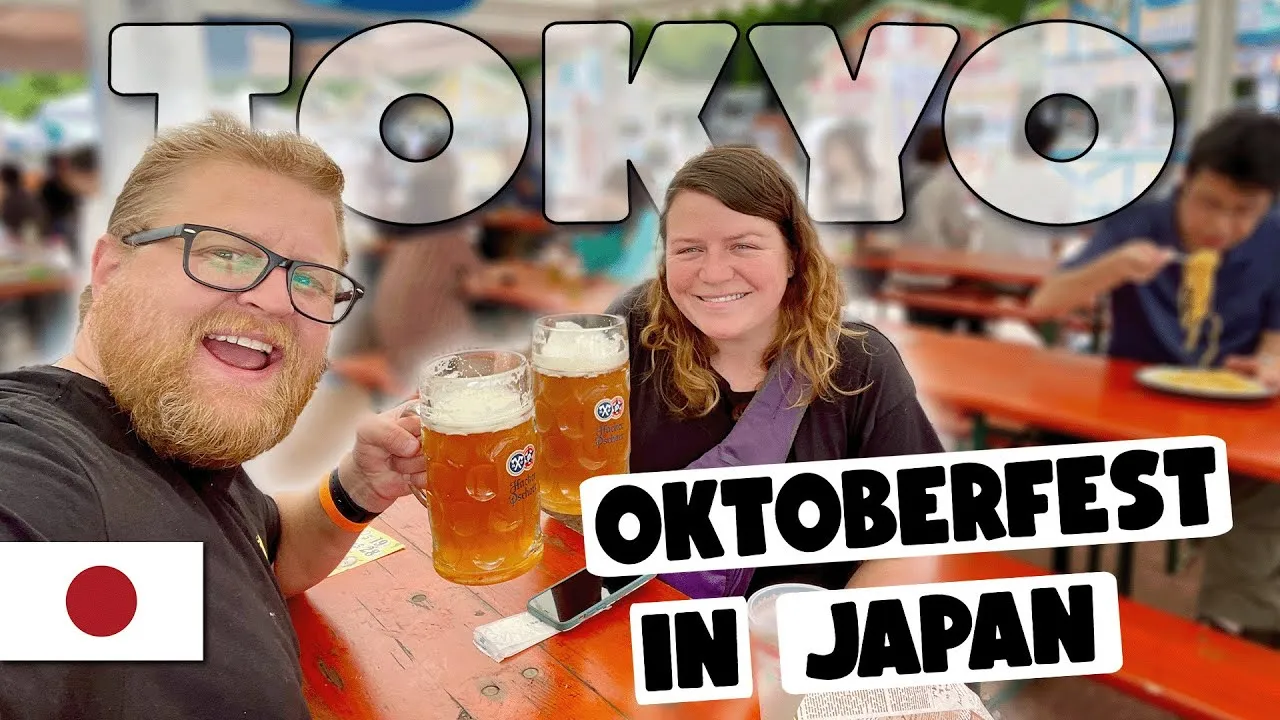
We filmed a trip to Tokyo’s Oktoberfest the last week of May 2023, red picnic tables, a beer tent, one-liter steins, the whole look of the real thing, except it wasn’t October and never pretended to be planned that way. If the name has you picturing a single fixed autumn date, Tokyo’s version runs on an entirely different calendar, worth knowing before you build an October trip around chasing one down.
The name never meant October to begin with
Even Munich’s own Oktoberfest, the one the name comes from, isn’t really an October festival anymore. The first one in 1810 ran entirely in October, celebrating the wedding of Crown Prince Ludwig and Princess Therese, ending with a horse race on October 17. As the festival grew, organizers pushed the start earlier into September for better weather, longer days and milder evenings for the outdoor beer gardens, a practical choice that stuck. Today’s Munich Oktoberfest starts on the first Saturday after September 15 and only its final weekend lands in October, kept there specifically to honor the original date. So Tokyo running its own branded version outside October isn’t a local misunderstanding or a marketing gimmick, it’s arguably closer to how the tradition has worked for most of its real history than a festival that only ran in October would be.
This isn’t even Japan’s first German import
Japan’s own outdoor beer garden tradition already traces back to German influence before “Oktoberfest” branding entered the picture at all. The concept came from Munich’s own Biergarten culture, adopted in Japan as a summer ritual alongside fireworks and other warm-weather festivals. Japan’s first beer garden opened in Yokohama in 1875, aimed at foreign residents and sailors rather than a local audience, and the rooftop version specifically is commonly traced to Osaka in 1953, when a motorcycle exhibition outgrew its basement venue and organizers opened the building’s roof for beer and food instead (that specific “first rooftop” claim is widely repeated rather than firmly documented, worth noting honestly). High-rise construction through Japan’s postwar growth years turned that into a nationwide boom, department stores across the country adding rooftop beer gardens with live bands and big screens through the peak years. Tokyo’s own department store rooftops, Isetan, Seibu, Parco among them, still run beer gardens every year, typically May through September. So a Tokyo “Oktoberfest” isn’t an odd mashup, it’s a German-inspired format landing in a country that already had nearly 150 years of its own German-inspired beer garden tradition running on a completely different, distinctly Japanese seasonal calendar.
Tokyo runs more than one, on more than one schedule
Tokyo doesn’t have a single annual Oktoberfest, it has a recurring circuit of German-style beer gardens that different parks host at different points in the year, sometimes more than once. Shiba Park in Minato City runs both a spring and an autumn edition most years, spring landing in May and autumn running mid-September into late September. Odaiba’s Symbol Promenade Park runs its own spring edition in late April into early May. Other venues have hosted versions too over the years. None of these are the single, fixed, October-only event the name might suggest to someone who’s only been to the Munich original, and that’s by design rather than an accident of scheduling.
What it costs
Based on the real, current pricing structure at Shiba Park’s recurring events, admission runs 500 yen for anyone 12 and older, with anyone under 11 getting in free. That admission fee isn’t just a gate charge either, it comes with a reusable Oktoberfest-branded cup for visitors 12 and up, something you keep rather than a disposable plastic option. Food and drink are both charged separately from admission, a real cost on top of the gate price rather than included in it, and both card and contactless payment (PASMO, Suica) are accepted at the stalls, no need to carry only cash. The one-liter beers in our own visit are the signature order at events like this, priced per stein rather than bundled into any flat admission package.
The beer in our own photo
The mugs in our cover photo are stamped Hacker-Pschorr, a real Munich brewery with roots back to a 1417 brewing site on what’s now Sendlinger Strasse, carried through the Hacker and Pschorr families from the 1700s before the two branches split between brothers and merged back into one company in 1972. It’s one of the handful of breweries still recognized as an official Oktoberfest beer in Munich today, and the brewery’s own account credits it with brewing a special batch for Crown Prince Ludwig’s 1810 wedding, the same event that started the whole tradition, though that specific claim comes from the brewery itself rather than an independent source. Seeing a real Oktoberfest-recognized Munich brand poured at a Tokyo park tent is part of what made the May timing feel beside the point once we had a stein in hand.
What a day looks like
These events run as actual beer gardens, not a themed restaurant or a one-off performance: picnic-style tables under open tents, German import beers alongside Japanese ones, pretzels, sausages, and other beer-hall food sold from separate stalls. Hours typically run shorter on weekdays, Shiba Park’s listing shows a 16:00 to 22:00 weekday window versus 11:00 to 22:00 on weekends and holidays, with last orders around 21:30. That’s a real planning detail if you’re trying to fit a visit around a weekday sightseeing schedule rather than a dedicated weekend outing.
Bringing kids to a beer garden
This is a real beer festival, not a family theme park with alcohol available on the side, worth setting expectations around before you show up with kids in tow the way we did. The food stalls sell the same pretzels and sausages any German-style event would, real kid-friendly options on their own, and the under-11-free admission policy signals this isn’t an adults-only event by design. What it doesn’t have is a dedicated kids’ zone or activities built for children specifically, it’s picnic tables, beer, and food under a tent, so the draw for a family is closer to a casual outdoor meal with a novelty backdrop than an attraction built around entertaining kids directly. Bring something to occupy younger kids during the stretch between food orders, the same way you would at any sit-down beer garden back home.
Getting there
Shiba Park’s venue sits a one-minute walk from Onarimon Station on the Toei Mita Line, with Kamiyacho Station on the Tokyo Metro Hibiya Line about 5 to 9 minutes on foot depending on which exit you use, both easy, central Tokyo stops rather than a destination requiring a dedicated day-trip plan. Odaiba’s spring edition sits within the same waterfront area as the rest of that neighborhood’s attractions, worth pairing with whatever else brings you out to Odaiba on the same day rather than a standalone trip.
Is it worth seeking out
For us, yes, and specifically because we weren’t expecting it: finding a real beer garden running in Tokyo in May, with the same giant steins and Bavarian-style food as the original, was a real surprise rather than something we’d researched and planned around in advance. If you’re a beer tourist specifically chasing the Munich original’s exact dates, this isn’t a substitute, it’s a different, distinctly Japanese take on the format that happens to borrow the name and the aesthetic rather than the calendar. But treated as its own thing, a real, recurring, reasonably priced outdoor beer garden that happens to exist in a city not otherwise known for them, it’s worth checking the current year’s dates before you assume “Oktoberfest” automatically means October, the same mistake we’d have made if we hadn’t stumbled into one in late spring ourselves.
When to check for one
Because this isn’t a single fixed annual event, the practical move is checking Tokyo’s own event listings (Go Tokyo’s official site is the most reliable source we found) for whichever park is hosting that season’s edition before you travel, rather than assuming a visit in any particular month, October included, guarantees you’ll find one running. Spring (April into May) and early autumn (mid to late September) have both hosted real editions in past years at different venues, but exact dates and host parks shift from year to year, confirm before building a day around it.