The Akihabara Everyone Pictures Started as a Radio Parts Black Market
Before Akihabara meant anime and arcades, it was Tokyo's postwar electronics bazaar. The history, what's changed, and what still costs nothing to browse today.
Published on 4 min read
On this page
Akihabara’s name, Akiba for short, comes from a fire. A blaze tore through the area in 1869, and locals built a shrine called Chinkasha, “fire extinguisher shrine,” hoping to keep the next one from happening. People nicknamed it Akiba after the fire-controlling deity it honored, the surrounding area became Akibagahara, and a train station opened there in 1890 carrying the name that stuck: Akihabara. None of that has anything to do with anime, manga, or arcades, the things most visitors picture first today.
The postwar radio bazaar
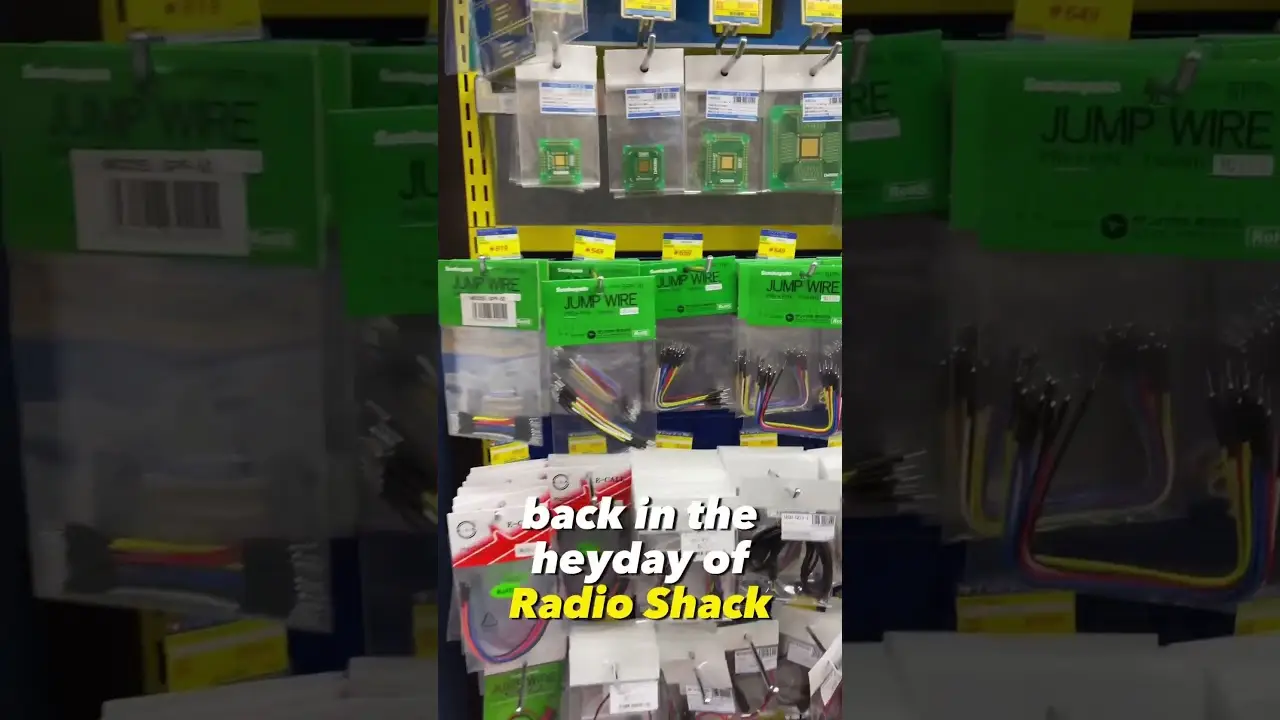
The otaku-culture reputation came much later. Right after World War II, the streets around Akihabara’s station became a real black market, and accounts differ slightly on the exact mechanics, one history traces it to informal stalls near Surugadai and Ogawamachi that gradually specialized in radio parts before getting formalized under a stall order in 1951, another ties it to the Allied Occupation’s 1949 ban on open-air markets, which pushed radio-parts vendors into the spaces under the area’s train overpasses and into nearby buildings instead. Either way, the pattern was the same: postwar Japan wanted radios, vacuum tubes and components were in demand, and Akihabara became the place to find them, piece by piece, shop by shop, the exact “miss the good ol’ RadioShack days” comparison we made on camera walking past a wall of jump wires in one of the district’s surviving component shops.
From radio tubes to computers to anime
The district kept evolving rather than freezing at any one identity. Shops started carrying computers as a real product category starting in the 1970s, riding the same specialist-electronics reputation the radio-parts era had built. Video games followed, then the broader subculture, manga, anime merchandise, maid cafes, arcades, that gives Akihabara its dominant reputation today, popular enough that “Akiba” became the common shorthand for the whole scene rather than just the neighborhood. The electronics-parts shops never fully disappeared, they just stopped being the headline, pushed to side streets and upper floors while anime storefronts took the ground-level foot traffic.
One real marker of how far the shift went: AKB48, one of Japan’s biggest idol groups, takes its name directly from the neighborhood. Producer Yasushi Akimoto built the group around a dedicated theater where members perform live on a regular schedule rather than sticking to occasional concerts and TV spots, and he put that theater on an upper floor of a Don Quijote store in Akihabara itself, debuting in December 2005. A neighborhood that spent its first postwar decades known for radio tubes and jump wires ended up with its name attached to a pop group headquartered inside a discount store a few blocks from where the black-market radio stalls used to stand.
What we’ve already covered here
We’ve been back to Akihabara enough times to have already written up two real, specific stops: building a custom Nintendo DS Lite from parts at a Pixel Lab workshop, a direct descendant of the district’s build-it-yourself electronics habit even if the product is a game console instead of a radio, and a costumed street go-kart tour that routes through the neighborhood among other parts of Tokyo. Both posts already cover their real current pricing, so we won’t repeat those numbers here.
What still costs nothing to browse
Walking Akihabara’s main strips, Chuo-dori and the side streets branching off it, costs nothing at any hour, the same free-to-walk pattern true of most Tokyo shopping districts. That includes the surviving electronics-parts shops, the ones still selling jump wires and components to hobbyists rather than tourists, real relics of the postwar version of this neighborhood if you know to look past the anime storefronts for them. Browsing multi-floor arcades without playing a single machine, window shopping the trading-card and retro-game shops, and simply taking in a streetscape that looks like almost nowhere else in Tokyo are all free. Where the money goes is what you choose to buy or play once you’re in a specific shop or arcade, not the neighborhood itself.
Was it worth the stop
Every time. Akihabara earns a different kind of visit than most Tokyo neighborhoods precisely because it’s layered rather than single-purpose, a real postwar electronics bazaar still visible in the side streets underneath a much louder anime-and-arcade identity built on top of it decades later. You don’t need to buy a single Power-Up-style gadget or a DS Lite mod to get something out of walking it, knowing the real history behind the jump-wire shops changes how the neighborhood reads even on a stroll that costs nothing beyond whatever snack catches your eye along the way.