A Kappabashi Knife Can Run 5,000 Yen or 500,000, Here's the Real Gap
Kappabashi's knife shops sell everything from a 5,000 yen starter blade to handmade pieces past 500,000 yen. Real shop names, real price tiers, a verdict.

Published on 4 min read
On this page
We’ve already written up Kappabashi’s free plastic food sample street, the hats and the giant beer mugs, but the same stretch of shops holds a second, much less novelty-shaped product: real Japanese kitchen knives, sold at a price range wide enough to cover a casual home cook and a serious collector in the same 800 meters.
The cheap end: 5,000 to 15,000 yen
An entry-level home kitchen knife at Kappabashi runs 5,000 to 15,000 yen, the lower end of that range built for someone who wants a real Japanese-made blade without committing to a serious purchase. Kamata, one of the street’s named knife shops, sells a knife at 5,000 yen bundled with a 5,400 yen whetstone and a certificate card, a real starter package rather than a bare blade with nothing to maintain it. Tsubaya, another named shop on the street, carries the widest selection of any single store and lets customers handle most knives directly without having to flag down staff first, useful if comparing a dozen blades by feel is part of the point.
The middle and the splurge: 15,000 to 500,000-plus
Professional-grade knives move into a real 15,000 to 40,000 yen range, and recent pricing on stainless santoku knives across six different Kappabashi shops landed between 17,800 and 23,100 yen, a tight enough spread that shopping around mostly buys you a specific steel or handle style rather than a dramatically different price. Past 40,000 yen, the category shifts to handmade and premium custom work, and that tier has no real ceiling in practice, prices climbing toward 500,000 yen for pieces built by a named craftsman rather than produced on a standard line.
The real tax break that applies here too
We’ve already written up how Japan’s tax-free system works from a real Bic Camera receipt, and the same rules apply at Kappabashi’s knife shops, not just electronics stores. Spend at least 5,000 yen pre-tax at a single registered shop and show your passport at checkout, and the 10% consumption tax comes off immediately at the register rather than getting refunded later. That threshold matters specifically here because it lines up almost exactly with Kappabashi’s own cheap tier, meaning even Kamata’s 5,000 yen starter knife bundle can clear the bar for tax-free pricing on its own, provided the shop is registered and the paperwork gets handled at the counter rather than assumed automatically.
One real detail worth knowing before you buy
Japanese knives split broadly into single-bevel blades, sharpened on one side only and built for precise, traditional cuts like sashimi slicing, and double-bevel blades, sharpened on both sides the way most Western kitchen knives are, more forgiving for a home cook who didn’t grow up using the single-bevel style. A santoku, the style most Kappabashi shops push toward visitors and the one behind that 17,800 to 23,100 yen stainless pricing we found, is double-bevel, which is part of why it’s the recommended starting point rather than a specialty blade that takes real practice to use well. The name itself translates to “three virtues,” a reference to how well it handles the three main kitchen tasks of slicing, dicing, and mincing in one blade rather than requiring a separate knife for each.
What we don’t know, and what we do
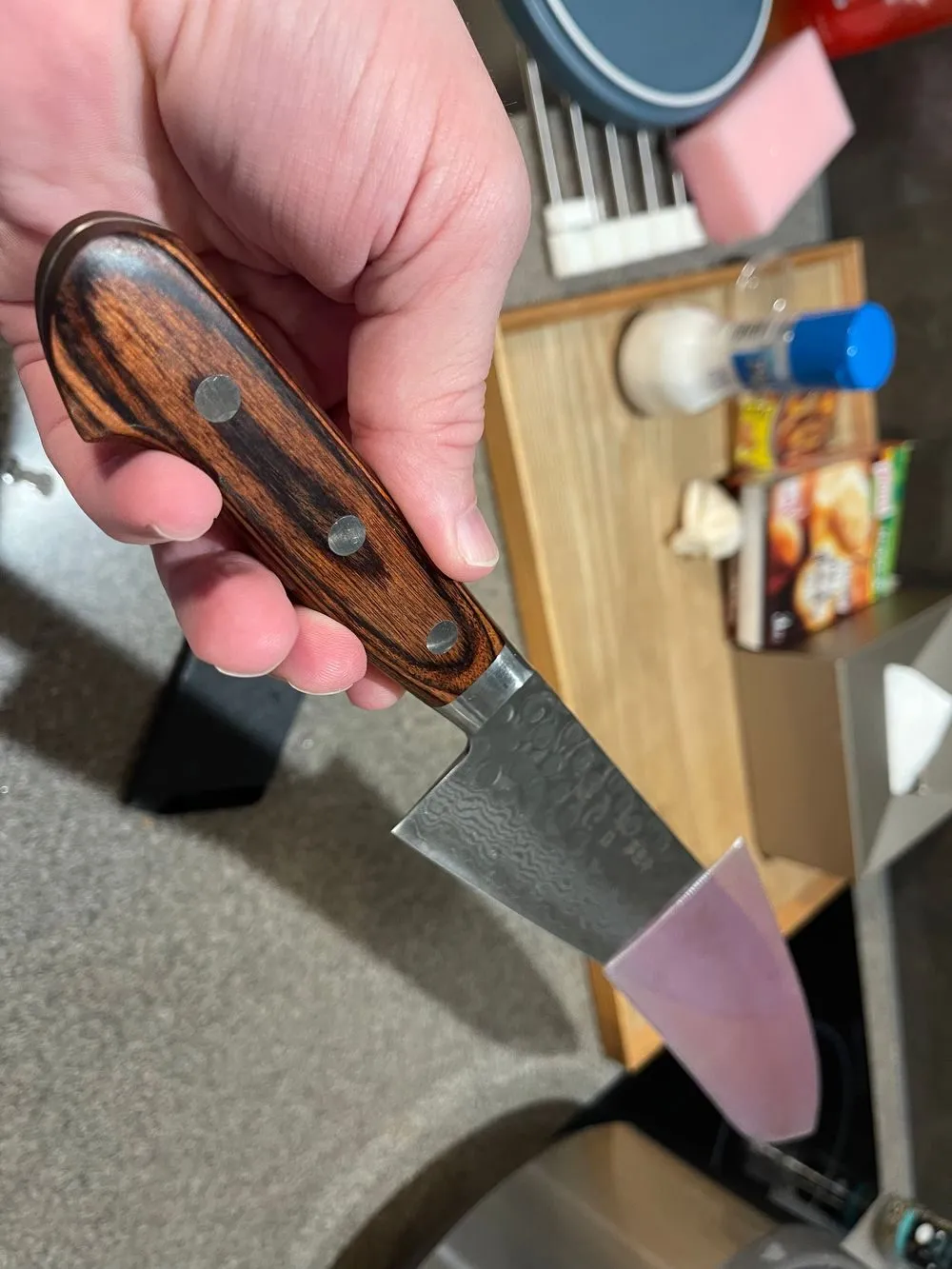
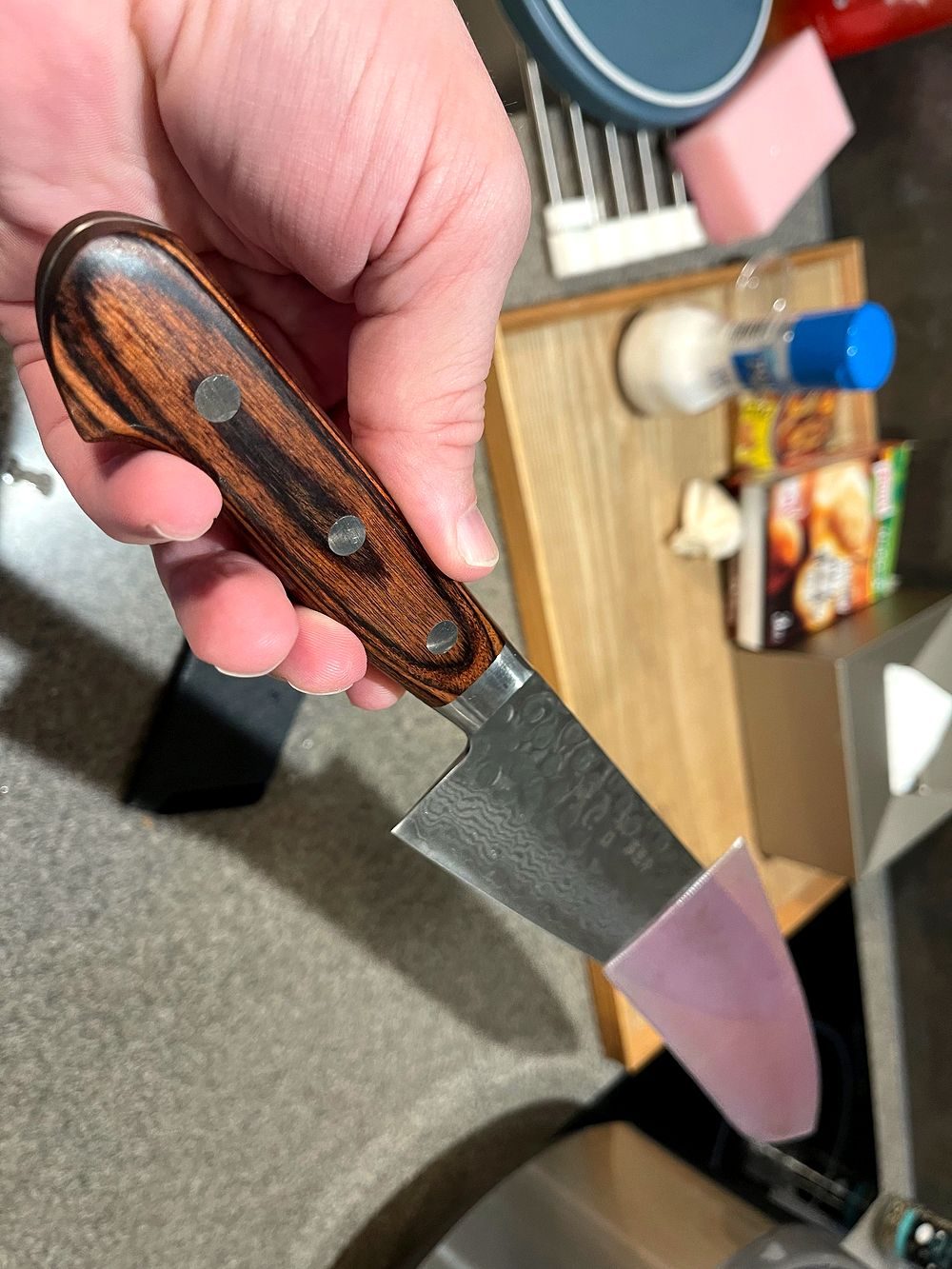
We don’t have a receipt for this specific knife, so we’re not claiming it sits at a specific point on that scale, the handle style, dark wood with visible rivets, is a common Western-style grip sold across several price tiers rather than a marker of any one of them. What we can say honestly is which category it almost certainly isn’t: nothing in the photo suggests a 500,000 yen custom piece, and the real range above makes clear that a perfectly legitimate Japanese kitchen knife purchase at Kappabashi can land anywhere from a casual 5,000 yen to a serious five-figure or six-figure commitment, with no single “normal” price to expect walking in.
If going in cold feels daunting, a real guided option exists too, a knife-store visit paired with a history walk through the neighborhood, English-speaking guide included:
Asakusa knife store visits with history tour
These are affiliate links. We may earn a commission if you book through them, at no extra cost to you. See our legal notice.
Klook code: ADAMANDLINDSKLOOK
Click through to Klook below, then enter code ADAMANDLINDSKLOOK at checkout. This is a real affiliate code, we may earn a commission on the booking too, at no extra cost to you. See our legal notice.
10% off, New Klook user
$50 minimum spend, capped at $50 off, one time use. Valid through December 31, 2026.
3% off, Existing Klook user
$50 minimum spend, capped at $50 off, up to three uses. Valid through December 31, 2026.
1% off, Selected things to do and mobility, including teamLab Planets TOKYO, teamLab Borderless, teamLab Biovortex Kyoto, Japan Shinkansen tickets, SHIBUYA SKY, Warner Bros. Studio Tour Tokyo, and Osaka Amazing Pass
No stated minimum spend for this tier. Valid through December 31, 2026.
50% off, eSIM, new eSIM customers only
No minimum spend, capped at $1.50 saved, one time use. Valid through December 31, 2026.
Was it worth the stop
If a trip already has Kappabashi on it for the plastic food samples, the knife shops are worth the extra few minutes even without buying anything, real craftsmanship on open display in a way a sealed retail package back home never shows. And if a knife is the real goal of the trip, walking in with that range in mind, 5,000 yen for a legitimate starter blade, tens of thousands for something built to last a cooking lifetime, makes the difference between browsing with a plan and guessing at a counter with no sense of what’s reasonable.