Kids' Debit Cards in Japan: What Works and What Still Needs Cash
A Greenlight-style kids debit card works internationally in Japan with no foreign transaction fee, but gacha machines, small shops, and temples still want coins.
Published on 6 min read
On this page
A kids debit card like Greenlight works in Japan the same way it works at home, no notification needed before you fly, no stated foreign transaction fee on the main card itself. Where it stops working is the gacha machine your kid is standing in front of with 400 yen of their own spending money, most of those still want a physical coin, not a tap or a card.
What the card does abroad
Greenlight’s own help center lists Japan as a supported country, not on their short list of unsupported places, and children’s cards are enabled for international use automatically, no call or app setting needed before a trip. The company states no foreign transaction fee on currency conversion. One third-party source raised a conflicting note about possible conversion fees, worth a direct check with Greenlight’s current terms before you travel rather than assuming either claim settles it. Parents keep real-time visibility and spending controls through the app the same as they would at home, that part doesn’t change just because the purchase happened in Osaka instead of down the street.
What a card handles well in Japan
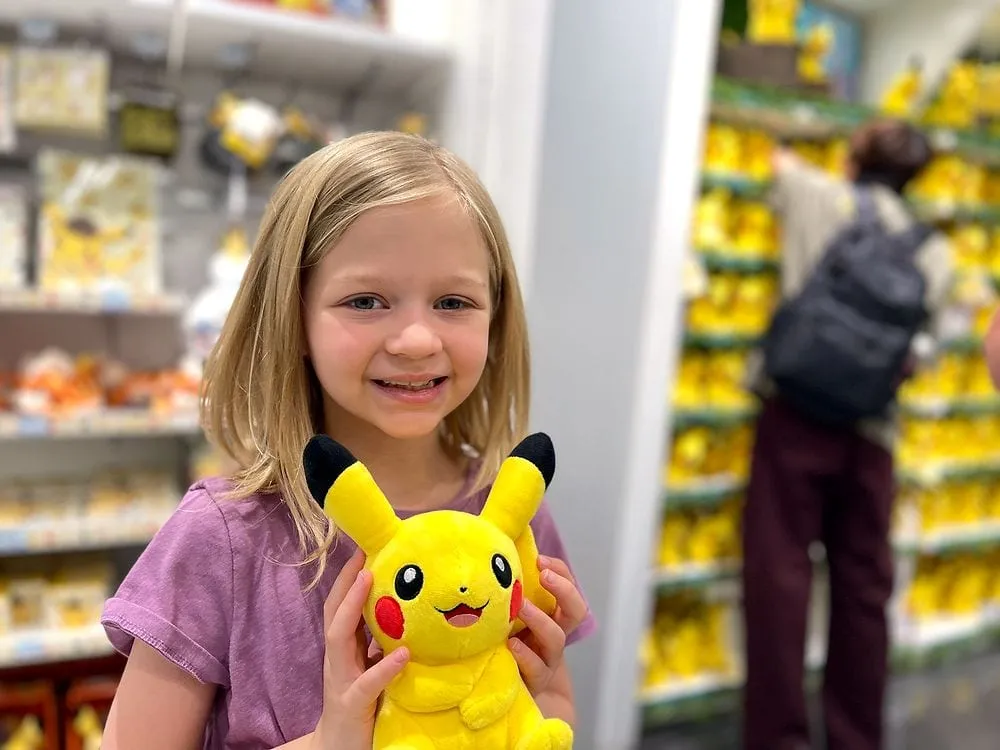
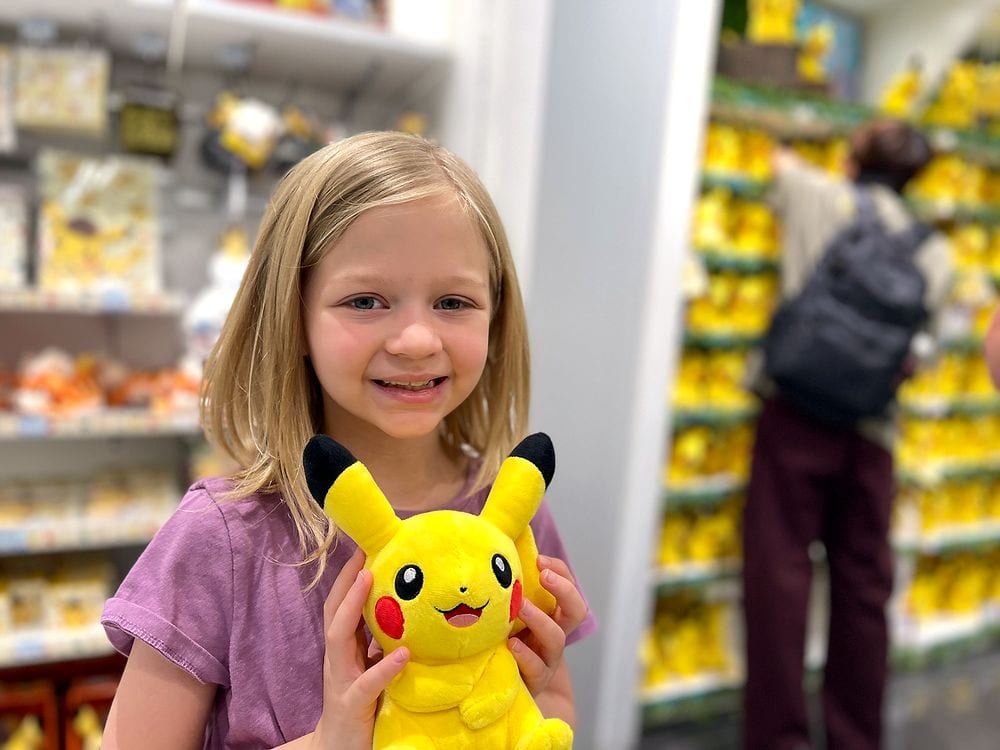
Convenience stores (7-Eleven, Family Mart, Lawson), most retail shops, department stores, and a growing share of vending machines all take a card or a tapped IC card without issue. The Pokémon Center purchase above, for instance, a straightforward retail transaction, no different from buying anything else with a card. If your kid’s Japan spending is mostly souvenirs, snacks from a conbini, or a meal, a debit card covers nearly all of it the same way it would anywhere else.
What still wants cash
- Gacha and capsule toy machines: the default is coins, usually exact 100-yen pieces, and most machines don’t make change. Cashless gacha exists, QR-code payment machines are a real, documented format, but it’s machine-specific rather than standard, so treat coins as the safe assumption rather than the exception. We’ve already written about real gacha pricing at MOOOSH Squishy in Harajuku and the Bikkura Pon machines at Kura Sushi’s Oshiage flagship, both running the same coin-first reality.
- Premium capsule machines: Bandai’s higher-end Gachapon runs 800 to 1,500 yen, too much for a simple coin slot, these typically take bills or a cashless option built into that specific machine rather than a standard card reader.
- Small shops and temples: smaller family-run stores, shrine and temple omamori stalls, and plenty of neighborhood spots outside the major tourist strips still run cash-only or close to it. A card-first strategy works great in Shibuya and falls apart fast in a quiet shopping arcade two train stops away.
- Older arcade and claw machines: like gacha, coin-first by default. UFO catcher pricing commonly runs around 100 yen a play, though sourcing on current arcade pricing is thin and inconsistent, some machines at some arcades run cheaper or pricier, so treat 100 yen as a rough baseline rather than a fixed number everywhere. Newer locations increasingly run on a prepaid arcade card system of their own, separate from both cash and a debit card.
The real system that works
We’ve already covered how Suica, Pasmo, and ICOCA work for transit, the same IC cards double as e-money at convenience stores and a lot of vending machines, tap instead of pulling out cash. That covers a real chunk of a kid’s spending without carrying coins specifically for it. But it doesn’t reach gacha machines reliably, so a kid heading into a day with Pokémon Center stops and a capsule toy corner on the itinerary needs both: an IC card or debit card for the retail side, and a real pocket of 100-yen coins for the machines. Handing a kid a card alone and assuming it covers everything is the version of this that goes wrong mid-trip, usually right in front of the one gacha machine they’d been saving their allowance for.
Where the cash comes from
The easiest real option is a 7-Eleven ATM, run by Seven Bank, which reliably accepts foreign Visa, Mastercard, Maestro, and Cirrus cards, runs 24 hours, and offers an English-language interface, no hunting for a bank branch during business hours. Per-transaction withdrawal caps out around 50,000 yen at most machines. Fees vary by source and by your own bank, commonly somewhere in the 110 to 220 yen range per withdrawal from the Japanese side alone, on top of whatever your home bank charges for a foreign ATM transaction, so check the on-screen fee before confirming rather than assuming it’s free. If the machine asks whether to convert to your home currency or charge in yen, choose yen, accepting the machine’s own currency conversion is a well-documented way to get a worse exchange rate than letting your own card issuer handle it. Lawson and Japan Post ATMs work as backups when a 7-Eleven isn’t nearby.
Setting a kid up before the trip
A debit card gives a parent real-time visibility into what a kid spends, which is worth something on its own, no end-of-trip surprise about where the souvenir budget went. The practical move: load the card as usual for the bigger, cardable purchases, and separately convert a known amount, maybe 2,000 to 3,000 yen per kid for a multi-day trip, into actual coins and small bills early on, ideally at a bank or convenience store ATM rather than scrambling for change at the gacha machine itself. That split isn’t a workaround, it’s just how Japan’s retail landscape really splits between cashless and coin-first machines right now.
A real day’s math
Put real numbers against a single day with three kids: a conbini snack run on the way out covered by a tapped IC card, maybe 300 to 500 yen each, card handles it without a thought. A stop at a toy or character store, the kind of purchase shown in the photo above, 1,000 to 3,000 yen depending on what gets picked up, card again, no issue. Then the gacha corner everyone’s been waiting for, two or three pulls each at roughly 400 yen a pull per the pricing we’ve already confirmed at MOOOSH and Kura Sushi, 800 to 1,200 yen per kid, and that part needs coins in hand, not a card. Across one day, a card alone would have covered maybe 70 to 80% of what three kids spent that day, with the gacha stop being the one moment a card-only plan leaves a kid standing there with nothing to put in the machine.
Was it worth setting up
Yes, mostly because the card removes the boring 90% of kids’ spending, snacks, souvenirs, meals, from needing physical cash management at all, while leaving the fun part, the gacha corner, the capsule toy wall, running on real coins the way it’s designed to. Neither on its own covers a full day. Together, a card for the predictable purchases and a real pocket of yen coins for the machines, a kid can manage their own spending money in Japan without an adult mediating every single purchase, which is worth more to us than which specific card brand issued it.
Greenlight is the kids debit card in our own affiliate list; this is information about how a card like it functions in Japan specifically, not a recommendation of one card over another. This is an affiliate link, we may earn a commission if you sign up through it, at no extra cost to you.