Topic: Towers & Observation Decks
Tokyo Skytree and Its 300-Shop Base Opened on the Exact Same Day
Tokyo Solamachi, the free shopping complex at Skytree's base, opened the same day as the tower itself. Real prices for the world's largest conveyor-belt sushi restaurant next door.

Published on 5 min read
On this page
Tokyo Skytree didn’t open alone on May 22, 2012. Tokyo Solamachi, the shopping and restaurant complex wrapped around its base, opened on the exact same day, a planned twin launch rather than a mall that got added on later to catch tower traffic. We’ve already written up what the Tembo Deck itself costs. This is about everything at ground level that isn’t the tower, free to walk through regardless of whether a deck ticket is in the plan.
312 shops, zero yen to walk through
Solamachi holds over 300 shops and restaurants across its floors, and admission to the complex itself is free, no ticket, no gate, no booking ahead. That’s the same free-to-browse model as most Japanese shopping complexes, but it’s worth saying plainly here because Skytree’s own paid ticket counter sits inside the same building, close enough that it’s easy to assume the whole structure requires a ticket to enter. It doesn’t. You can walk the full retail floor, eat a meal, and leave without ever buying anything tower-related.
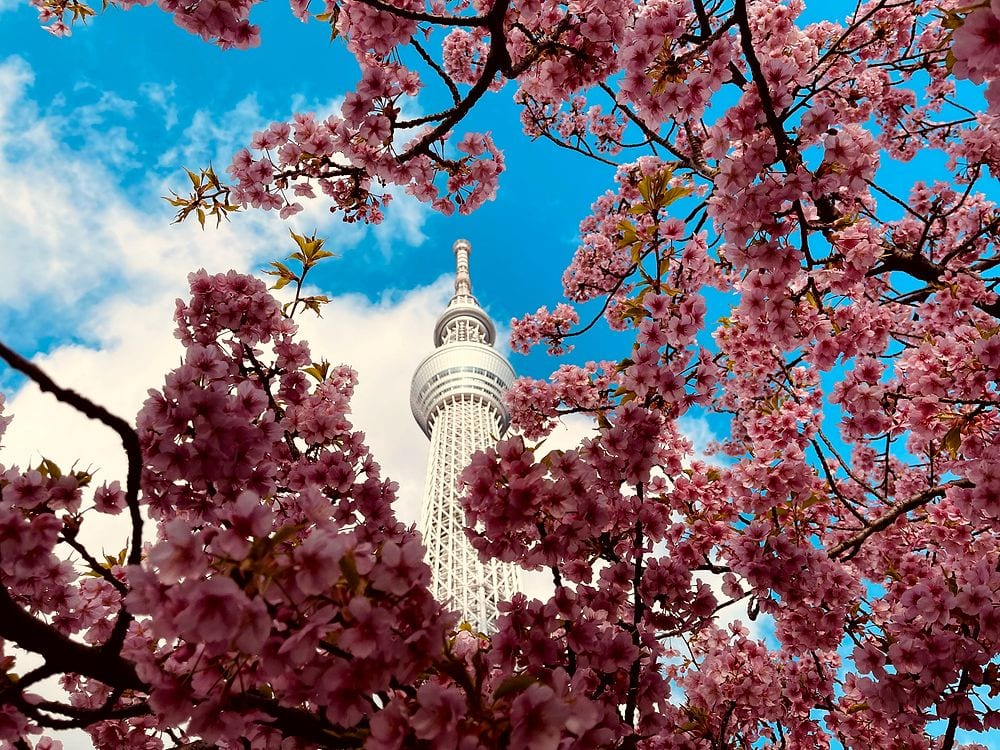
The tower itself is visible free from well outside the building too. Jikkenbashi, a bridge built in 1939 over the narrow Kitajikken River in the same Narihira neighborhood, is a known free spot for photographing Skytree reflected in flat water, best at blue hour just after sunset, no ticket, no fee, just a bridge over a canal that happens to frame the tower perfectly. None of that competes with the view from 350 meters up, but it’s a real, no-cost way to see the tower up close without the dynamic pricing we’ve already covered for the deck itself.
The world’s largest conveyor-belt sushi restaurant is right here
Right next to Solamachi, a one-minute walk from Oshiage Station, sits Kura Sushi’s flagship Skytree Oshiage store, a real title holder: the world’s largest conveyor-belt sushi restaurant, two floors, 277 seats, 834 square meters, more than double the size of a standard Kura Sushi location. It opened specifically to handle Skytree’s foot traffic, a flagship built around tourist volume rather than a neighborhood branch that happened to end up near a landmark.
Kura Sushi’s standard plates run in real, visible price bands rather than a single number: 110 to 150 yen per plate depending on the dish, most standard items landing at 115 yen, with premium and seasonal plates running higher. Two pieces of sushi or sashimi per plate is the norm, and the conveyor-belt format means the only real cost control needed is how many empty plates stack up before the bill comes.
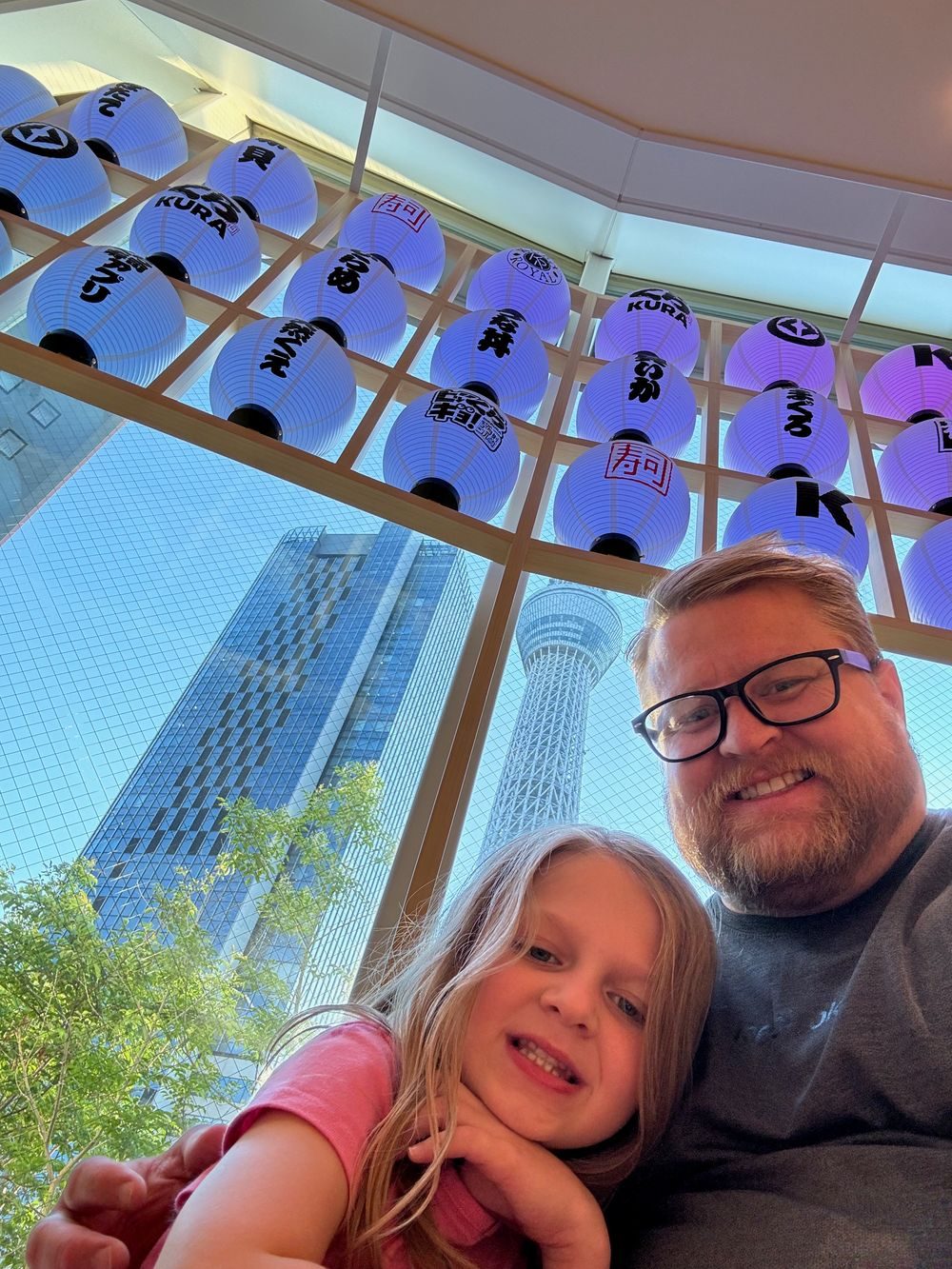
The real hook for kids isn’t the fish, it’s Bikkura Pon, Kura Sushi’s built-in capsule toy game: drop five empty plates into the table’s return slot and a digital screen plays a short animation before dispensing a prize. At this specific Oshiage flagship, the machines run bigger than a standard branch and pay out two capsule toys per five plates instead of the usual one, a real perk tied to this exact location rather than the chain generally.
What else at Solamachi costs money
Two real paid attractions share the building with the free shops: Sumida Aquarium runs 2,700 yen for an adult, and the Konica Minolta Planetarium “Tenku” runs 1,500 yen for an adult at its standard show (1,700 yen for the “healing” variant, 4,000 yen flat for a reclining mikazuki seat). Neither is required to enjoy the free half of the building, but both are real options if a rainy day calls for more than window shopping and a sushi plate count.
What we ordered: a beer at the base
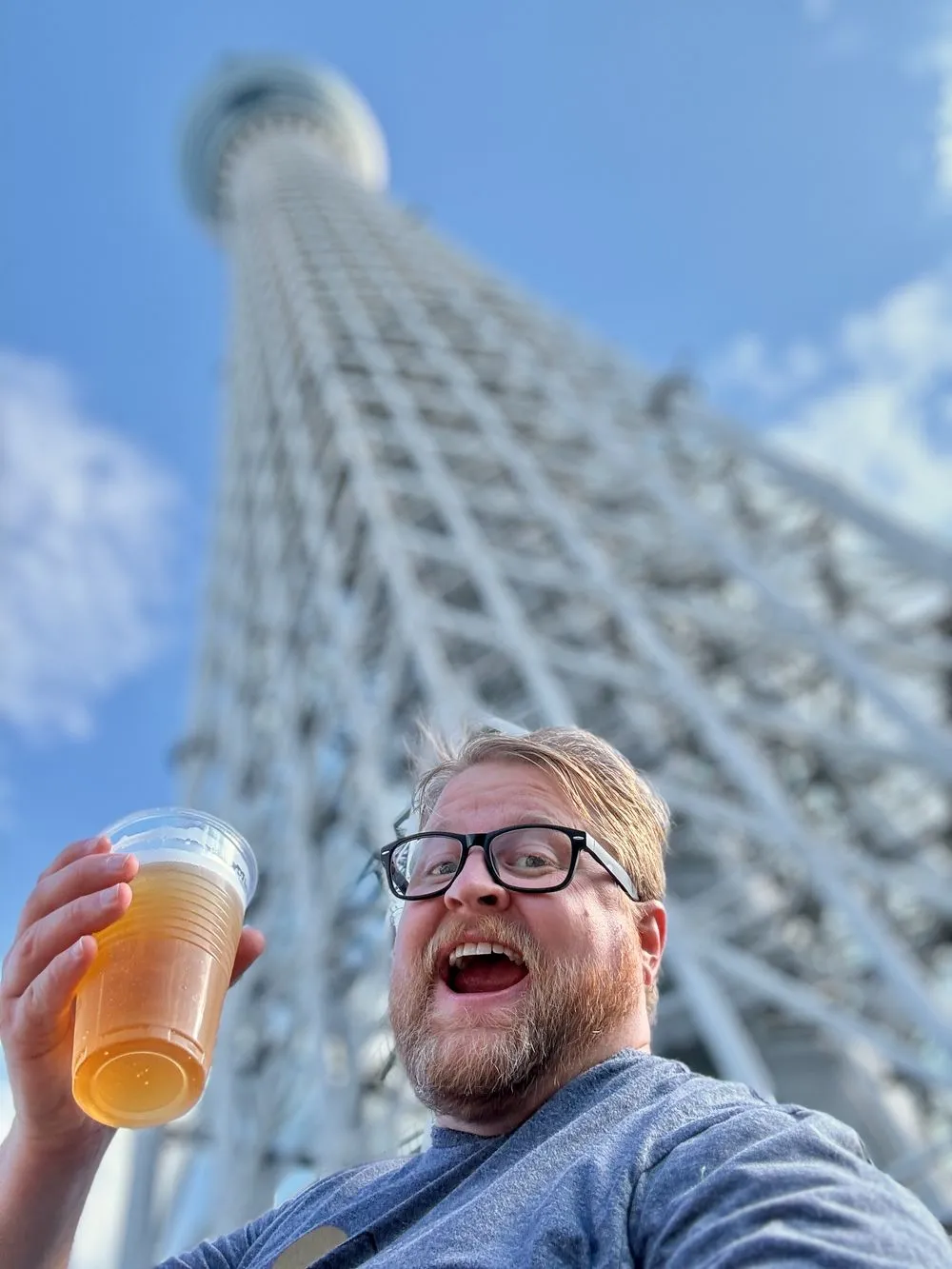
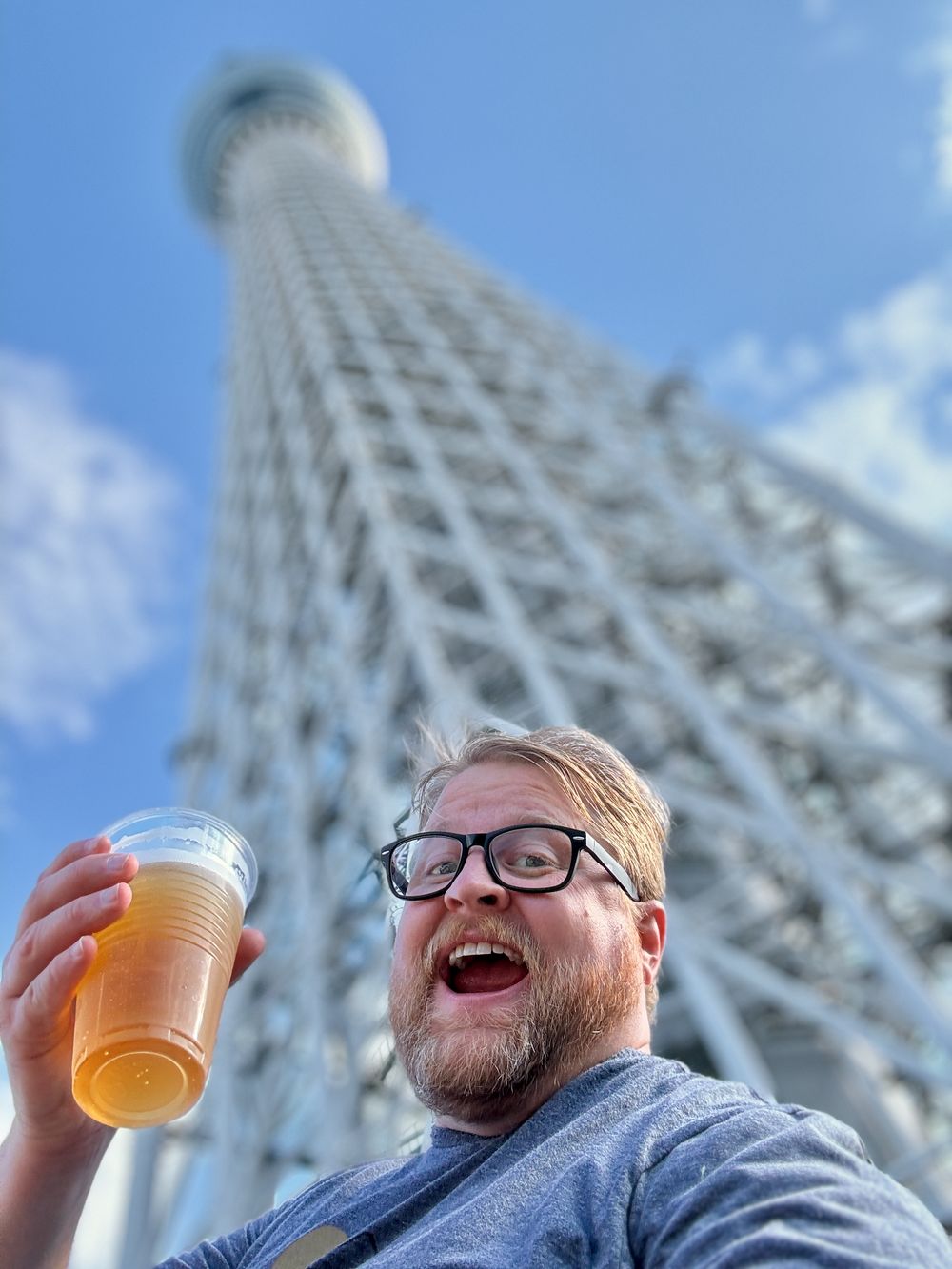
Our own photo from this stop isn’t the sushi counter, it’s a beer at street level with the tower looming directly overhead, a smaller, less photogenic purchase than a sushi plate count but a real one: a plastic cup from one of the casual stands around Solamachi’s ground floor, the kind of impulse buy that costs a few hundred yen and turns “we’re just walking through” into an actual stop.
Cross-referencing the tower itself
We’ve already written up Skytree’s real current dynamic pricing, 1,800 to 2,300 yen for the Tembo Deck alone depending on day and booking window, so we won’t restate it here. What’s worth adding is the practical sequencing: Solamachi and Kura Sushi both sit at the literal base of the same building the deck ticket counter is in, so a family debating whether the paid deck is worth it doesn’t have to decide that before getting anything out of the stop. Walk the free floors, eat real conveyor-belt sushi, and decide about the view afterward, nothing about the free half requires committing to the paid half first.
Tokyo Skytree Tembo Deck admission
These are affiliate links. We may earn a commission if you book through them, at no extra cost to you. See our legal notice.
Klook code: ADAMANDLINDSKLOOK
Click through to Klook below, then enter code ADAMANDLINDSKLOOK at checkout. This is a real affiliate code, we may earn a commission on the booking too, at no extra cost to you. See our legal notice.
10% off, New Klook user
$50 minimum spend, capped at $50 off, one time use. Valid through December 31, 2026.
3% off, Existing Klook user
$50 minimum spend, capped at $50 off, up to three uses. Valid through December 31, 2026.
1% off, Selected things to do and mobility, including teamLab Planets TOKYO, teamLab Borderless, teamLab Biovortex Kyoto, Japan Shinkansen tickets, SHIBUYA SKY, Warner Bros. Studio Tour Tokyo, and Osaka Amazing Pass
No stated minimum spend for this tier. Valid through December 31, 2026.
50% off, eSIM, new eSIM customers only
No minimum spend, capped at $1.50 saved, one time use. Valid through December 31, 2026.
Getting there
Oshiage Station (Tokyo Skytree Station on the Tobu Skytree Line) puts both Solamachi and the Kura Sushi flagship within a one to two minute walk, the same station serving the tower’s own ticket counter. There’s no reason to treat the free floors and the paid deck as separate trips, they share an entrance. The flagship Kura Sushi location’s size doesn’t eliminate waits entirely, it’s a genuinely popular stop given the “world’s largest” branding, so a weekday lunch beats a weekend dinner if walk-in seating matters more than a specific time.
Was it worth the stop
Completely, and we never bought a deck ticket on either visit these photos came from. A free, 312-shop complex that opened the same day as one of Tokyo’s tallest buildings, next to a record-holding sushi restaurant charging 115 yen a plate, is worth the stop on its own terms, whether or not the tower ticket ever gets added to the day.