Everything on Our Tsukiji Outer Market Walk, Priced Item by Item
Tsukiji Outer Market is free to walk, the food isn't. Real current prices for tamagoyaki, tuna bowls, grilled skewers, and what really moved to Toyosu in 2018.
Published on 5 min read

On this page
With only a couple of days left on a trip, we spent a morning walking Tsukiji with the kids, trying foods off whatever stall looked interesting rather than working from a list. Here’s what that adds up to in real yen, stall by stall, plus the real history behind why “fish market” doesn’t mean what it used to here.
What moved, and what didn’t
The wholesale fish auction, the part most people picture when they hear “Tsukiji,” relocated to Toyosu in October 2018, a real, government-driven move. What stayed behind is the outer market, roughly 400 to 460 shops and stalls that never closed, still operating on the original site. If you’re picturing a tuna auction floor, that’s Toyosu now, not Tsukiji. What Tsukiji still offers is the street food and small-shop walking experience, arguably the more approachable version for a family anyway.
The name itself is a real piece of history
Tsukiji (築地) literally means “constructed land” or “reclaimed land,” and the name isn’t decorative, the whole area was built by landfill following the 1657 Great Fire of Edo, which destroyed roughly two-thirds of the city and forced a rebuild that reshaped the waterfront. The fish market itself has its own displacement story: the original Tokyo fish market operated in Nihonbashi until the 1923 Great Kanto Earthquake destroyed it. A temporary replacement at Shibaura proved too small and poorly located, so the city moved its central wholesale market to Tsukiji in December 1923, formally opening there as Tokyo’s central wholesale fish market on February 11, 1935. That market ran on the same site for over 80 years before the 2018 move to Toyosu, a real, continuous run most visitors walking the outer market stalls today never hear about.
Getting in costs nothing
Walking the outer market itself is free, no gate, no ticket, open to anyone wandering through during operating hours. Most shops run early morning into early afternoon, and plenty close on Sundays and some Wednesdays, worth checking before you plan a visit around a specific day. Everything past the entrance is pay-as-you-go, one stall at a time, which is exactly how we ended up building a real itemized cost without meaning to.
What we ate, and what it cost
- Tamagoyaki (grilled egg skewer): roughly 100 to 300 yen per piece depending on the stall, the first thing we tried and the cheapest real food item in the market.
- Grilled seafood skewers: a broad 300 to 800 yen range per item, with scallop skewers specifically running closer to 500 to 1,000 yen depending on size and vendor.
- Kaisendon (seafood rice bowl): typically 1,500 to 3,000 yen, a real sit-down-or-walk-and-eat meal rather than a snack.
- Multi-piece tuna sushi or sashimi tray: upwards of 3,000 yen, with a chef-selected nigiri set generally landing between 2,000 and 5,000 yen.
None of these are flat, posted chain prices, every stall sets its own, so treat these as a real planning range rather than a guaranteed number at whichever shop you stop at first.
Beyond the food stalls
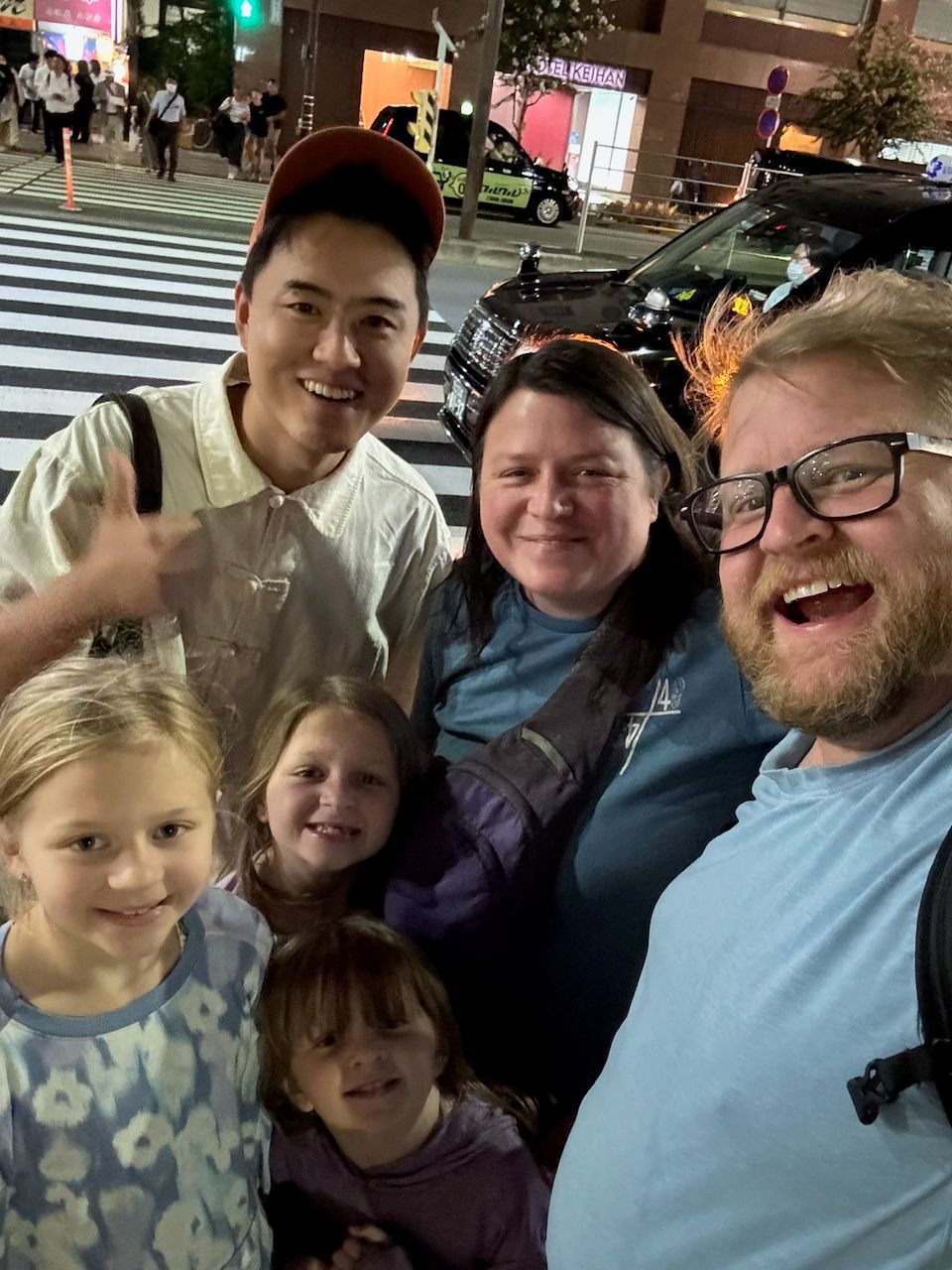
Our own morning didn’t stop at the market gates: we walked on to Ginza’s fashion street afterward, stopped to reload a physical Suica card, found the Mooosh Squishy store (already covered on this site separately), and ended with cotton candy bigger than the kids’ heads. None of that is Tsukiji-specific, but it’s a real example of how naturally a market stop folds into a bigger half-day out in this part of Tokyo rather than standing alone as a single destination.
Was it worth it
Yes, and the free admission is doing real work here: a family can walk the entire market, see everything, and spend nothing beyond whatever food gets eaten. That’s a real, different cost structure from a ticketed attraction, you control the bill one skewer at a time rather than paying a flat rate up front regardless of how much your kids want to be there. For a family traveling with picky eaters, that flexibility matters more than any single dish does: nobody has to commit to a sit-down meal nobody’s sure the kids will eat, you just keep walking until something looks good.
If you’d rather not navigate it solo
Real guided food tours exist for Tsukiji, running from small-group walking tours with a handful of included tastings up to private half-day options, priced anywhere from roughly 3,000 yen for a short walking tour up to 12,000 yen and beyond for a private morning with a guide. That spread is wide enough that it’s worth comparing a few before booking rather than taking the first listing, since format varies as much as price does, some include several tastings in the ticket price, others just walk you through and leave the food budget separate.
Planning a Tsukiji food stop?
These are affiliate links. We may earn a commission if you book through them, at no extra cost to you. See our legal notice.
Booking anything through Klook for the rest of the trip, our code ADAMANDLINDSKLOOK is worth entering at checkout, the general new or existing user tiers apply once a cart crosses $50, not just the specific activities we’ve named it on elsewhere:
Klook code: ADAMANDLINDSKLOOK
Click through to Klook below, then enter code ADAMANDLINDSKLOOK at checkout. This is a real affiliate code, we may earn a commission on the booking too, at no extra cost to you. See our legal notice.
10% off, New Klook user
$50 minimum spend, capped at $50 off, one time use. Valid through December 31, 2026.
3% off, Existing Klook user
$50 minimum spend, capped at $50 off, up to three uses. Valid through December 31, 2026.
1% off, Selected things to do and mobility, including teamLab Planets TOKYO, teamLab Borderless, teamLab Biovortex Kyoto, Japan Shinkansen tickets, SHIBUYA SKY, Warner Bros. Studio Tour Tokyo, and Osaka Amazing Pass
No stated minimum spend for this tier. Valid through December 31, 2026.
50% off, eSIM, new eSIM customers only
No minimum spend, capped at $1.50 saved, one time use. Valid through December 31, 2026.
Doing it with kids specifically
A market stall crawl works well for kids in a way a sit-down restaurant sometimes doesn’t: nobody has to commit to one dish, and a picky eater can walk right past the uni and tuna stalls to find grilled chicken or a sweet treat instead without anyone feeling like the outing failed. The narrow walkways do get crowded, especially mid-morning, worth factoring in if you’re navigating with a stroller or small kids who don’t love being jostled in a dense crowd. Going earlier rather than later also means better odds that the one item your kid wants most is still available rather than sold out.
Getting there
Tsukiji Outer Market sits a short walk from Tsukiji Station on the Toei Oedo Line or Higashi-Ginza Station on the Toei Asakusa and Tokyo Metro Hibiya lines, both easy, central stops. Go in the morning rather than the afternoon, several stalls sell out of their best items or close early once the morning rush has cleared through.