Ueno Zoo or Tennoji Zoo: Which One's Worth Your Yen
Real visits to both of Japan's biggest city zoos, Tokyo and Osaka, compared side by side: real prices, real animals, and an honest verdict.

Published on 8 min read

On this page
We’ve been to both of Japan’s biggest city zoos enough times now to compare them properly: Ueno Zoo in Tokyo, once, on a Halloween afternoon in full costume, and Tennoji Zoo in Osaka, three separate times across a single extended stay. Neither city is going to move for the other, so this isn’t really a “which one should you fly to” question, it’s a “if your trip touches both cities, which zoo earns the stop” question, and the real answer has more nuance than either city’s tourism board would probably like.
Ueno Zoo, Tokyo: real price, real crowds
Ueno Zoo costs 600 yen for an adult ticket, one of the more affordable major attractions anywhere in central Tokyo, and it sits inside Ueno Park, which means a day here can fold in the park’s museums, the Shinobazu Pond paddle boats, and a relaxed atmosphere without much extra planning. We went on Halloween, one daughter in a full Luigi costume, and the mix of real animals and a city-park setting made for one of the more low-pressure days we’ve had anywhere in Tokyo, no timed entry, no advance reservation, just walk up and pay at the gate.
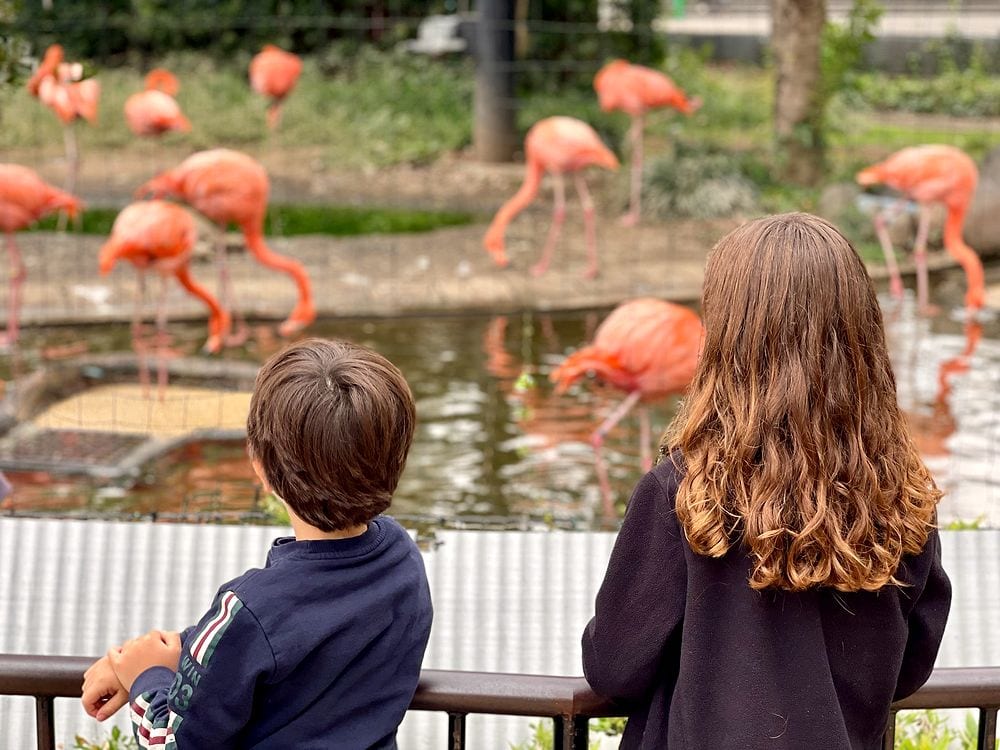

The one honest asterisk on Ueno Zoo right now: it lost its pandas in January 2026, when they left for China, a change worth knowing before visiting since a lot of older guides and photos still treat pandas as the headline draw. What’s left is still a real, well-stocked city zoo, flamingos, and enclosures dense enough that Ueno Park’s compact footprint doesn’t feel like a downside the way it might at a sprawling suburban zoo.
Tennoji Zoo, Osaka: the price that changed, and the savanna layout
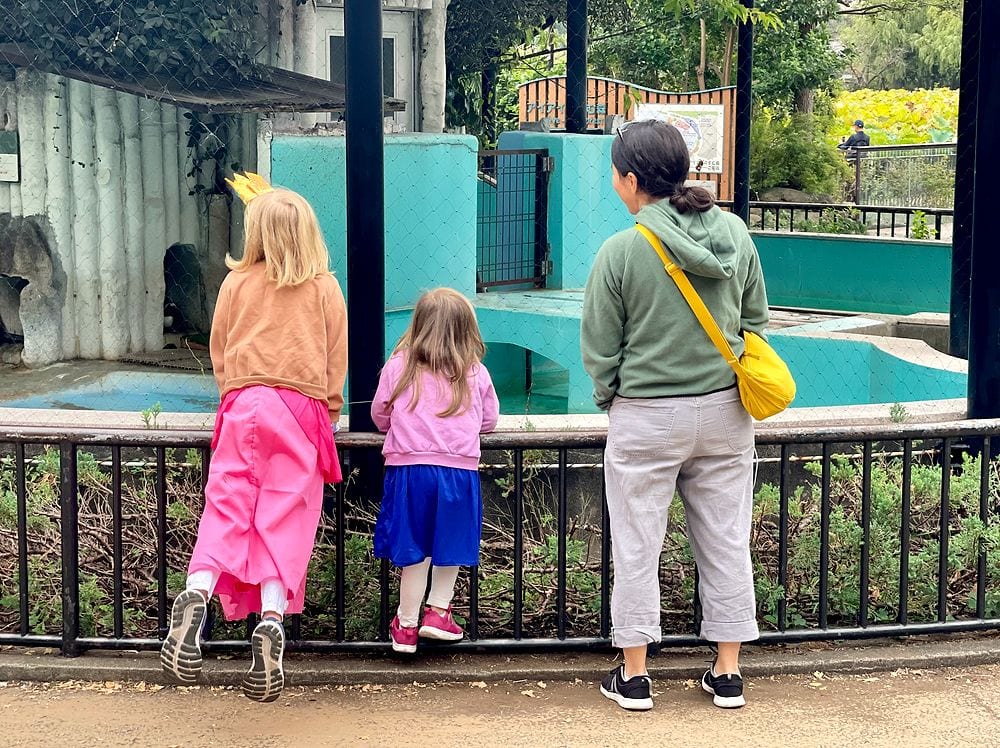
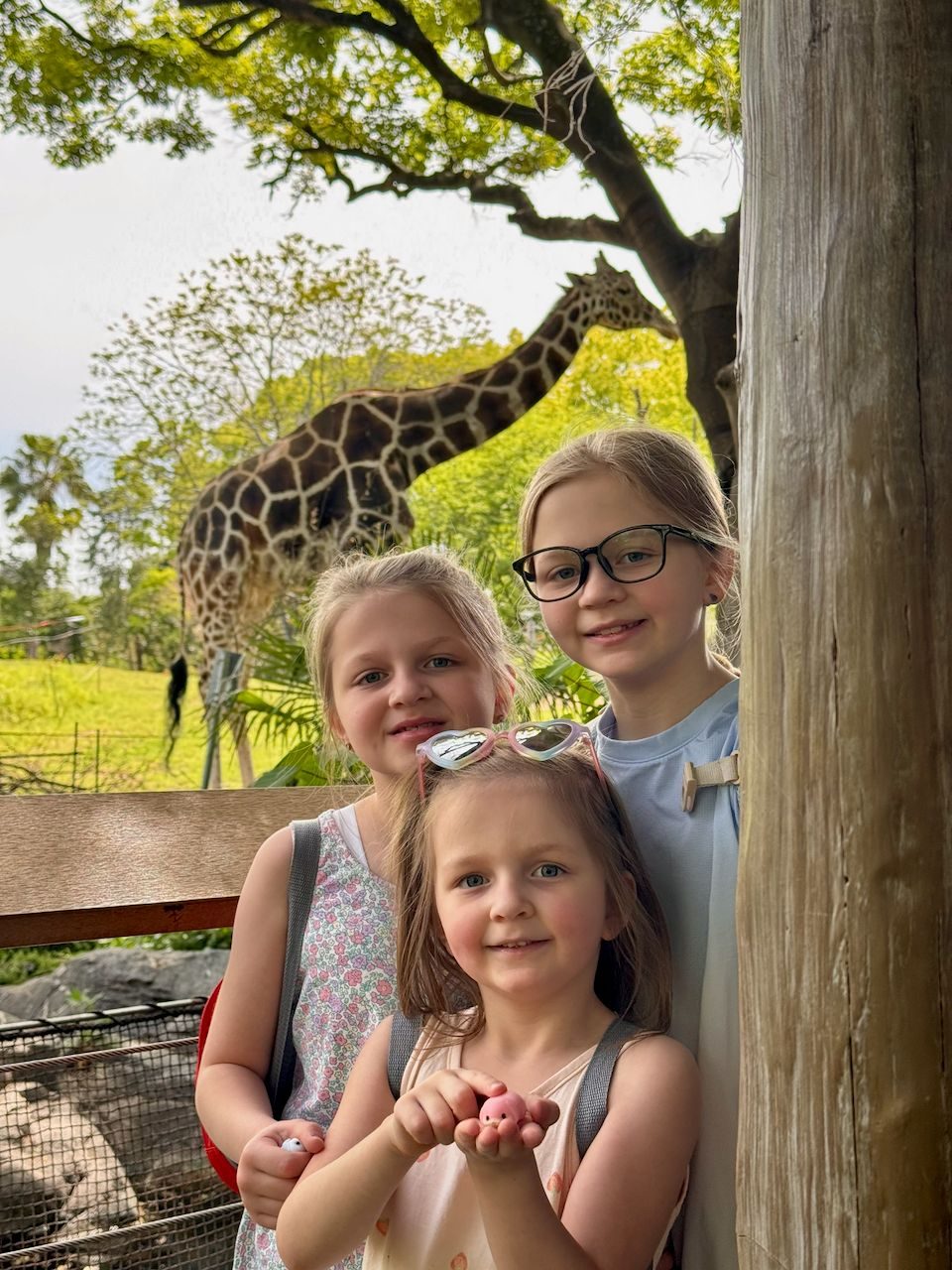
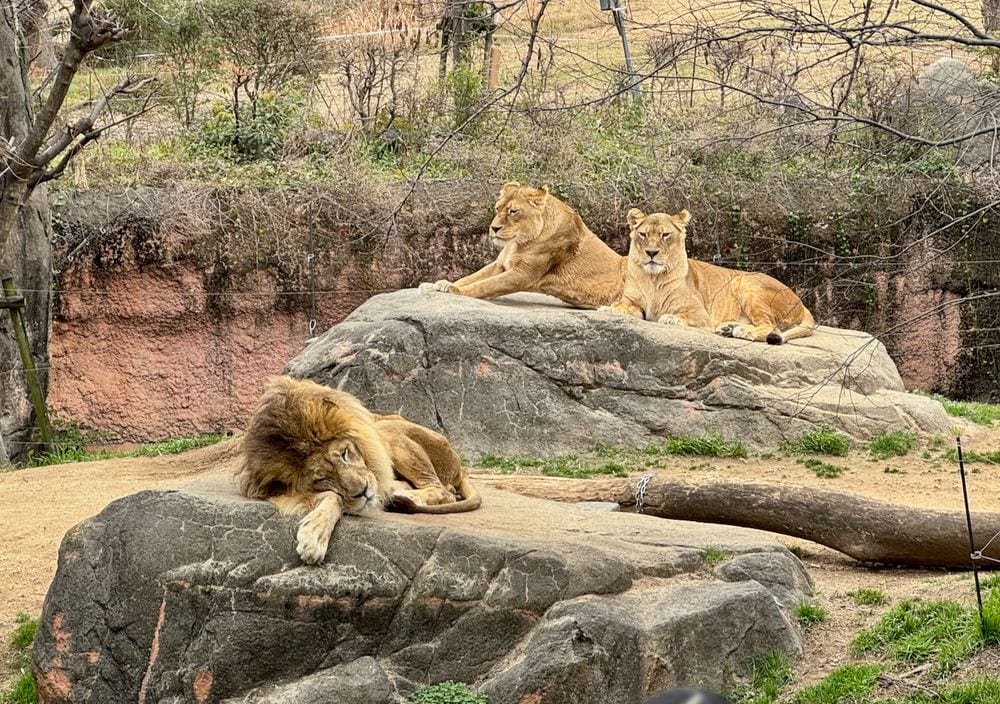
Tennoji Zoo costs more than Ueno does now, 800 yen for an adult ticket after a price increase from 500 yen that took effect in July 2026, a jump worth knowing about if you’re working from an older budget estimate. We went three separate times across one extended Osaka stay, February, March, and April, which is itself a real data point: an annual pass runs 3,200 yen, and at 800 yen a visit, four trips is the break-even point, a number that mattered once we were staying long enough to consider it seriously. Tennoji’s layout leans harder into open, savanna-style enclosures than Ueno’s more traditional zoo footprint, giraffes and zebras sharing one sightline, lions visible resting on rock formations rather than behind smaller fencing.

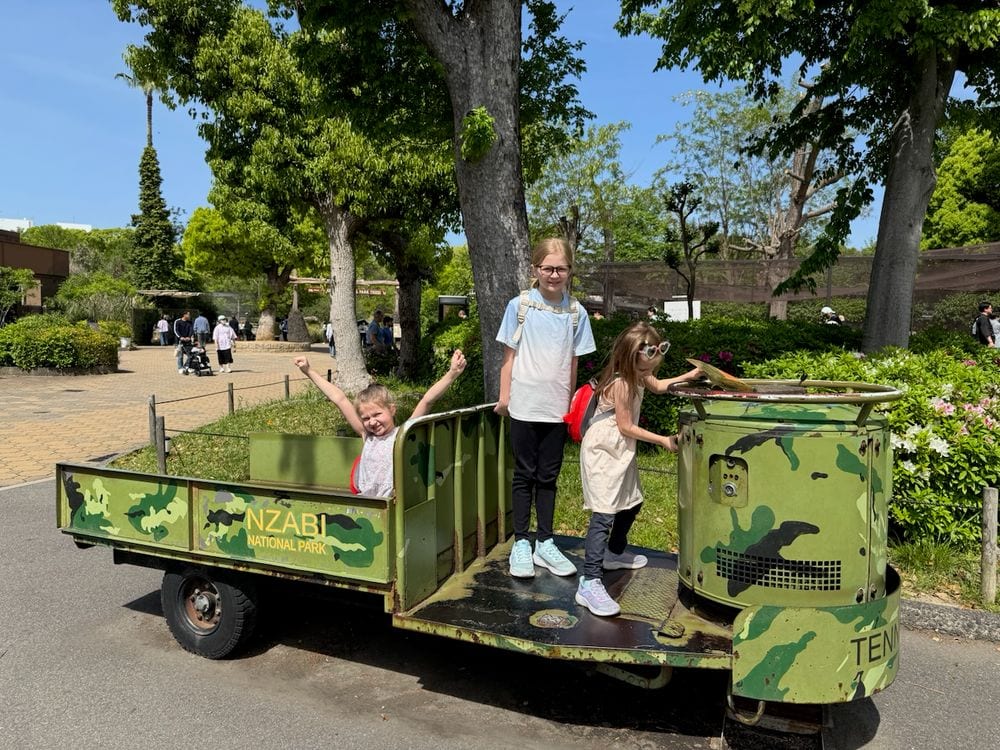
Tennoji also has more built-in kid-specific extras than Ueno does: a safari-style play truck the girls treated as its own attraction independent of any real animal nearby, the kind of detail that doesn’t show up in a ticket price comparison but matters a lot with three kids under 10 in tow.
Two real histories, decades apart
Ueno Zoo is the older of the two by a wide margin: it opened in March 1882, making it Japan’s first zoo, on land that had belonged to the imperial family before being handed over to the city alongside the rest of Ueno Park in 1924. Today it holds more than 3,000 animals across roughly 400 species, a scale that shows in how densely packed the enclosures feel walking through. Tennoji Zoo is younger, opening in January 1915 as Japan’s third zoo, built just southwest of Shitenno-ji, the country’s first Buddhist temple. It’s smaller in raw numbers, around 1,000 animals across 180 species on about 11 hectares, but it’s leaned into what’s called “ecological exhibits,” recreations of natural habitat rather than traditional cages, which is the real reason the savanna sections read so differently from anything at Ueno. Tennoji has also kept investing recently: a zoo museum covering animal ecology opened in 2021, and a “Friendship Garden” close-contact animal area opened in 2022, both additions from well after Ueno’s much longer history had already been set.
Getting to each one
Ueno Zoo sits inside Ueno Park itself, a five-minute walk from Ueno Station’s Shinobazu exit, whether arriving on the JR Yamanote Line, the Keihin-Tohoku Line, or the Keisei line from Narita. Multiple subway lines reach it too, Tokyo Metro’s Ginza and Hibiya lines put you about eight minutes out, and the Chiyoda line’s Nezu Station is a five-minute walk from a different side of the park. It’s about as centrally connected as a Tokyo attraction gets. Tennoji Zoo is similarly easy from central Osaka: five minutes on foot from Dobutsuen-mae Station on the Midosuji or Sakaisuji subway lines, or about ten minutes walking from JR Tennoji Station if arriving by train from elsewhere in the Kansai region. Neither zoo requires much transit planning beyond picking the right exit once you’re at the station.
Side by side
| Ueno Zoo, Tokyo | Tennoji Zoo, Osaka | |
|---|---|---|
| Adult ticket | 600 yen | 800 yen (up from 500 yen, July 2026) |
| Annual pass | Not something we priced out | 3,200 yen, break-even at 4 visits |
| Setting | Inside Ueno Park, dense city-park footprint | Standalone zoo, more open savanna-style layout |
| Headline animal history | Lost its pandas to China, January 2026 | Giraffes, zebras, and lions in open sightlines |
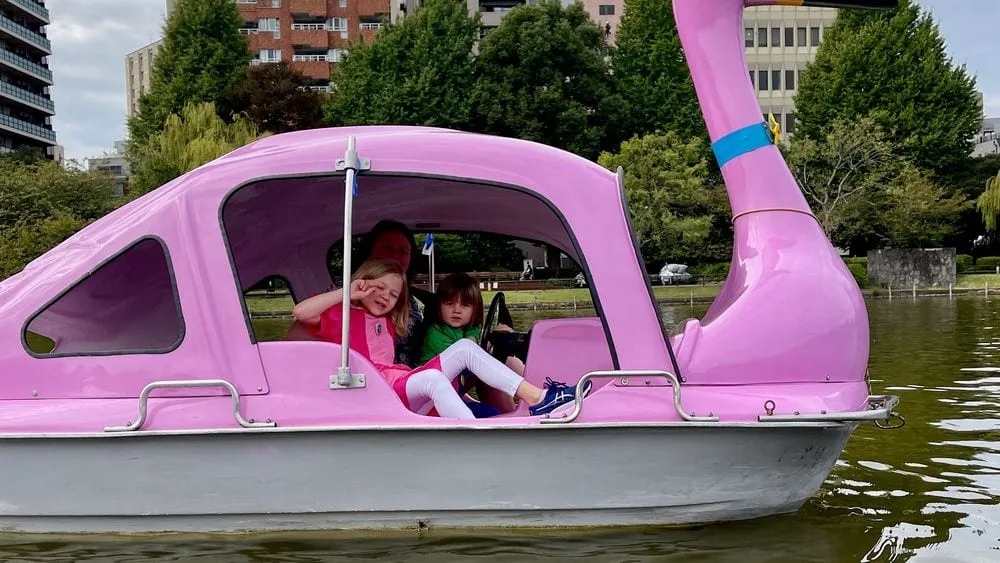
| Kid-specific extras | Shinobazu Pond paddle boats next door | A safari-truck play structure inside the zoo itself |
| Real visit count | Once, Halloween 2023 | Three times, Feb-April 2026 |
What separates them
The price gap, 600 yen against 800 yen, isn’t large enough on its own to be the deciding factor for most families, it’s closer to a rounding error once you’re already budgeting for a day out. The real difference is in layout and pacing. Ueno’s density means a family can cover the whole zoo in a couple of hours and fold it into a bigger Ueno Park day without either part feeling rushed. Tennoji’s more open, spread-out savanna sections take longer to walk but give a better unobstructed view of animals like giraffes and lions that don’t always photograph well through Ueno’s more traditional enclosure fencing. Neither is objectively better, they’re built around different footprints and different park contexts entirely.
Beyond the headline animals
Both zoos have real depth past the obvious photo-op animals. Ueno still runs a broad collection at 400 species despite its compact footprint, the kind of density where you can wander from flamingos to a small-mammal house to a reptile enclosure without much walking between them. Tennoji’s ecological-exhibit approach means fewer total species but more space given to each one, and it shows in unexpected pairings: the zoo’s fish and marine exhibits sit close enough to the land enclosures that a polar bear and an aquarium tank can end up in the same sightline, a layout choice that surprised us more than once across three visits.

Managing three kids at each one
Ueno’s density cuts both ways with three kids in tow: less walking between animals means less time for anyone to get tired or bored mid-transfer, but it also means less room to spread out if one kid wants to linger somewhere the others have already moved past. Tennoji’s more spread-out layout is the opposite trade, more walking overall, but the safari-truck play structure gives an automatic pressure-release stop built into the route itself, somewhere to let energy out that isn’t just another animal enclosure. Neither layout is wrong for a family with a wide age range, they just ask for different pacing, and knowing that ahead of time is more useful than any ticket price comparison.
The verdict
If your trip only touches one city, go to whichever zoo is in it, both are legitimately worth the ticket price and neither is a letdown next to the other. If your itinerary somehow includes both Tokyo and Osaka with room for a zoo day in each, Tennoji earns a slight edge for repeat visits thanks to the annual pass math and the open savanna layout, while Ueno wins on convenience, folded into a park day that already includes Shinobazu Pond and doesn’t ask for a dedicated half day on its own. We’d go back to both, and that’s really the most honest verdict a head-to-head like this can land on: this isn’t a comparison with a loser, just two different real zoos worth knowing the real numbers for before you pick.
If we had to push past “it depends on the city,” the edge case worth naming is a family with a long, multi-city Japan trip rather than a quick Tokyo-or-Osaka choice. For that kind of trip, doing both isn’t really a competition at all, it’s two completely different zoo days that happen to share a species list. Ueno slots naturally into a Tokyo day that already has Ueno Park on it, museums and all, while Tennoji works best as its own half-day rather than an add-on, especially once a family has been there enough times to justify the annual pass math. Neither zoo asks for a special trip on its own merits the way a destination like teamLab or a theme park does, but both reward being folded into a day that was already heading that direction.
Ueno Zoo tickets
These are affiliate links. We may earn a commission if you book through them, at no extra cost to you. See our legal notice.
Klook code: ADAMANDLINDSKLOOK
Click through to Klook below, then enter code ADAMANDLINDSKLOOK at checkout. This is a real affiliate code, we may earn a commission on the booking too, at no extra cost to you. See our legal notice.
10% off, New Klook user
$50 minimum spend, capped at $50 off, one time use. Valid through December 31, 2026.
3% off, Existing Klook user
$50 minimum spend, capped at $50 off, up to three uses. Valid through December 31, 2026.
1% off, Selected things to do and mobility, including teamLab Planets TOKYO, teamLab Borderless, teamLab Biovortex Kyoto, Japan Shinkansen tickets, SHIBUYA SKY, Warner Bros. Studio Tour Tokyo, and Osaka Amazing Pass
No stated minimum spend for this tier. Valid through December 31, 2026.
50% off, eSIM, new eSIM customers only
No minimum spend, capped at $1.50 saved, one time use. Valid through December 31, 2026.
Tennoji Zoo tickets
These are affiliate links. We may earn a commission if you book through them, at no extra cost to you. See our legal notice.
Klook code: ADAMANDLINDSKLOOK
Click through to Klook below, then enter code ADAMANDLINDSKLOOK at checkout. This is a real affiliate code, we may earn a commission on the booking too, at no extra cost to you. See our legal notice.
10% off, New Klook user
$50 minimum spend, capped at $50 off, one time use. Valid through December 31, 2026.
3% off, Existing Klook user
$50 minimum spend, capped at $50 off, up to three uses. Valid through December 31, 2026.
1% off, Selected things to do and mobility, including teamLab Planets TOKYO, teamLab Borderless, teamLab Biovortex Kyoto, Japan Shinkansen tickets, SHIBUYA SKY, Warner Bros. Studio Tour Tokyo, and Osaka Amazing Pass
No stated minimum spend for this tier. Valid through December 31, 2026.
50% off, eSIM, new eSIM customers only
No minimum spend, capped at $1.50 saved, one time use. Valid through December 31, 2026.