Need a Kids' Haircut While Traveling in Japan? Here's What to Expect
Real prices, what the appointment looks like, and how it compares to a haircut back home. From a real stop mid-trip in Tokyo.

Published on 7 min read
On this page
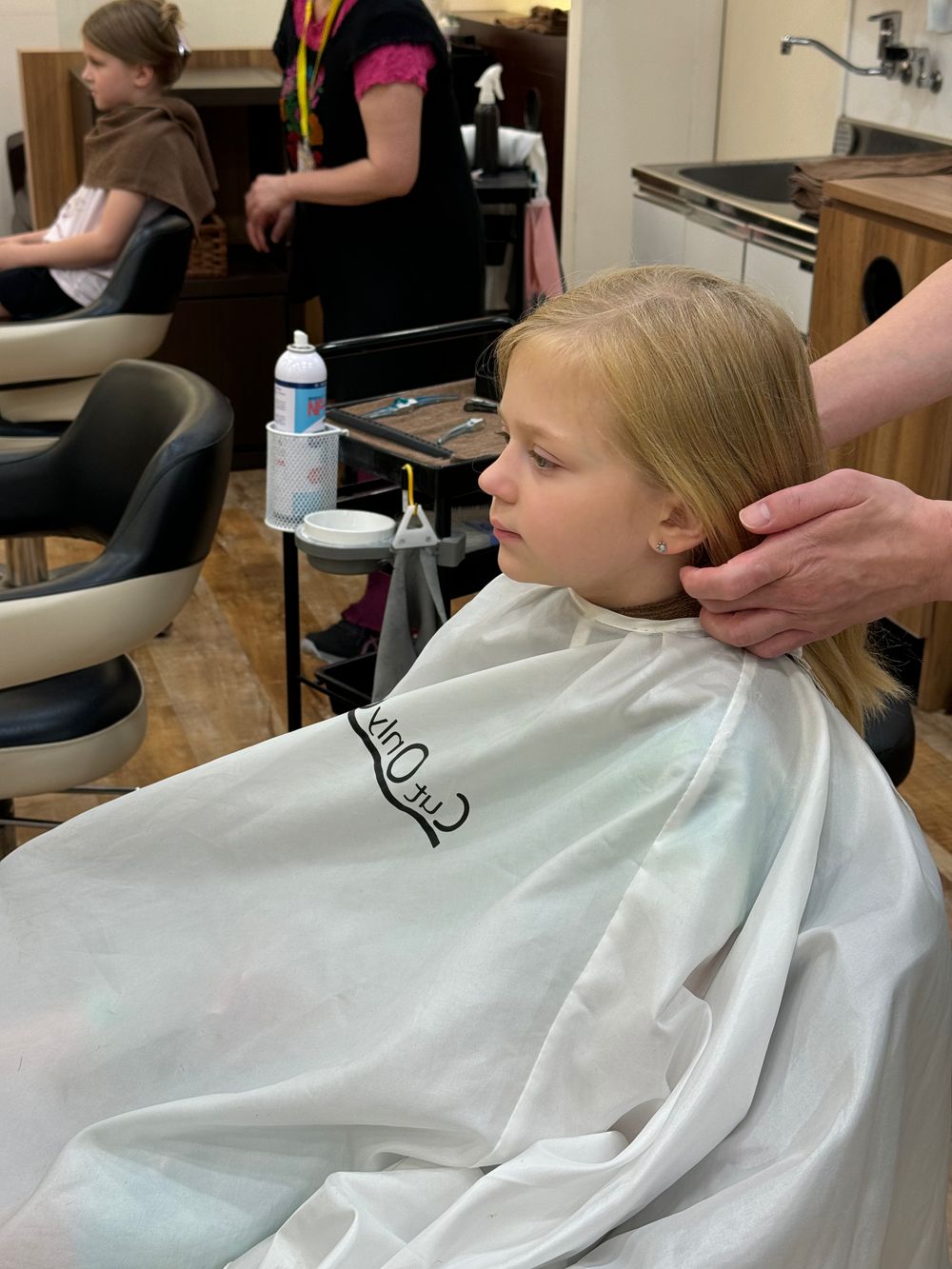
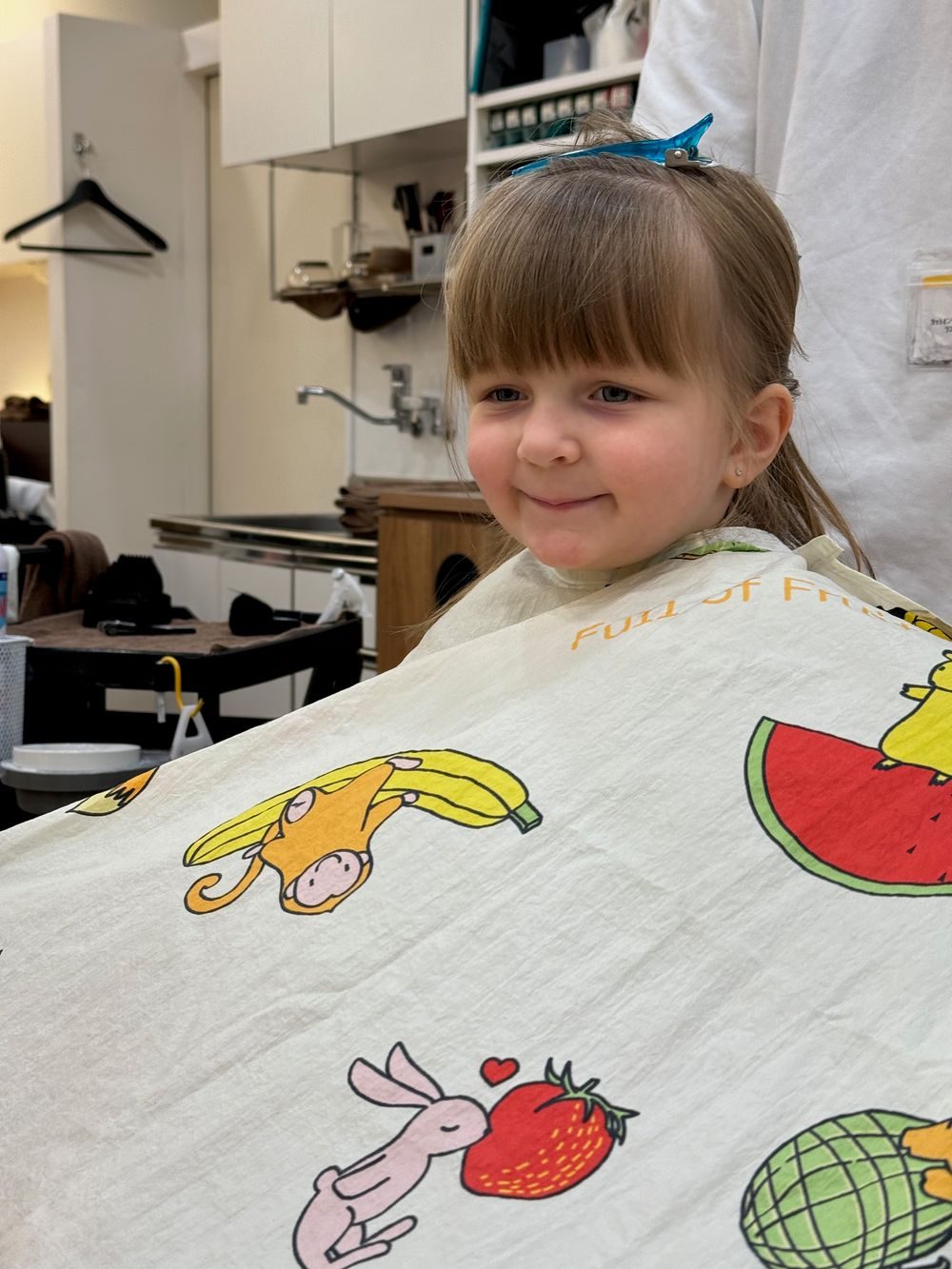
If you’re on an extended stay in Japan and a kid’s hair has gone from “needs a trim” to “a real problem,” a haircut mid-trip is an easy errand to handle, and one that never shows up on any pre-trip packing list or budget spreadsheet. We took two of the girls in for trims during a longer stay in Katsushika, and it turned out to be one of the more painless unplanned stops of the whole trip.
What it costs
Children’s haircuts in Japan typically run somewhere between 2,500 and 4,400 yen, with pricing usually split by age: younger kids often land around 2,750 yen, while elementary-age kids run closer to 3,300 yen. Some salons knock off around 500 yen for appointments after 3pm, and a handful offer a combined parent-and-child cut package, sometimes priced around 8,800 yen total, if a parent wants a trim at the same time. None of that is dramatically cheaper than a haircut back home, which is worth knowing going in if you’re expecting a big discount simply because you’re in Japan.
What a parent’s haircut costs, if you need one too
Kids weren’t the only ones who could use a trim mid-trip, and adult pricing in Japan covers a much wider range than the kids’ pricing does. A neighborhood salon typically runs 4,000 to 7,000 yen for a cut, a mid-range salon in a trendier area like Shibuya or Omotesando runs 6,000 to 12,000 yen, and high-end spots in places like Ginza can push past 12,000 yen. At the opposite end of that range sits QB House, a nationwide chain built around speed rather than style: a precision cut for 1,350 yen, done in about 10 minutes, no reservation needed, with locations built directly into major train stations. It’s not the place for a complicated style, but for a parent who just needs hair out of their eyes before the next stretch of a trip, it’s hard to beat on price or convenience.
How it compares to a haircut back home
A kids’ haircut in the US typically runs $15 to $30 depending on age and salon, with budget chains landing around $16 to $23. At current exchange rates, Japan’s 2,500 to 4,400 yen range converts to roughly $17 to $29, which is close enough to the US range that there’s no real savings story here, just a comparable cost in a different currency. That’s a useful thing to know before assuming every kid-related errand abroad comes with either a markup or a discount; sometimes it’s just the same number in a different shape.
Finding a salon without much planning
We weren’t working from a recommendation or a pre-booked appointment, this was a walk-up stop in a residential Tokyo neighborhood, found the same way you’d find any local salon: walking past storefronts until one looked right. Neighborhood salons in Japan are common enough that this works in most residential areas without much searching, and a lot of them display a rotating barber pole or a katakana sign reading something close to “cut” (カット) near the entrance, a useful visual cue even without reading the rest of the signage. Walking in without a reservation worked fine for us, though a busier salon in a dense area like Shibuya or Shinjuku is more likely to want a booked slot, especially on a weekend. For a quieter residential stop like ours, showing up and asking, even with minimal Japanese, was enough.
What the appointment looked like
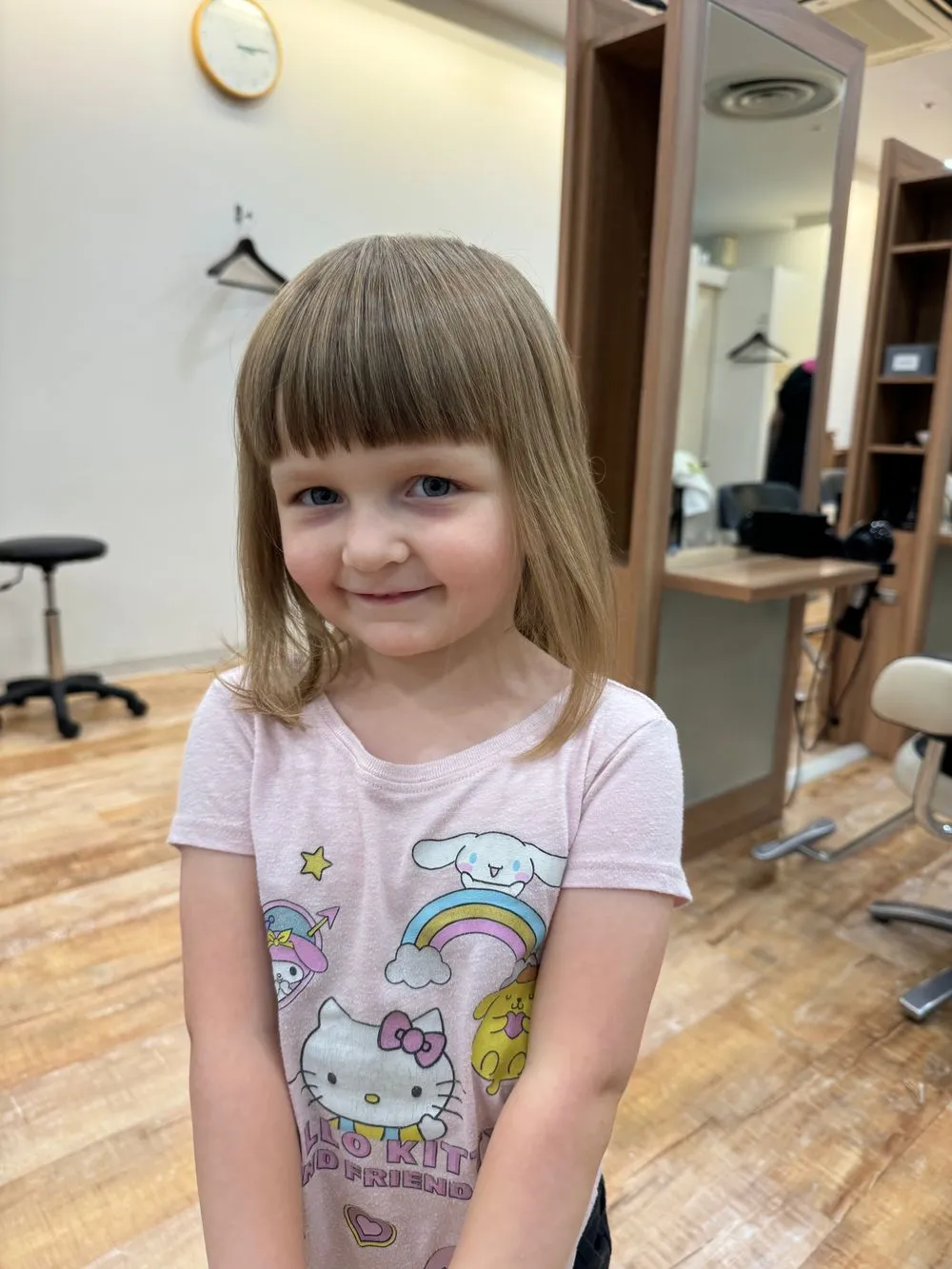
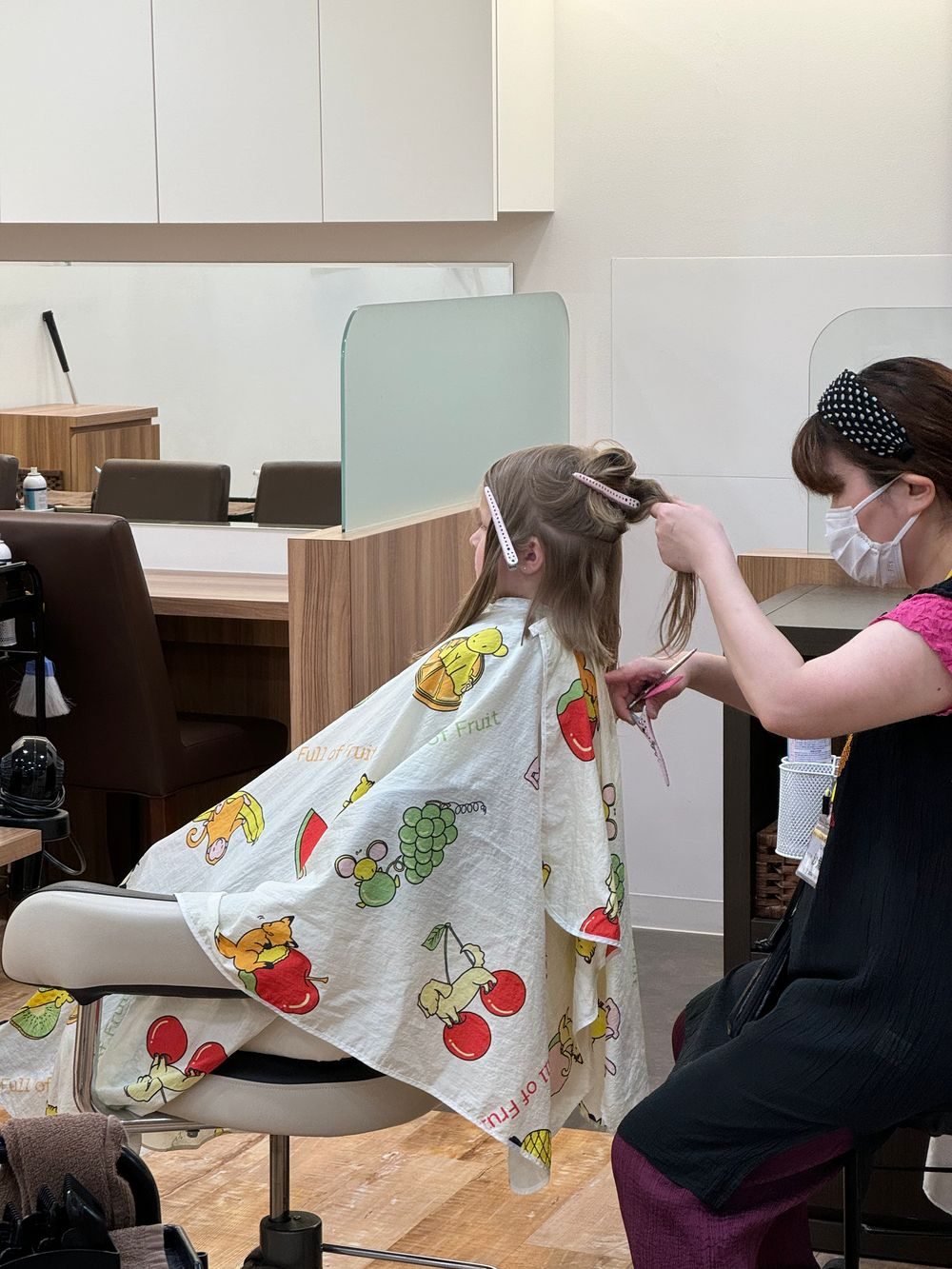
Neither of the salons we used were part of a dedicated kids-only chain, no arcade games, no car-shaped chairs, nothing built specifically around entertaining a nervous toddler through a haircut. What we got instead was a normal neighborhood salon that handled two kids without any fuss: a fruit-patterned cutting cape sized for a child, a calm, unhurried stylist, and a straightforward trim that took about the same amount of time it would anywhere else. Japan does have salon chains built specifically around this age group, CHOKKIN’S is probably the best known, a nationwide chain aimed at kids from infancy through elementary school with staff specifically trained in kids’ haircutting and a motto along the lines of “it’s okay if they cry or wiggle.” We didn’t end up at one of those specifically, and the regular salon experience worked out just fine, which is worth knowing if a dedicated kids’ chain isn’t nearby wherever you’re staying.
The language barrier matters less than you’d think
Getting a haircut is one of the more forgiving errands to handle with limited Japanese. A stylist doesn’t need a detailed verbal description of the style you want nearly as much as they need to see it: pointing at a length on the child’s own hair, showing a reference photo on a phone, or simply gesturing “just a trim, keep the length” gets the point across without much room for miscommunication. It’s a lower-stakes version of the same visual-first approach that makes ordering off a picture menu easy, and a haircut is forgiving enough that a slightly-off translation isn’t going to ruin anyone’s week.
One habit to leave at home: tipping
Don’t tip. It isn’t part of hair salon culture in Japan the way it is in the US, and the price on the menu is the whole price, no percentage added on top at the register. Trying to leave extra cash for the stylist doesn’t read as generous, it tends to create an awkward moment where staff will actively try to hand the money back rather than accept it. The habit is easy to forget mid-trip when tipping is second nature at home, but it’s one of the simpler adjustments to make, and skipping it isn’t rude here the way it would be back home, it’s just how the transaction works.
The pattern behind this kind of stop
A haircut mid-trip fits into a category of errand that doesn’t get much attention in trip planning: the stuff that happens on any long stay regardless of country, an eye exam, a dentist visit, a kid outgrowing shoes, hair getting out of hand. We’ve written about one of these before, a real eye exam and glasses purchase that came up during an extended stay, and the pattern holds here too: none of these errands are dramatic, none of them derail a trip, and all of them are easier to handle in the moment than to put off until getting home. The longer a stay runs, the more of these ordinary-life errands show up, and treating them as a normal part of the trip rather than an interruption to it makes the whole stretch easier to manage.
Was it worth the detour
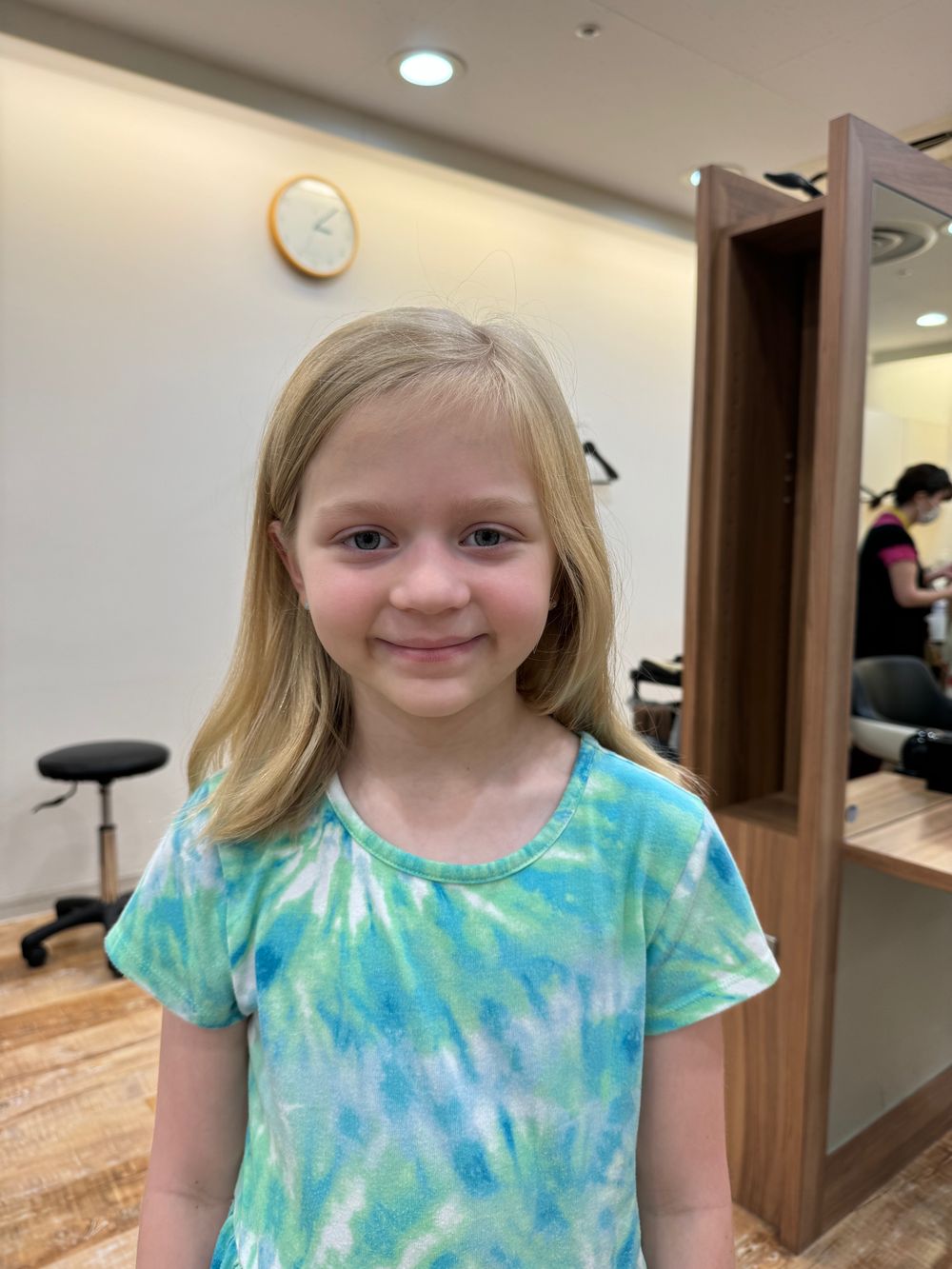
Yes, without much debate. An unmanageable haircut mid-trip is the kind of small, nagging problem that’s easy to keep putting off, especially when every other hour of a trip feels like it should be spent doing something more exciting than sitting in a salon chair. But a trim took less than half an hour for each kid, cost about what it would have cost at home, and didn’t require any special planning, reservation, or research beyond finding a salon within walking distance. If a kid’s hair is becoming a daily argument mid-trip, there’s no real reason to wait until you’re back home to deal with it. A regular local salon can handle it exactly the way it would anywhere else, fruit-patterned cape included.