The Part of Yokohama's Christmas Market That Isn't Free
Yokohama's Red Brick Warehouse Christmas Market has free illuminated zones, but the main market area needs a paid ticket. Real 2026 prices, dates, and what we paid.
Published on 7 min read
On this page
Walk along Yokohama’s waterfront in Christmas season and it looks entirely free: lights everywhere, an illuminated YOKOHAMA sign, a glowing tree visible from outside the gates. The part that catches people out is that the market itself, the German-style huts, the main tree, the stalls, sits inside a paid entry zone. The free illuminated areas surround it, and it’s easy to assume you’re already inside the whole thing when you’re really still standing outside the ticketed core.
What the paid zone costs
For the 2026 run (November 20 to December 25), general admission into the main market runs 500 to 1,000 yen depending on the date, with Priority Entry running 2,000 to 2,500 yen, and a Priority ticket that includes a premium souvenir mug running 4,500 to 5,000 yen. As of this writing, the organizers hadn’t released exact date-by-date pricing yet, more detail is expected closer to the market’s opening in late November, so treat the ranges above as the real current word rather than a locked-in number for every single day.
Free entry applies to elementary-school age kids and under when accompanied by a guardian, and to junior-high age and under specifically until December 4, after which that free window narrows. Yokohama residents get in free on November 25 only. Outside those specific conditions, the paid tiers above apply.
General admission versus Priority Entry comes down to one real tradeoff: cash lines at the gate get long once the market fills up in the evening, and Priority Entry is the way past that line rather than a meaningfully different experience inside. If you’re arriving right at opening on a weekday, the cash line is short enough that paying extra for priority buys you almost nothing. If you’re showing up on a weekend evening with a group that includes kids who don’t do well standing in a crowd, the Priority tier’s real value is time, not access to anything the General tier doesn’t also get you.
The free part, and what it shows you
Outside the paid gate, the free illuminated zones run along the waterfront and include a view of the market’s centerpiece tree, a roughly 12-meter installation visible well before you reach the ticketed entrance. Light shows run on the tree on a repeating schedule, roughly every 15 minutes in past years, visible from the free side as well as the paid one. This is the real reason the whole area can look free from a distance: the tree, the lights, and the general glow of the market all reach past the gate, even though walking into the huts themselves requires a ticket.
Hours, and why they shift mid-run
The market runs longer hours as December goes on: 11am to 9pm for the first stretch (through roughly December 4), then 11am to 10pm from December 5 through Christmas Day, with last orders at food stalls 30 minutes before close either way. The market opened later on its very first day in past years (a shortened opening-evening schedule), worth checking the exact opening-day hours separately if your trip lands right at the start of the run.
Food and drink, charged separately from admission
The paid admission ticket gets you into the market itself, not what you eat or drink once inside. German-style huts sell the usual market lineup: sausages, pretzels, hot chocolate, and glühwein, a spiced, warmed red wine that contains real alcohol, not a kid-friendly hot drink despite looking like spiced cider in photos. No specific 2026 stall prices were published as of this writing, each hut sets its own, so budget food and drinks as a separate line item on top of whatever admission tier you book rather than assuming the ticket price covers the evening.
Why this market exists at all
The Red Brick Warehouse itself predates the market by over a century. The two buildings were built as customs warehouses, one in 1911 and the other in 1913, and survived the catastrophic 1923 Great Kanto earthquake better than most structures nearby thanks to iron reinforcement built into the brickwork itself, a real engineering detail rather than just good luck. The warehouses closed in 1989 after decades of use, sat empty through the 1990s, then reopened in 2002 after a multi-year restoration as the retail and event space that now hosts the Christmas market each winter.
The Christmas market tradition at the site is itself well over a decade old, past its 15th consecutive year as of the mid-2020s runs, modeled loosely on the German Christmas markets the huts and food still reference directly. That history is part of why the market reads as a genuine seasonal institution for Yokohama rather than a one-off pop-up event aimed at tourists.
What a full Yokohama Christmas day costs, stacked up
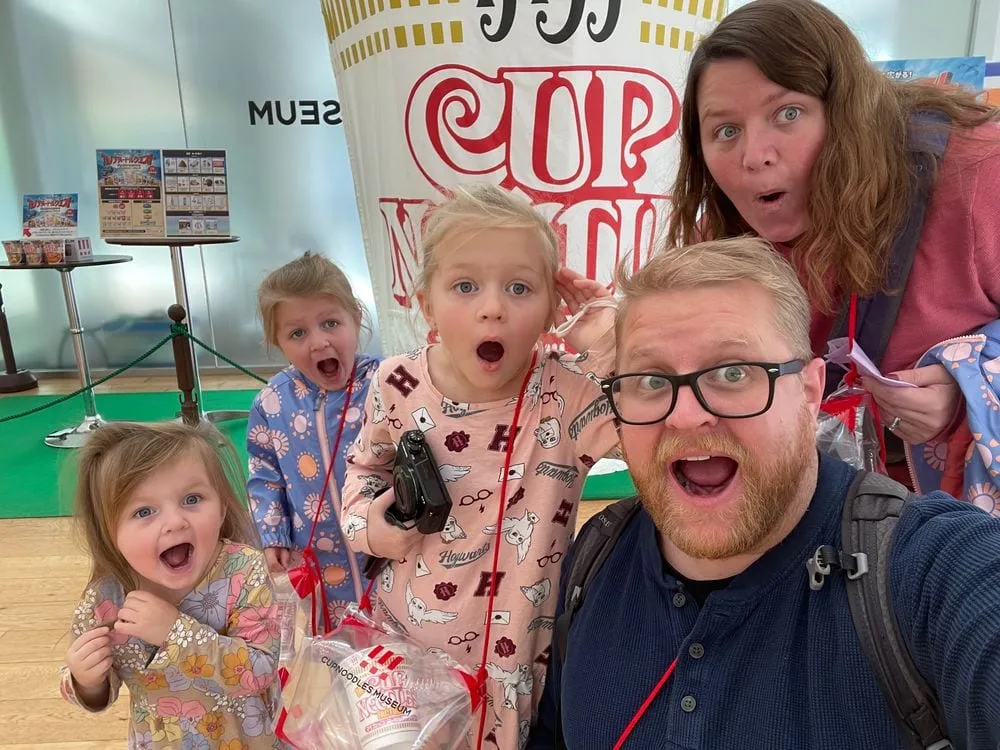
If you’re combining this with the rest of the day the way we did, Sankeien Garden and the Cup Noodles Museum both sit a reasonable distance away and both have their own real, separate admission. Sankeien runs 900 yen a head for adults, 200 yen for anyone under 15. Cup Noodles Museum is 500 yen general admission, plus another 500 if you want to design your own cup at My CUPNOODLES Factory. Add the Christmas Market’s 500 to 1,000 yen general tier on top, and a single adult doing the full day, garden, museum, custom cup, and market entry, is looking at roughly 2,400 to 2,900 yen before any food. For a family, that’s the number worth multiplying out ahead of time rather than discovering gate by gate.
What we did
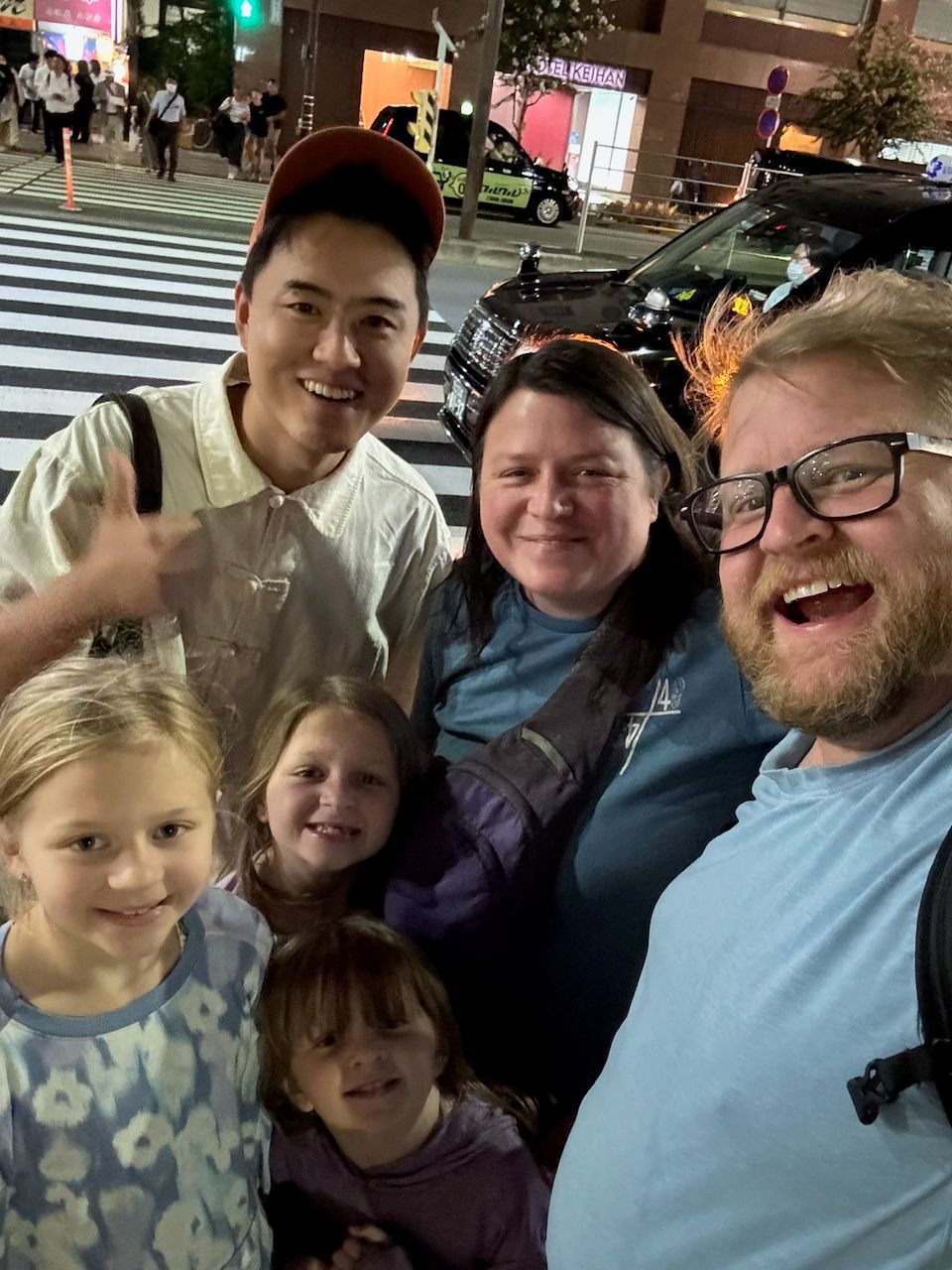
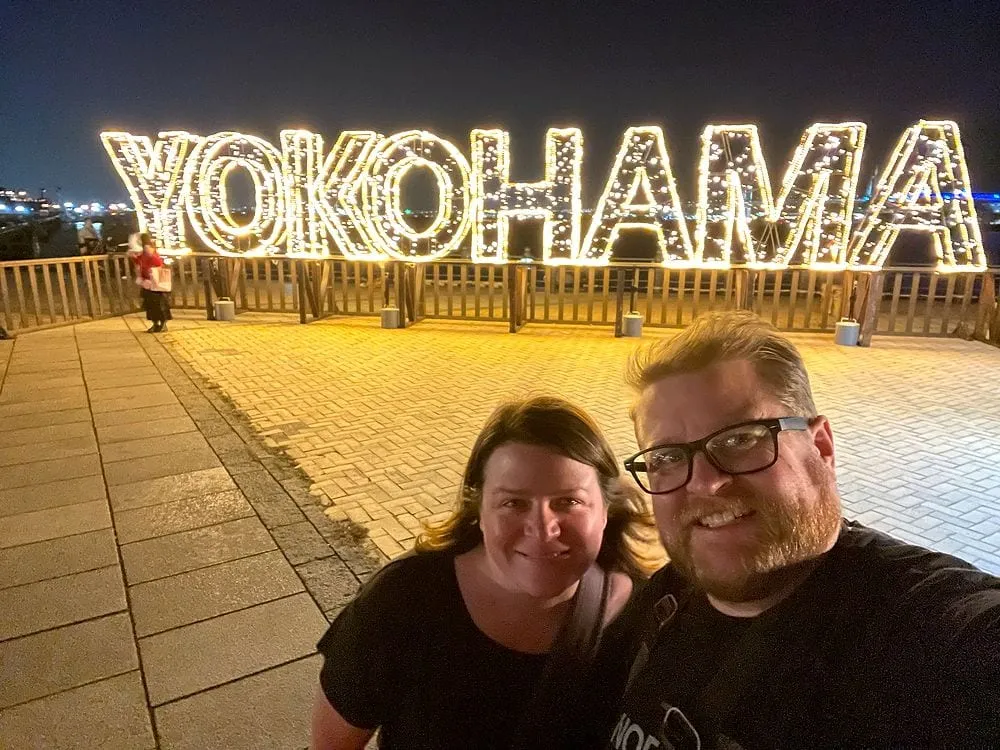
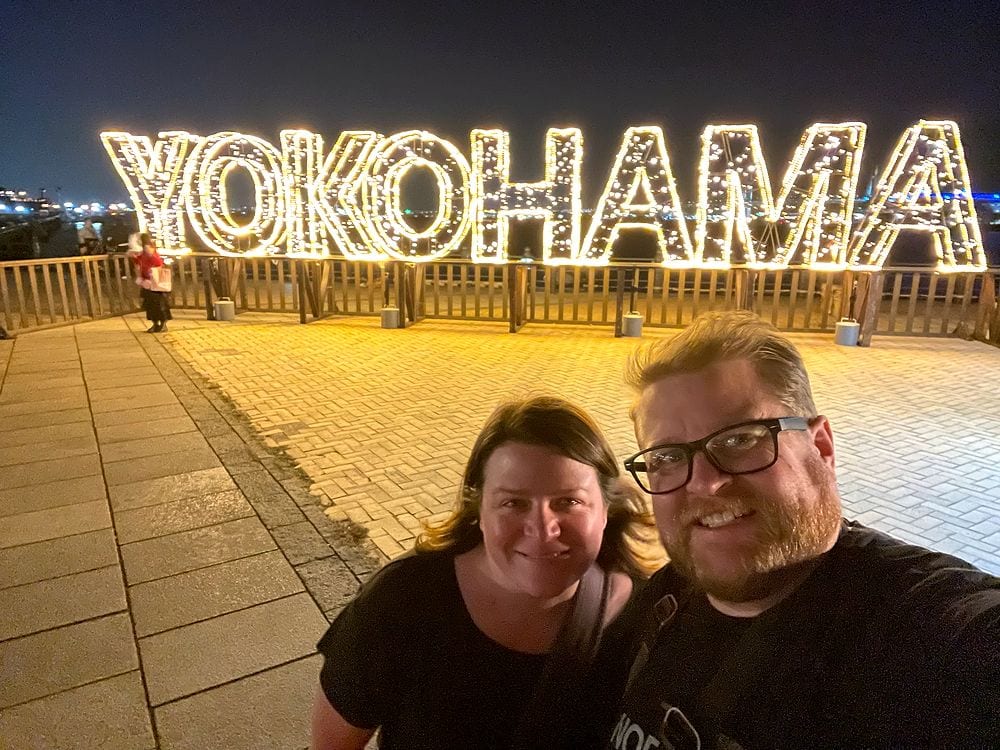
We went November 24, 2023, part of a longer Yokohama day that started at Sankeien Garden that afternoon, a visit we’ve already written about in detail. By evening we’d made it to the waterfront with the girls and both sets of grandparents in tow, five adults and three kids total, enough people that keeping everyone together through a crowded illuminated walkway took more coordination than the actual cost of anything we paid for. The photo above is from right at the YOKOHAMA sign, a free spot just outside the market’s ticketed core, not inside the paid area itself, worth being honest about since we didn’t keep a receipt confirming which tier we paid into that specific evening.
Correcting our own earlier post
Our existing Yokohama day trip post mentions this same illuminated sign as a free waterfront stop, true as far as it goes, but it doesn’t name what was really happening around it that evening: a real, dated Christmas market, not just a generic nighttime photo spot. We’ve added a cross-reference there pointing back to this post, so anyone reading about the Cup Noodles Museum and Sankeien Garden day gets the full picture of what else that particular evening involved.
Visiting with a big group
Five adults and three kids through a crowded, lit-up waterfront at night is its own kind of logistics problem, separate from anything on a price list. Pick one obvious meeting point before splitting up for photos or a food stall line, a crowded evening market is exactly the setting where a 6-year-old can disappear from view for a real, stressful thirty seconds. Strollers work on the main waterfront paths but get tight once you’re inside the ticketed market itself between huts, worth factoring in if anyone in your group still needs one. None of this shows up on an admission price breakdown, but it mattered more to how the evening went than any yen figure did.
Getting there
The market sits at the Red Brick Warehouse (Akarenga Soko) on the Shinko waterfront, a short walk from Bashamichi or Sakuragicho Station, both on the JR Negishi Line and a quick ride from Yokohama Station itself. If you’re combining this with a Sankeien Garden or Cup Noodles Museum day the way we did, the waterfront stop works best saved for the end of the day, after both of those close for the evening.
Was it worth it
Yes, with the one caveat that matters most: don’t walk up expecting the whole scene to be free just because the lights reach well past the paid gate. Know which tier you’re buying into before you’re standing at the entrance with three kids and two sets of grandparents behind you, and budget food and drinks as their own cost on top. Outside the ticketed core, the illuminated walk along the water is a real, free, worthwhile stop on its own, we’d do that part again even on an evening we skipped the paid market entirely.