A5 Wagyu Yakiniku in Asakusa: What the Grade Means and What It Costs
A plate of seared wagyu in Asakusa, no receipt, no restaurant name. Real history of the A5 grading system and real current yakiniku course pricing in Tokyo.

Published on 3 min read
On this page
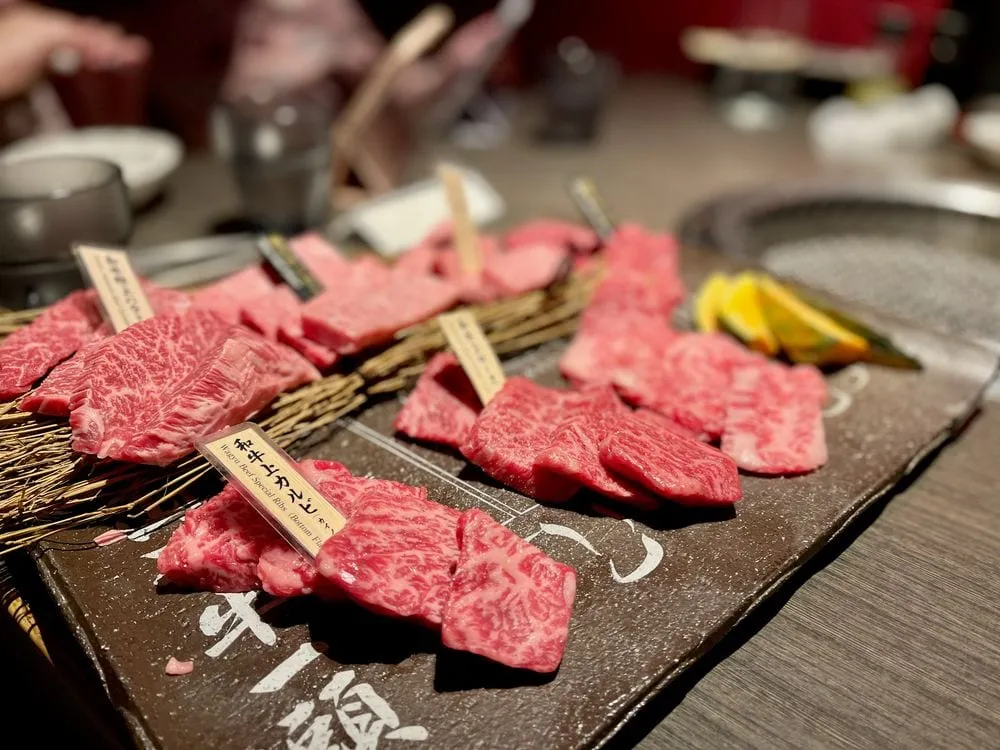
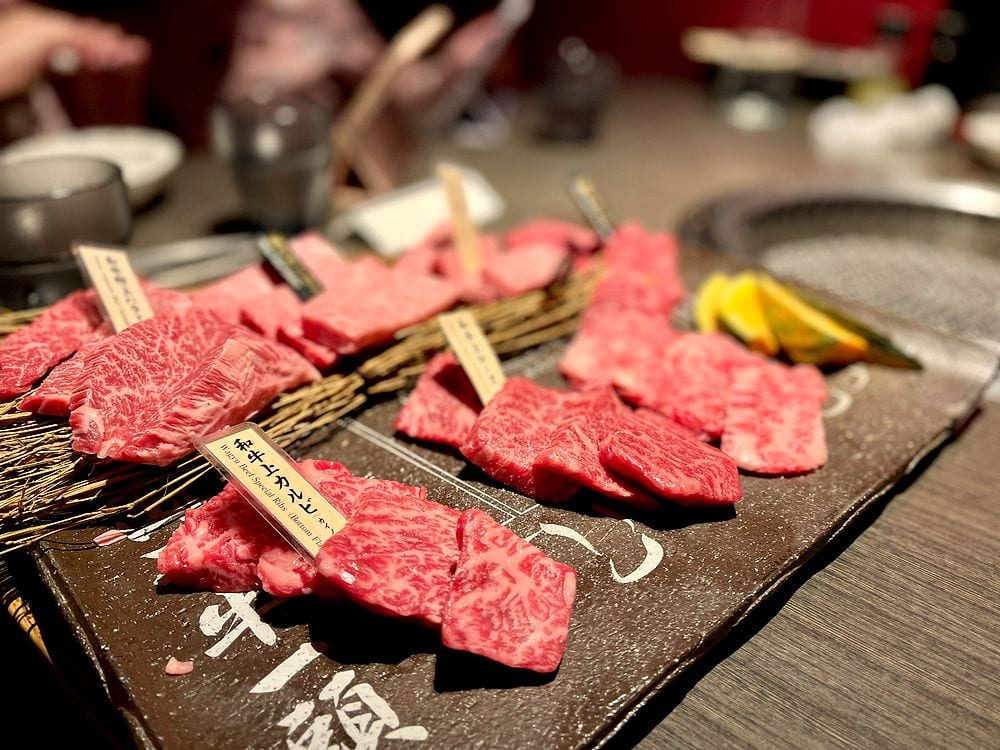
November 15, 2023, a yakiniku counter in Asakusa, wagyu going straight onto the grill. We don’t have the restaurant’s name or a receipt from that night, just this one photo of the meat itself. What we do have is a real explanation of why a plate like this costs what it does, and what the “A5” label stamped on menus really means.
What “A5” is grading
The grade splits into two separate parts, a letter and a number, and they measure completely different things. The letter, A, B, or C, is a yield grade, how much usable meat a carcass produces, with A requiring 72 percent or higher. The number, 1 through 5, is a quality grade, and it isn’t an average, it’s set by whichever of four sub-scores comes in lowest: marbling, color and brightness, firmness and texture, and fat quality. Earning a 5 means scoring Excellent across all four, not just one standout category. Marbling specifically gets its own numeric scale, the Beef Marbling Score, running 1 to 12, and a quality grade of 5 requires a BMS of 8 or higher. The whole system runs through the Japan Meat Grading Association, inspectors who cut each carcass between the sixth and seventh ribs to expose and score the meat directly.
The word “wagyu” is also regulated
The grade is only half the real story, the word itself is restricted too. Japan’s agriculture ministry set guidelines in 2007 limiting the “wagyu” label to four officially recognized breeds: Japanese Black, Japanese Brown, Japanese Shorthorn, and Japanese Polled, plus crosses among them. Japanese Black, also called Kuroge Washu, accounts for roughly 98 percent of all wagyu raised in the country, which is why most A5 beef on a Tokyo menu traces back to that one breed specifically. Cattle that don’t meet the criteria, including most dairy cattle, have to be labeled “domestic beef,” kokusangyu, instead, a real, legally meaningful distinction rather than a marketing nuance.
What a plate like this costs
No receipt survives from this specific meal, so we’re not claiming a number for this exact plate. What’s real and current: Hirakuen, a yakiniku restaurant near Asakusa Station, lists value courses starting around 3,000 yen, though that figure comes from an older listing and is worth confirming before relying on it. For broader Tokyo context, comparable wagyu-focused yakiniku courses elsewhere in the city run considerably higher, 8,000 yen for a 9-dish course in Akihabara, 10,000 yen for an 8-dish ribeye set in Ginza, 11,000 yen for a tasting course in Akasaka. Asakusa’s own reputation for better value than those more central neighborhoods lines up with Hirakuen’s lower starting figure.
Tokori Wagyu BBQ, Asakusa
These are affiliate links. We may earn a commission if you book through them, at no extra cost to you. See our legal notice.
Klook code: ADAMANDLINDSKLOOK
Click through to Klook below, then enter code ADAMANDLINDSKLOOK at checkout. This is a real affiliate code, we may earn a commission on the booking too, at no extra cost to you. See our legal notice.
10% off, New Klook user
$50 minimum spend, capped at $50 off, one time use. Valid through December 31, 2026.
3% off, Existing Klook user
$50 minimum spend, capped at $50 off, up to three uses. Valid through December 31, 2026.
1% off, Selected things to do and mobility, including teamLab Planets TOKYO, teamLab Borderless, teamLab Biovortex Kyoto, Japan Shinkansen tickets, SHIBUYA SKY, Warner Bros. Studio Tour Tokyo, and Osaka Amazing Pass
No stated minimum spend for this tier. Valid through December 31, 2026.
50% off, eSIM, new eSIM customers only
No minimum spend, capped at $1.50 saved, one time use. Valid through December 31, 2026.
Why the range is so wide
A5 is the ceiling grade, not the only grade worth ordering. Plenty of yakiniku menus mix A5 cuts with A4 or even non-wagyu beef at a fraction of the price, and course pricing depends heavily on how many A5 cuts are really included versus how much of the meal is filler, side dishes, and lower grades padding out the total. A restaurant advertising “wagyu” on its sign doesn’t guarantee every cut on the grill carries the A5 label specifically, worth checking a course’s actual composition rather than assuming the headline grade applies to everything on the plate.
Was it worth it
We can’t put a final number on this one, and we’re not going to guess. What the real research behind the grade shows is that “A5” isn’t marketing shorthand, it’s a specific, inspected, multi-category score, and that distinction is exactly why a plate like this commands real money in a city where a konbini meal costs a few hundred yen. Whether it’s worth it comes down to how much a family values that distinction on one specific night, not something a blog post can answer for anyone else’s trip.