Zauo in Osaka: There's No Catch and Release on Your Own Dinner
Zauo lets you fish for your own dinner from indoor tanks in Namba, Osaka. The real correction: nothing goes back in the water. Real prices and how it works.

Published on 7 min read
On this page
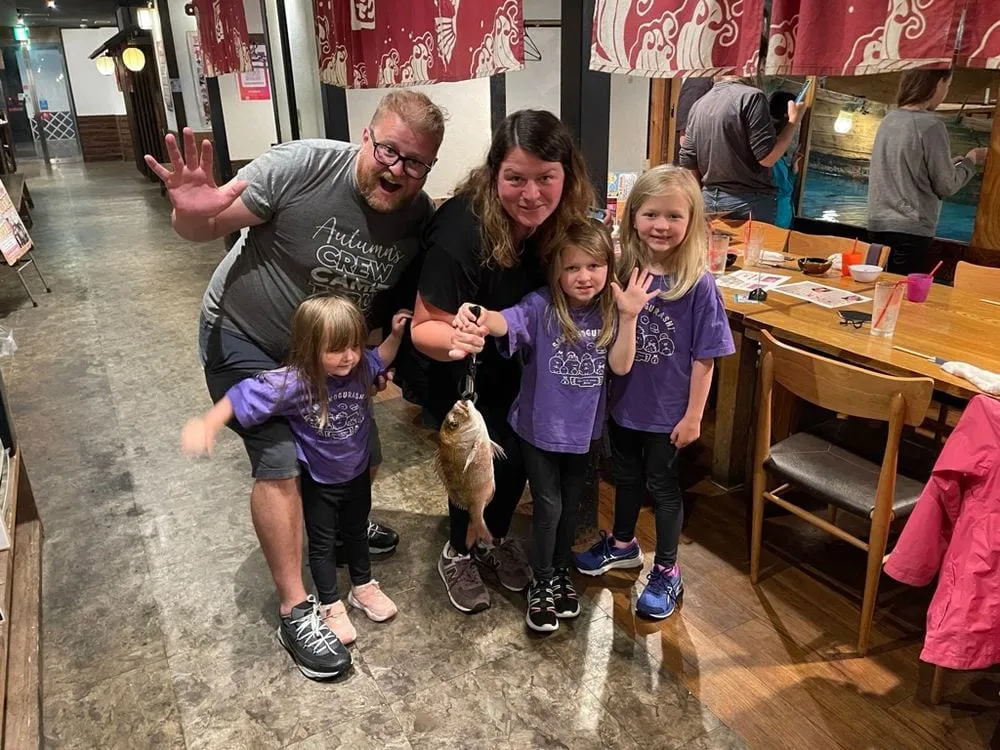
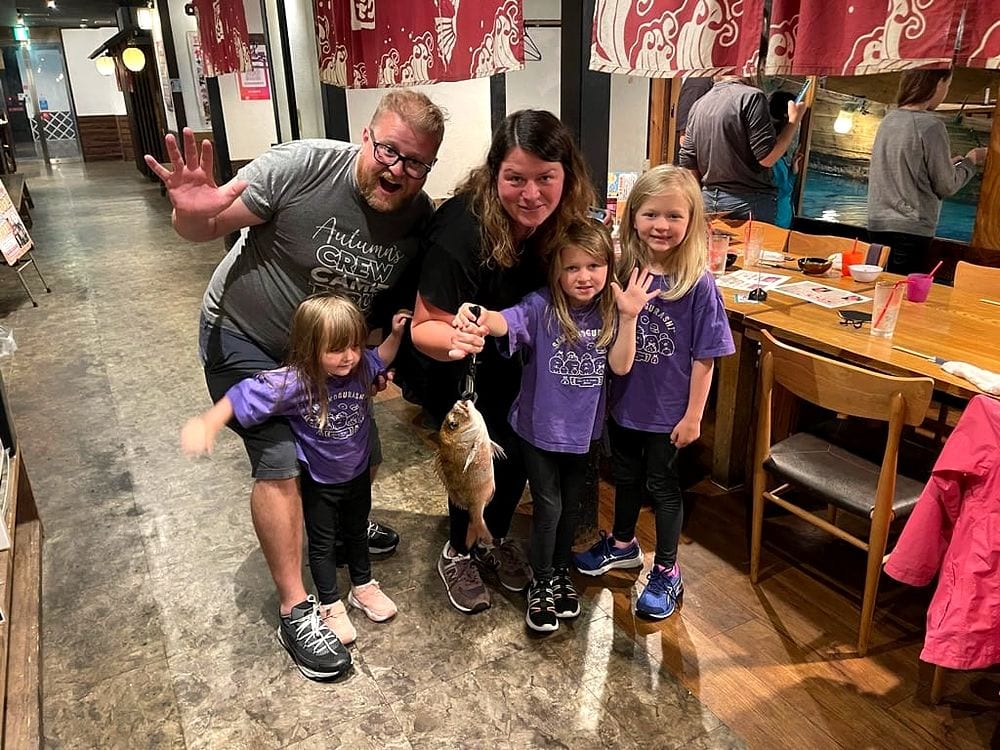
Walk into Zauo in Namba and the easy assumption is that it works like a carnival game: cast a line into one of the indoor tanks built into the floor, catch something, maybe throw the small or ugly ones back and try again until you land a good one. That’s not how it works. Whatever comes up on your hook is now your dinner, no do-overs, no catch and release. We found that out on a June 2023 evening in Osaka, and it changes the whole way you should think about walking in.
How it works
Zauo is a small chain of restaurants built around the same idea: the dining room sits next to, or directly over, tanks stocked with live fish and shellfish, and instead of ordering off a printed menu first, you rent a rod, drop a line in, and catch your own meal. The Namba location sits about a minute’s walk from Nihonbashi Station, across the road from the Dotonbori canal, close enough that it’s an easy add to a night already built around that strip.
Staff net whatever you hook, and before you start they’ll ask which cooking style you want it prepared, sashimi, grilled, boiled, fried, or a 50:50 split between two styles. There’s a dedicated Fish Corner stocked with smaller, denser, easier-to-catch species that’s aimed specifically at kids, cheaper individual fish and a higher hit rate than fishing for the bigger species elsewhere in the room. Staff hand out small prizes when a kid lands a catch, which did more to keep our girls engaged than the food itself for the first twenty minutes.
The real cost, and where sources disagree
No single official price list, and the numbers vary depending on which guide and which year you’re reading. Rod rental is the clearest disagreement: some sources quote it as free, bundled into the cost of whatever you catch, others put it at 100 to 110 yen. We didn’t keep a receipt itemizing it either way, so treat that specific line as unconfirmed rather than take either number as current.
What’s consistent across sources is the shape of the pricing, not a flat admission fee, you pay per fish:
| Catch | Typical price |
|---|---|
| Fish Corner shrimp | around 400 yen each |
| Fish Corner horse mackerel | around 1,000 yen |
| Larger species (sea bream, flatfish, and similar) | up to several thousand yen |
| Lobster | market rate, priced individually |
Side dishes fill in the rest of the bill if fishing alone doesn’t make a full meal: fish head miso soup runs around 200 yen, a natto sushi roll about the same, and potato wedges closer to 480 yen. Put together, a realistic total lands somewhere between 1,000 and 5,000 yen per person depending entirely on what you reel in and how much you order alongside it, which is a wide enough range that it’s worth going in with a rough budget in mind rather than an exact one.
Getting there
Zauo’s Namba location, officially the Tsuri-sen Chaya Zauo Namba Honten, sits about a minute’s walk from Nihonbashi Station on the Sakaisuji and Sennichimae subway lines, directly across the road from the Dotonbori canal. If you’re coming from Namba Station on the Midosuji line instead, Namba Walk, an underground shopping street roughly 715 meters long, runs the whole distance between the two stations and connects straight into Nihonbashi Station’s Exit 3 and 4, meaning you can walk the entire route underground without surfacing once. Worth double-checking your map app’s result against Kintetsu Nippombashi Station too, a separate stop on a different line that shares a near-identical name but isn’t the same station.
The wider Zauo chain
Namba isn’t a one-off location, it’s described as the main Kansai store in a small national chain built around the same catch-your-own concept, with Fukuoka holding the original store and Kanto branches in Shinjuku, Shibuya, Meguro, and Tokorozawa. The Shinjuku branch, the first one to open in Tokyo back in 2003, is one of the more visually dramatic rooms in the chain, a full wooden boat built into an oversized seafood tank rather than the smaller individual tanks elsewhere. Shibuya runs its own set course, one guide pricing a 75-minute fishing experience at 4,980 yen with a 110 yen rod rental on top, and mentions a catch discount on at least one species, a sea bream running cheaper if you land it yourself than if you’d simply ordered it off a menu. None of that pricing is confirmed current for 2026, and we can’t vouch for how closely the Tokyo branches match the Namba room we fished in, but it’s useful context for knowing this isn’t a single novelty restaurant, it’s a format the chain has repeated across the country with real variation location to location.
Hours and getting a table
Weekdays run 17:00 to 23:00, last order at 22:00. Weekends and holidays split into a lunch session, 11:30 to 15:00, and a separate dinner session, 16:00 to 23:00, both with last orders 30 minutes before the room closes. Online reservations are the standard route in, often with a small deposit that gets refunded once you’re seated, and you settle the actual bill after eating based on what you caught and ordered. Dining slots run around two hours, though guides describe staff as flexible about that when the room isn’t full.
Why the no catch and release rule matters more than it sounds
This is the part that’s easy to misjudge walking in with kids. A fishing game at a restaurant reads as low stakes, cast a line, see what happens, no real consequence either way. Zauo runs on the opposite logic: once a fish is on your hook and netted, it’s sold, cooked, and billed, full stop. That’s not a hidden catch, every source describing the place mentions it plainly, but it’s also exactly the kind of detail that doesn’t occur to you until you’re standing over the tank watching your kid reel in something smaller than what she was aiming for. Setting that expectation before anyone picks up a rod, rather than explaining it mid-catch, makes the whole visit go smoother. For a kid-aimed activity, it’s also a pretty direct lesson in where dinner comes from, which is arguably the more interesting part of the gimmick once you get past the novelty of it.
Worth doing with kids
Yes, and specifically because of the Fish Corner rather than in spite of the no-release rule. A dedicated section stocked for easier, cheaper catches means a 6-year-old can land something real without the whole table waiting twenty minutes on one stubborn sea bream, and the small prizes for a successful catch turned what could have been a frustrating wait into its own source of excitement. It reads less like a themed restaurant gimmick and more like dinner with an activity built directly into it, which is a different kind of value than a normal meal out, even before you get to what ends up on the plate.
More of Namba and Dotonbori
These are affiliate links. We may earn a commission if you book through them, at no extra cost to you. See our legal notice.
Klook code: ADAMANDLINDSKLOOK
Click through to Klook below, then enter code ADAMANDLINDSKLOOK at checkout. This is a real affiliate code, we may earn a commission on the booking too, at no extra cost to you. See our legal notice.
10% off, New Klook user
$50 minimum spend, capped at $50 off, one time use. Valid through December 31, 2026.
3% off, Existing Klook user
$50 minimum spend, capped at $50 off, up to three uses. Valid through December 31, 2026.
1% off, Selected things to do and mobility, including teamLab Planets TOKYO, teamLab Borderless, teamLab Biovortex Kyoto, Japan Shinkansen tickets, SHIBUYA SKY, Warner Bros. Studio Tour Tokyo, and Osaka Amazing Pass
No stated minimum spend for this tier. Valid through December 31, 2026.
50% off, eSIM, new eSIM customers only
No minimum spend, capped at $1.50 saved, one time use. Valid through December 31, 2026.
Was it worth it
Completely, and for reasons beyond the food itself. We’ve eaten plenty of good meals in Osaka that didn’t leave much of a story behind them. This one did, a kid baiting her own line, staff coaching her through a catch, and a plate arriving a few minutes later that she’d had a direct hand in. The no catch and release rule is the detail worth knowing ahead of time, not because it’s a problem, but because walking in expecting a game and walking out with your actual dinner is a much better experience when you see it coming.