Can't Get Sumo Tournament Tickets in Tokyo? Here's the Dinner-Show Price
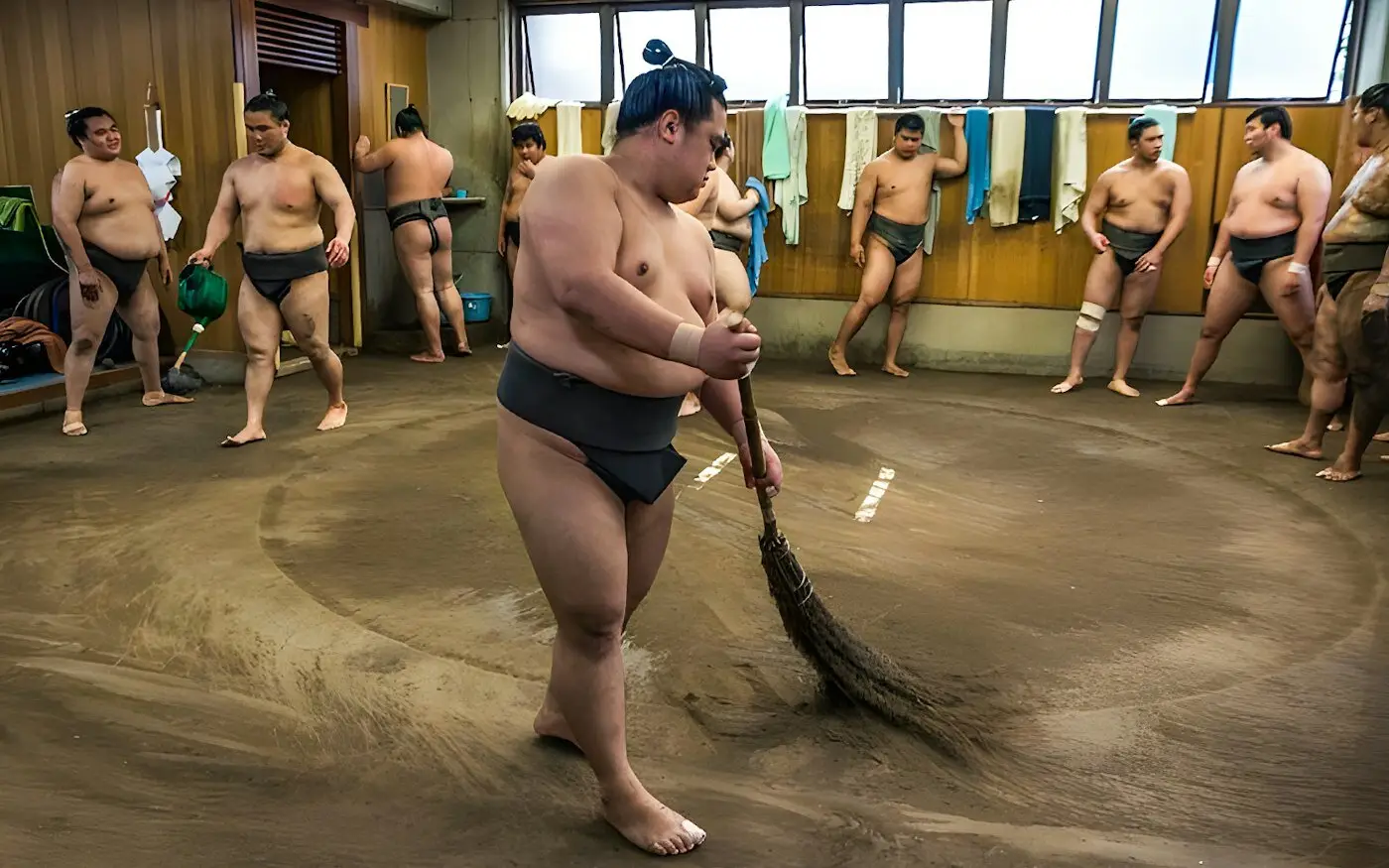
Tokyo only hosts three Grand Sumo tournaments a year, and the good seats sell out in minutes. The Asakusa Sumo Club dinner show runs nightly year-round, retired pro wrestlers included, for around $100 to $102.
Published on 7 min read
On this page
If your Tokyo trip doesn’t line up with a Grand Sumo tournament, or it does and the tickets were already gone by the time you looked, the Asakusa Sumo Club’s dinner show is the year-round option: retired professional wrestlers performing live matches a few feet from your table, every night, for a ticket you can book weeks out instead of refreshing a sales page at a set hour. Standard admission with the chankonabe meal runs in the $100 to $102 range per adult as of this writing.
Why the tournament calendar doesn’t work for most trips
Japan holds six Grand Sumo tournaments a year, and only three of them are in Tokyo, at Ryogoku Kokugikan in January, May, and September. Each one runs 15 days. Outside those three windows, there’s no tournament to see in Tokyo at all, full stop, whatever week your flight happens to land.
Even inside a tournament window, tickets go through the official Ticket Oosumo channel and move fast, the opening day, weekend dates, and the final day (senshuraku) are reported selling out within minutes to an hour of release, and both the January and May 2025 Tokyo tournaments sold out entirely. A trip planned around other priorities, flights booked first, sumo added later, routinely misses both the calendar and the ticket window.
The dinner show sidesteps both problems. It’s not a tournament and it’s not amateur demonstration, the wrestlers are retired professionals, but it runs on a nightly schedule you can book around your itinerary instead of the other way around.
What an official tournament ticket costs, for comparison
Since the whole point of the dinner show is standing in for a tournament ticket you couldn’t get, here’s what that ticket costs when it is available. Ticket Oosumo pricing for 2026 runs from roughly ¥4,000 to ¥9,500 per person for a 2nd-floor chair seat, the cheapest entry point, up to ¥56,000 to ¥60,000 for a 4-person box (priced as a whole box, not per person, so a group of two still pays for all four seats), with ringside seats around ¥20,000 a person and sold only through the Japanese-language site. A reasonable chair seat clears the dinner show’s price before conversion even starts, the box and ringside tiers run well past it. The dinner show isn’t cheaper than every tournament seat, it’s cheaper than the good ones, and available on a night you pick yourself.
What the show is
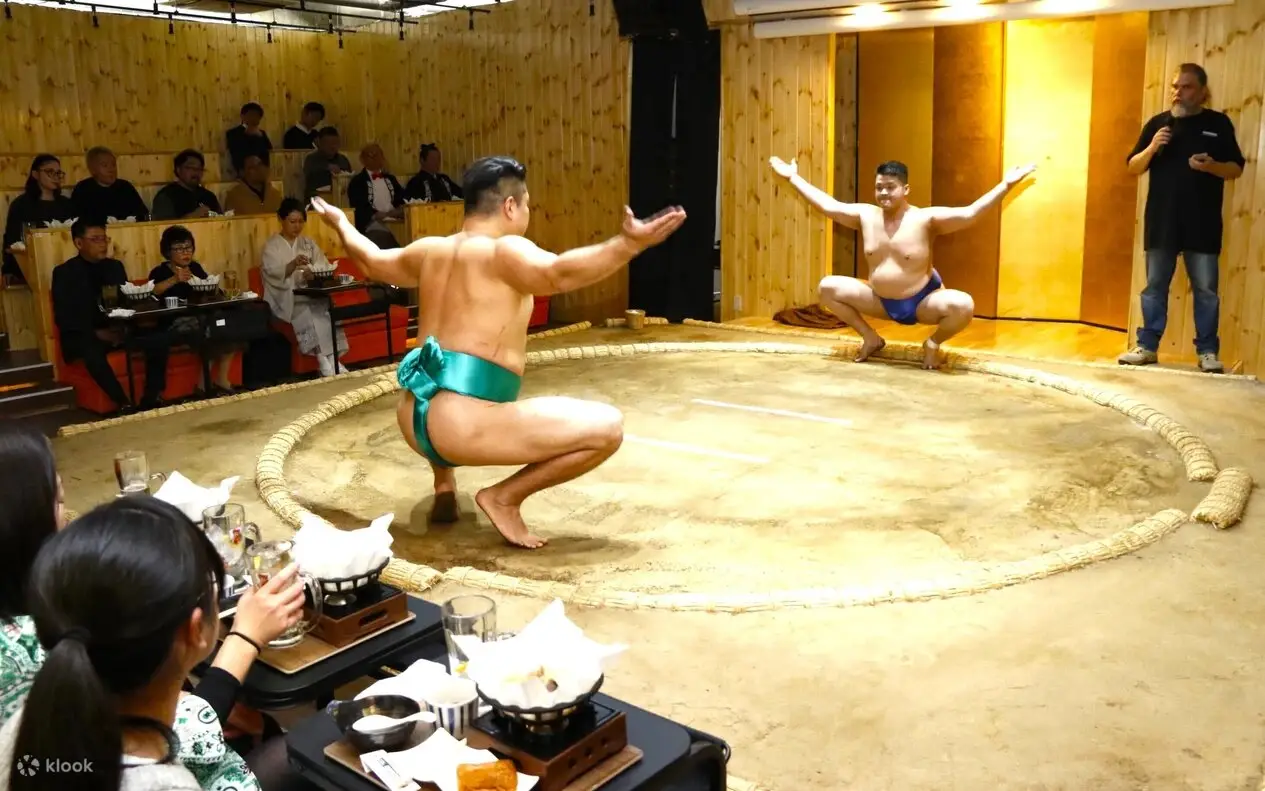
The venue sits in a basement space in Asakusa, about a six-minute walk from Senso-ji’s Kaminarimon gate and about three minutes from Asakusa Station on the Ginza and Asakusa lines, close enough to fold into a day that already has the temple on it. Inside, a regulation-size dohyo (the sumo ring, a raised clay circle bordered by a ring of rice-straw bales) sits at the center of the room with seating around it, upper-tier chairs for guests who’d rather not sit on the floor, lower-tier floor cushions closer to the ring itself.
For anyone who’s never watched a match: a rikishi (wrestler) wins by forcing the other out of the ring or down to the clay with anything other than the soles of the feet, wearing only a mawashi (the thick belt), and a single bout is usually over in seconds, the buildup and ritual around it is most of what takes time, not the fight itself. A host narrates in Japanese and English through the evening to explain what’s happening as it happens, useful if this is the first match anyone at the table has ever seen. Between courses, the retired wrestlers perform live matches on the dohyo, not a slowed-down demonstration, genuine bouts. A geisha dance opens the show, and partway through, the host invites guests to throw salt into the ring the way a wrestler would before a match. There’s also an optional “Sumo Challenge,” willing guests, kids included, can step up and face off against a wrestler in the ring. Nobody’s required to join, and the wrestler clearly isn’t trying.
What’s on the table
Chankonabe, the protein-heavy hot pot wrestlers eat daily to maintain size, is the centerpiece, served at the table and kept coming rather than a single bowl. Around it sits an all-you-can-eat spread: sushi, karaage, tempura, edamame, rice, and dessert, plus soft drinks included in most ticket tiers. Beer and sake packages are offered as paid add-ons on top of the standard ticket, worth deciding on before you sit down rather than ordering piecemeal once the show starts.
The whole evening runs close to 100 minutes, with a 6pm slot that tends to fill first.
What it costs
Klook code: ADAMANDLINDSKLOOK
Click through to Klook below, then enter code ADAMANDLINDSKLOOK at checkout. This is a real affiliate code, we may earn a commission on the booking too, at no extra cost to you. See how affiliate links work here.
10% off, New Klook user
$50 minimum spend, capped at $50 off, one time use. Valid through December 31, 2026.
3% off, Existing Klook user
$50 minimum spend, capped at $50 off, up to three uses. Valid through December 31, 2026.
1% off, Selected things to do and mobility, including teamLab Planets TOKYO, teamLab Borderless, teamLab Biovortex Kyoto, Japan Shinkansen tickets, SHIBUYA SKY, Warner Bros. Studio Tour Tokyo, and Osaka Amazing Pass
No stated minimum spend for this tier. Valid through December 31, 2026.
50% off, eSIM, new eSIM customers only
No minimum spend, capped at $1.50 saved, one time use. Valid through December 31, 2026.
Pricing on Klook’s listing has moved around depending on when and where it’s checked, somewhere in the $100 to $102 range per adult for the standard admission-plus-chankonabe ticket is the most consistent figure across checks, with kids’ tickets discounted and children under three admitted free. Treat the exact number as a starting point rather than a locked rate and confirm it on the live page before booking, the same way any Klook price on this site gets flagged. The listing sits at 4.8 stars with review counts climbing well past a thousand as of this writing, one of the more consistently well-reviewed sumo experiences bookable through Klook.
This activity isn’t on the ADAMANDLINDSKLOOK code’s short list of 1%-tier activities (that list covers things like teamLab Planets and SHIBUYA SKY specifically), but the code’s general tiers still apply here: 10% off for a new Klook account, 3% off for an existing one, both needing a $50 cart minimum. A single ticket at $100-plus clears that minimum, no bundling required.
The wagyu version, if the chankonabe tier isn’t enough
A separate, newer venue, the Asakusa Sumo Club Annex, opened February 2025 as a step up from the original club: the same live sumo and geisha dance, the same post-show photo op with the wrestlers, but the meal swaps the chankonabe for A5-ranked wagyu sukiyaki alongside tempura and a chanko hot pot, with a vegan menu available on request. On Klook, a back-row seat runs around $109 and a seat with an all-you-can-drink package runs closer to $126, both still well under what some other booking sites list for what looks like the same package. If the grading on “A5” sounds like marketing rather than an official standard, we’ve broken down what the grade measures separately, worth a read before paying a premium for the letter and number on the menu.
Before you book
A few things worth deciding ahead of time rather than at the door: the floor-cushion seating near the ring puts you closest to the action but means sitting cross-legged or kneeling for the better part of 100 minutes, a chair seat trades a bit of distance for not having to do that, worth picking based on who’s in your group rather than defaulting to whichever sounds more atmospheric. The “Sumo Challenge” is open to kids as well as adults, so a family with children old enough to want to try it is a reasonable fit for this, not just a couples’ dinner activity. And since the 6pm slot fills first, booking a few days to a week ahead rather than the morning of gives the better odds of getting the start time you want for your evening.
Was it worth booking
What makes it worth considering on paper: it solves a scheduling problem the tournament calendar can’t (sumo outside the three Tokyo windows, or sumo without fighting for a ticket the moment sales open), it’s bookable weeks in advance at a fixed price instead of a release-day scramble, and the meal means it functions as dinner, not just a show you still need to feed everyone after. If a tournament ticket on your exact dates already worked out, that’s still the stronger version of seeing sumo in Tokyo. If it didn’t, this is the fallback that doesn’t feel like a downgrade.
Photo credits: Klook, Booking-site listing photo, via Wikimedia Commons.