The Tram Car That Survived the Hiroshima Bombing, Still in Service
Real current fares for Hiroshima's streetcar network, the two surviving tram cars that were running on August 6, 1945, and what a real first-night Hiroshima-style okonomiyaki dinner costs.
Published on 5 min read
On this page
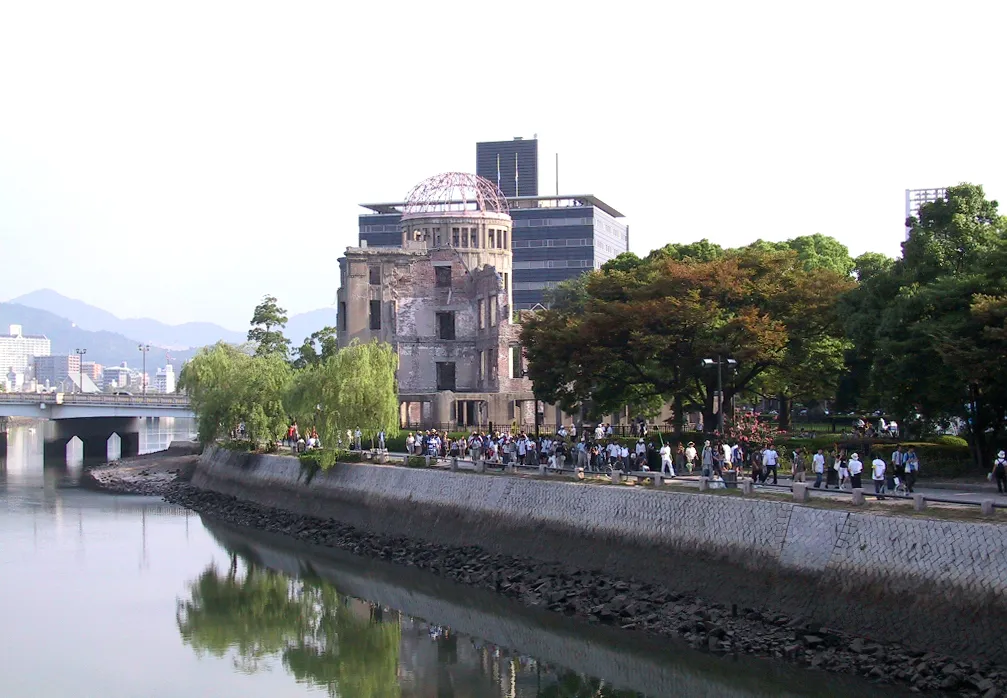
Of the roughly 70 streetcars running through Hiroshima on the morning of August 6, 1945, 108 of the operator’s 123 total cars across the network were destroyed that day. Two of the streetcars on the tracks that morning survived: cars 651 and 652, both built in 1942. Upgraded since, now accepting contactless IC cards and running with air conditioning, they still ride on their original chassis, and Hiroden’s stated policy is to keep at least one of them in regular service for as long as it can run. We didn’t know which specific car we boarded riding the network ourselves, Hiroden doesn’t publish a live roster telling riders which exact streetcar is coming, but we rode the same system those two cars have run on continuously since before the war ended.
The trams were running again three days later
The detail that puts the two surviving cars in context: Hiroshima’s streetcar network as a whole resumed service just three days after the bombing, a fact the city is openly proud of and one that’s documented across multiple histories of the network, not a single unverified claim. That rebuilding-fast instinct shaped the whole system going forward. Rather than retiring older cars as other Japanese cities shut down their own tram networks over the following decades, Hiroden bought up the retired rolling stock instead, Kyoto cars, cars from Kobe, even imported cars from Hannover and Dortmund in Germany. The oldest car still in regular service, numbered 582, is a former Kobe streetcar built before World War II. Ride the network on any given day and there’s a real chance the car under you is older than most of the buildings around it, a mix locals call, with some real pride, a moving streetcar museum rather than a transit system that happens to be old.
What the tram costs today
Hiroshima’s streetcar network runs on a flat fare now, confirmed directly from Hiroden’s own current fare page: 240 yen per adult, 120 yen per child, paid as you get off rather than bought in advance. A one-day streetcar pass runs 700 yen for adults, 350 yen for kids, or 1,000 yen and 550 yen respectively for a combined streetcar-and-ferry pass that also covers the Miyajima crossing. For a family doing more than two or three rides in a day, the pass pays for itself fast, three adult single rides alone already costs more than the day pass.
Getting there from Kyoto
We arrived via Shinkansen from Kyoto, a route we’ve written up the real booking mechanics for separately, JR Pass versus Klook versus the station machine, since that comparison doesn’t change city to city. What’s worth adding from the ride itself rather than re-deriving: a Shinkansen bathroom is a remarkably tiny, efficient piece of engineering worth a look if you’ve never used one, and it’s a detail that tends to surprise first-time riders more than the train’s top speed does.
Hiroshima-style okonomiyaki, not the Osaka kind
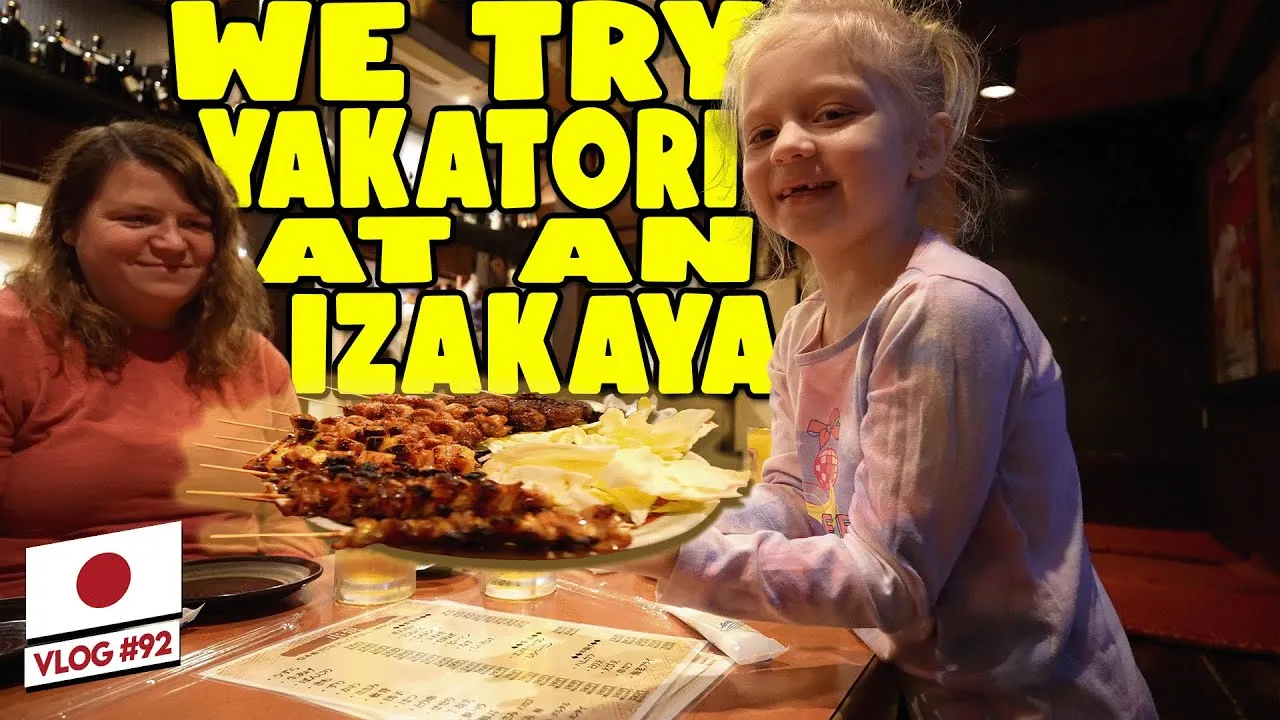
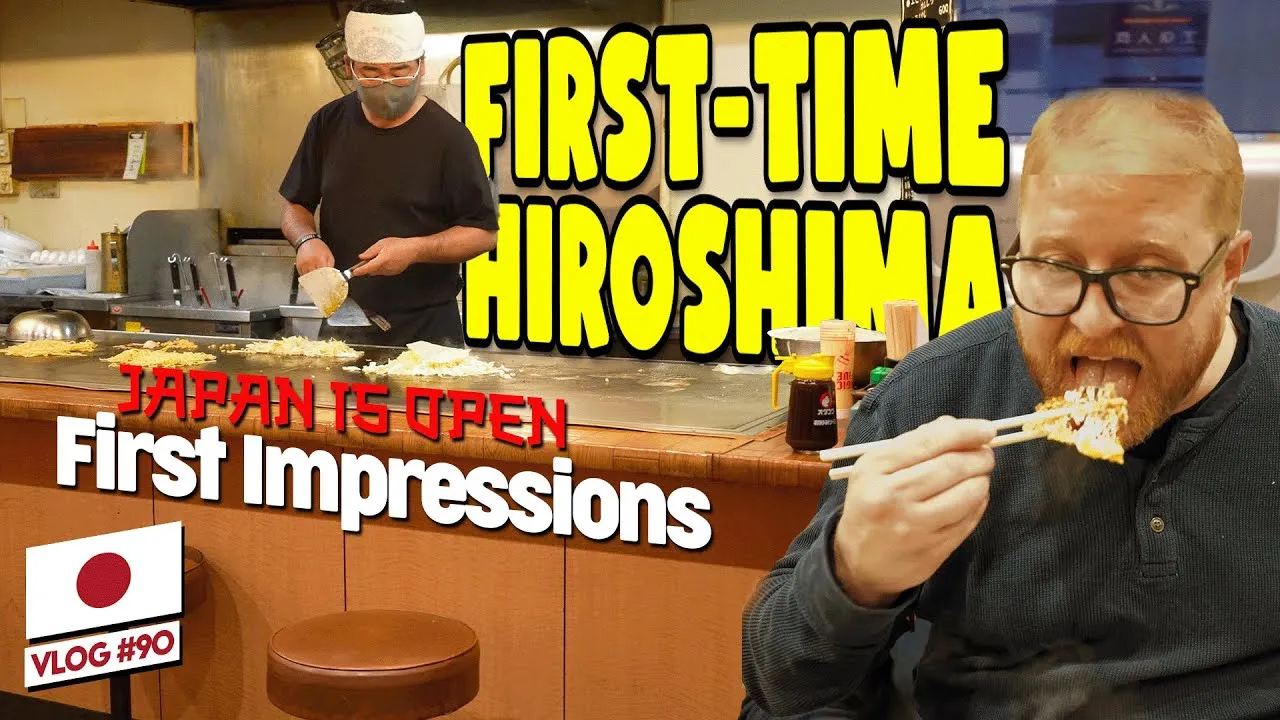
Dinner that first night was Hiroshima-style okonomiyaki, and it’s worth being specific about the “style” distinction since the two regional versions aren’t the same dish wearing a different name. Osaka-style mixes everything, batter, cabbage, and fillings, into one bowl before it hits the griddle. Hiroshima-style is layered instead: a thin crepe goes down first, then a mountain of cabbage, pork belly, and usually yakisoba or udon noodles stacked on top, a fried egg laid over the whole thing last, the layers built in front of you on the teppan rather than mixed beforehand. It’s a real, substantial meal built from a street-food dish, not a pancake-sized snack, and watching a cook build one in layers is part of the appeal before you’ve taken a single bite.
The dish has its own real postwar history, a second thread of the same rebuilding story the tram tells. It grew out of issen yoshoku, a cheap prewar snack sold from street stalls for about one sen (a hundredth of a yen) a piece. After the bombing, with sweets and proper ingredients scarce and US flour aid reaching the city, Hiroshima’s cooks adapted that simple fried-batter base into something more substantial using whatever was available. From around 1950, okonomiyaki stalls started appearing downtown and in front of Hiroshima Station, many of them run by war widows rebuilding a livelihood from a cart and a griddle, a real detail documented in multiple local histories rather than restaurant marketing. Otafuku, the sauce brand on nearly every table in the city today, started selling its okonomiyaki sauce in 1952. A standard Hiroshima-style okonomiyaki today runs roughly 900 to 1,500 yen, climbing to 1,800 to 2,300 yen for a seafood or oyster version, numbers that vary enough by stall that they’re a planning range rather than a fixed menu price.
Was it worth it
Completely, and for a reason that has nothing to do with price. A 240 yen tram ride is cheap enough that cost was never really the question, what made it worth writing about is that it’s a real, working piece of history still doing its original job eight decades later, not a museum piece behind glass. Pair the ride with a real Hiroshima-style okonomiyaki dinner and the first night in a new city turns into something more than just logistics, a flat fare streetcar from 1942 and a dish built in layers in front of you, neither one needing much of a budget to be worth doing on day one. We’ve also written up what the Peace Memorial Museum itself costs, the part of that same trip this post deliberately leaves out.