What an Eye Exam and New Glasses Actually Cost in Japan
A free walk-in eye exam and new glasses, real prices from an Osaka optician: 5,500 to over 25,000 yen depending on the chain, same-day pickup.

Published on 4 min read
On this page
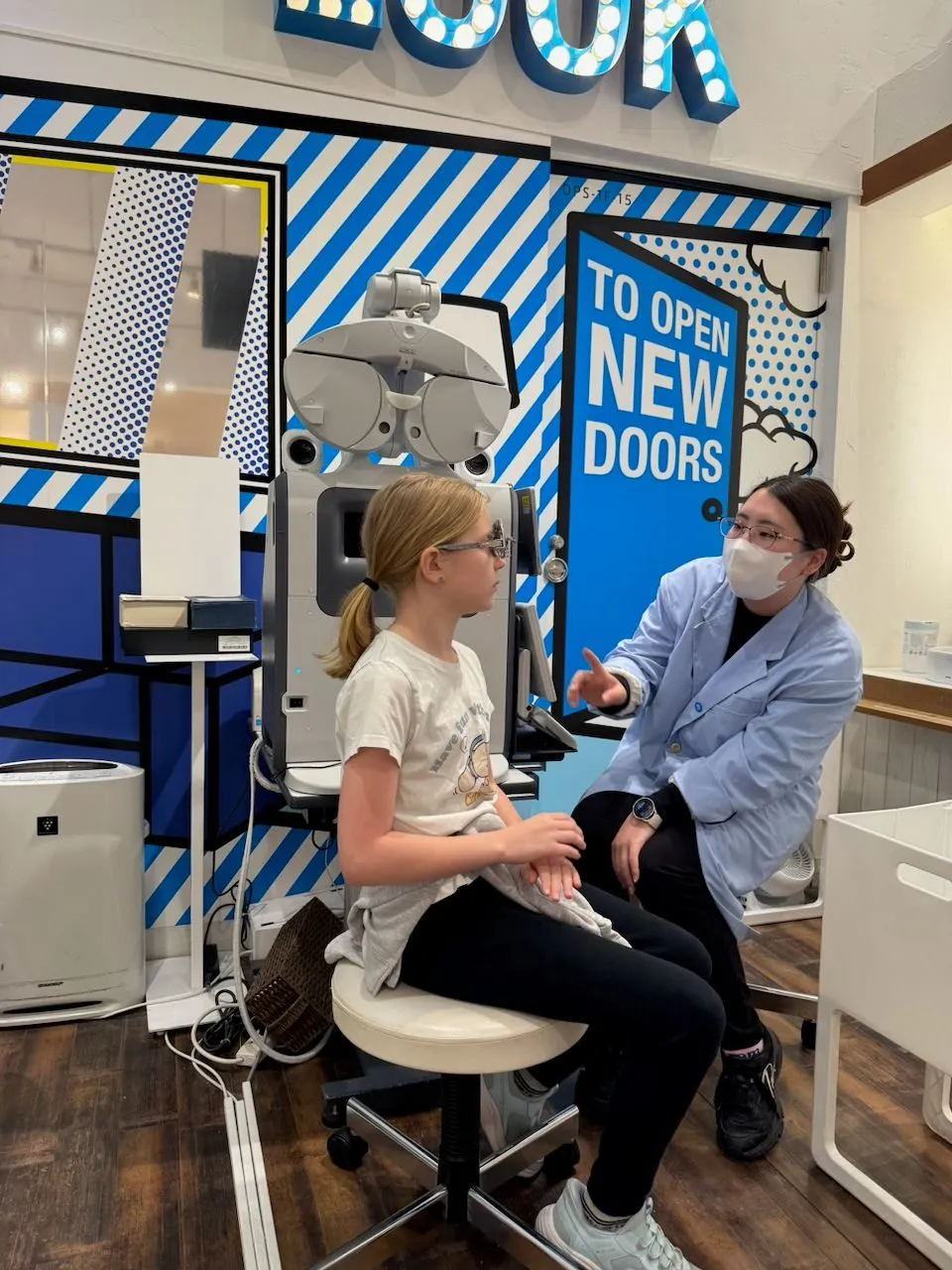
Living in Osaka for an extended stretch this spring meant we eventually ran into the kind of cost that never shows up in a normal travel budget: Lily needed her eyes checked, and possibly a new pair of glasses, while we were still there. No trip itinerary plans for this, but it turned into one of the more useful things we figured out cost-wise, because Japan’s walk-in optician chains make this dramatically easier and cheaper than we expected.
No appointment, no prescription needed
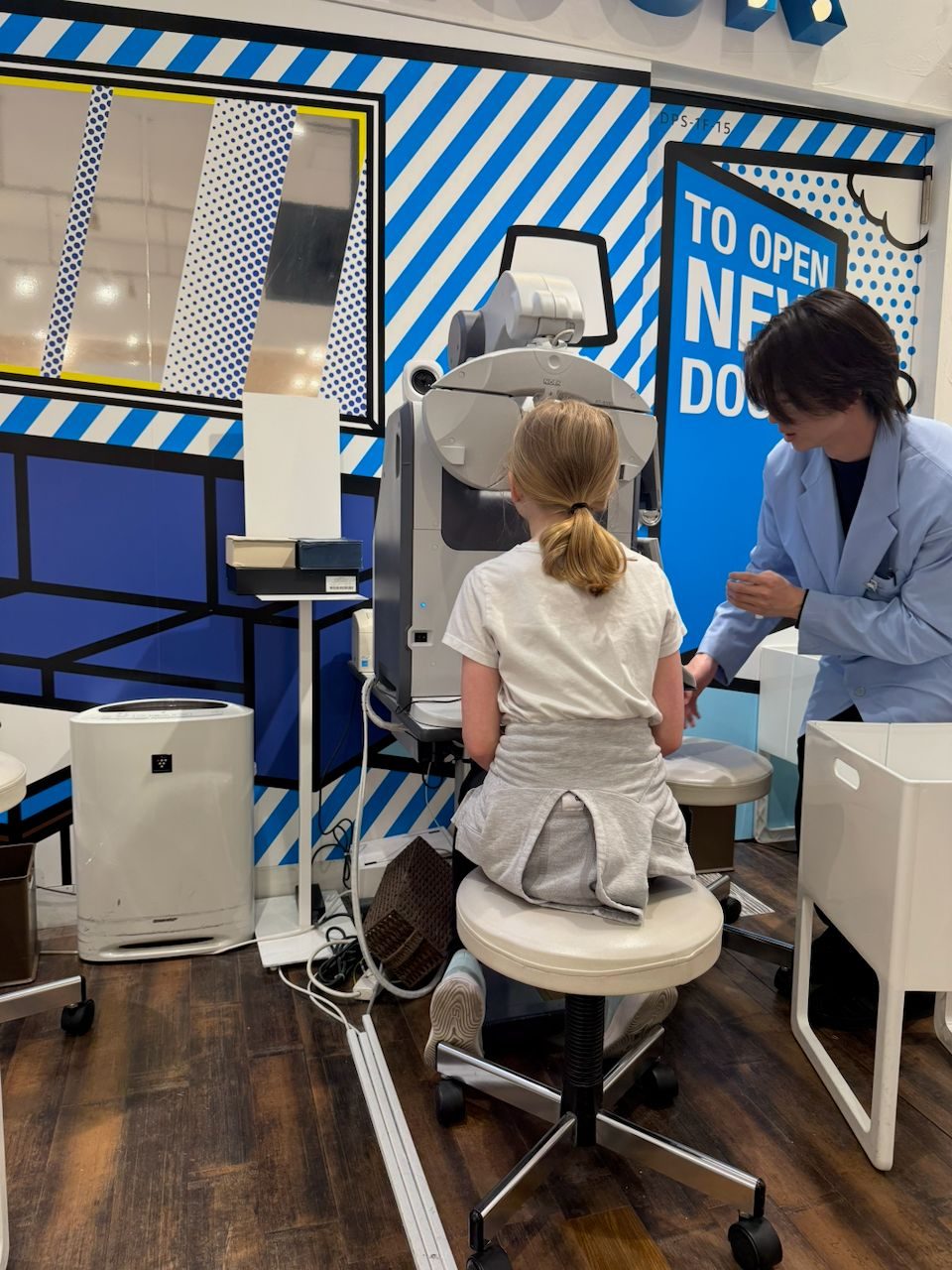
Japan’s big optician chains, JINS, Zoff, and OWNDAYS being the three you’ll see in nearly every shopping district and mall, all run the same basic model: walk in, tell the staff you want an eye exam and glasses, and get seen without booking anything ahead of time. The exam itself, done on the same equipment you’d expect at any optometrist, takes about 15 to 20 minutes and is free, bundled into the cost of the glasses rather than billed separately. No existing prescription is required going in, which matters for a traveling family since we didn’t have Lily’s current numbers on hand.
What the glasses actually cost
Pricing varies by chain, but all three keep it simple and posted rather than buried in add-on fees:
| Chain | Price range |
|---|---|
| JINS | 5,500 to 13,200 yen |
| Zoff | 5,500 / 8,800 / 13,200 yen (three flat tiers) |
| OWNDAYS | 9,800 to 25,300 yen |
Every price listed includes the frame and standard lenses, thin lenses at JINS specifically, with no separate charge tacked on afterward the way some opticians back home handle lens upgrades. Zoff’s three flat price points make it the easiest to budget for exactly, you know your total before you’ve even picked a frame. OWNDAYS tends to have more English-speaking staff on hand, which is worth factoring in if navigating the exam in Japanese sounds stressful on top of everything else.
Same-day, not a multi-visit process
The part that actually surprised us: turnaround on in-stock lenses runs about 30 minutes, meaning the whole process, exam plus finished glasses in hand, can happen in a single afternoon rather than the multi-appointment process we’re used to. For a family already juggling a full day of other plans, not needing to carve out a second trip back to collect the glasses later mattered as much as the price itself.
How that compares to home
Back in the US, a basic eye exam alone typically runs somewhere between 50 and 250 dollars without insurance depending on where you go, and a full pair of glasses, frame plus lenses, commonly lands in the 300 to 500 dollar range once you add the exam on top. Even at the higher end of the Japanese chains, OWNDAYS topping out around 25,300 yen, roughly 165 dollars at typical exchange rates, we were still looking at a total well under what an uninsured visit at home would have cost for the exam alone, let alone the glasses. That gap is worth knowing about even outside a travel emergency, it’s a real reason a long enough Japan trip could double as a chance to handle vision care while you’re already there.
Why this is worth knowing before you need it
Kids lose glasses, sit on them, or simply outgrow a prescription mid-trip, and none of that waits for a convenient moment. Knowing there’s a free, no-appointment exam and a same-day glasses turnaround sitting inside nearly every train station shopping complex in Japan turns what could be a genuinely stressful travel problem into an ordinary errand. We didn’t budget for this ahead of time because there was nothing to budget for, it wasn’t part of any plan, just something that came up while we were already there.
Was it worth it
Completely, and mostly because of how little friction it added to an already busy stretch of time. A free exam, a clearly posted price with no surprise add-ons, and glasses in hand the same day turned an unplanned, slightly worrying afternoon into a non-event. If you’re traveling with kids for any real length of time, it’s worth knowing these chains exist before you need one, rather than discovering them mid-crisis the way we did.