Japan Plug Adapters: The $8 Fix Most Travelers Need, and the $35 One a Few Do
Japan runs on 100V through the same flat two-pin plug shape as North America. What that means for your charger, your hair dryer, and whether you need an adapter or an actual voltage converter.

Published on 4 min read
On this page
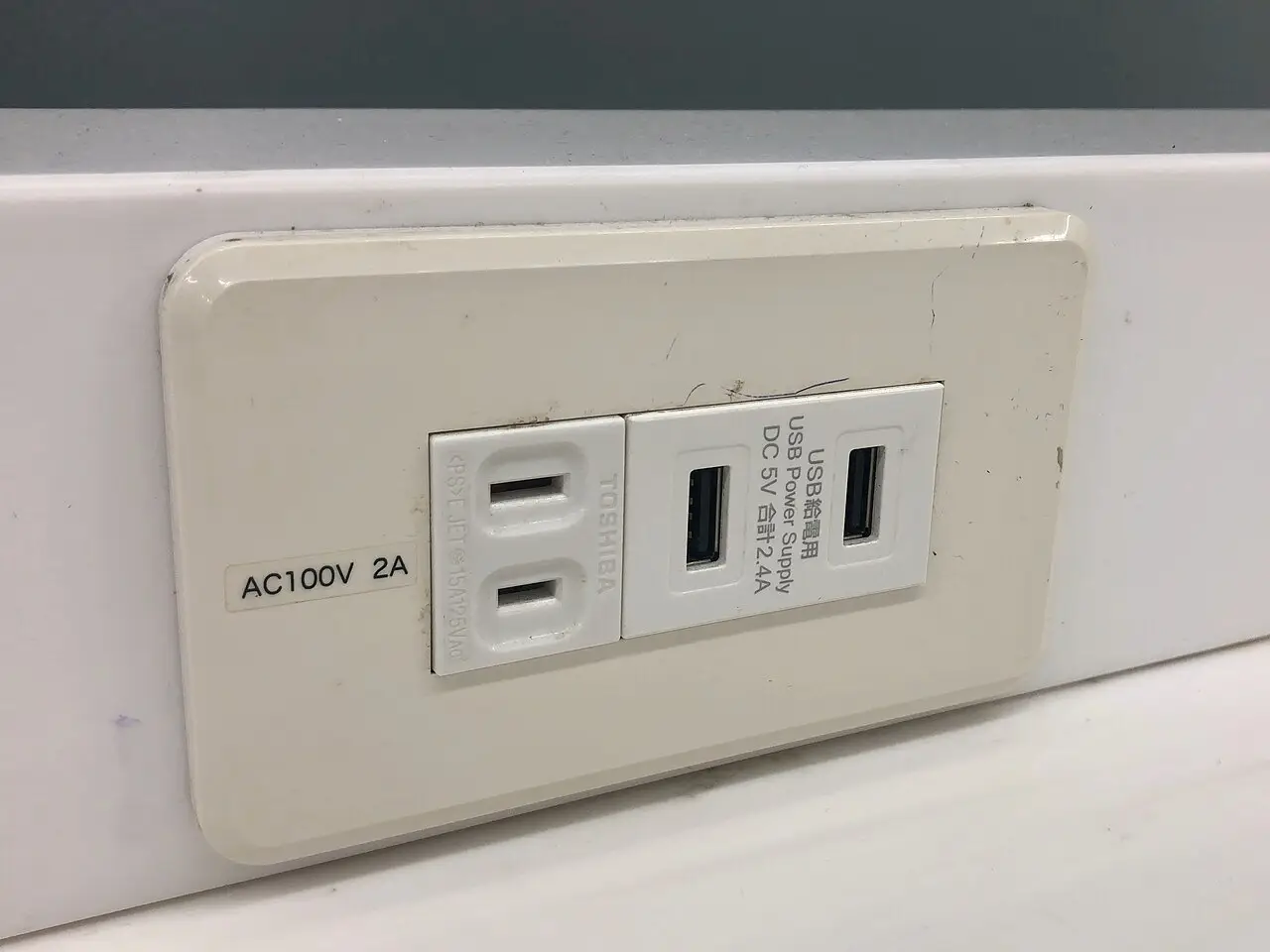
Japan’s wall outlets run at 100V, lower than the 120V most of North America uses and well under the 220-240V most of the rest of the world runs. The plug shape, though, is the same flat two parallel pins as the US, Canada, and a handful of other countries, Type A. That single fact splits every traveler into two very different packing lists, and most people land on the cheap one without realizing it.
Quick answers
Does Japan use the same plug shape as the US? Yes, Type A, the same flat two-pin shape as the US, Canada, and a handful of other countries.
What voltage does Japan use? 100V. Check a device’s label for “100-240V” to confirm it works in Japan without a converter.
Do I need a voltage converter? Only for a single-voltage 220-240V device, hair dryers most often. Anything labeled “100-240V” needs nothing extra.
Why two electrical frequencies? A Meiji-era quirk, Tokyo bought German 50Hz generators, Osaka bought American 60Hz ones, and the grids were never unified.
Who needs nothing at all
If your charger, camera, or laptop already shows “INPUT: 100-240V” printed on the brick, which most phone chargers, laptop chargers, and camera chargers do, it’s built to run on any wall outlet in the world, Japan’s 100V included. Plug it straight in if you’re coming from a Type A country, and you’re done, no adapter, no converter, nothing to buy.
The $8ish fix: a shape adapter
Coming from the UK, Europe, Australia, or most of Asia and Africa, your plug’s physical shape doesn’t match Japan’s sockets even though your device’s voltage range is fine. That’s a shape problem only, solved by a cheap plug adapter, the kind that converts a round or angled pin shape into Japan’s flat two-pin slots and does nothing to the actual electricity passing through it. A basic multi-country travel adapter covers Japan along with most other destinations in one small, light piece of gear, the kind of thing worth tossing in a bag even if you’re not sure you’ll need it that trip.
A strange bit of history behind the plug
Japan’s electricity has one more wrinkle: the frequency splits by region, 50Hz in the east (Tokyo, Yokohama) and 60Hz in the west (Osaka, Kyoto), with the line falling roughly around Shizuoka. The reason traces back to the Meiji era, when Tokyo bought its first generators from Germany, built for 50Hz, while Osaka bought American generators built for 60Hz, and the country never fully unified the two grids afterward. It’s a real, interesting piece of trivia, but for a modern traveler it rarely matters: most devices built in the last couple decades handle either frequency without a second thought, the voltage is the number worth checking on a label.

The $35-and-up fix: when you need a real converter
A shape adapter only changes the pins, not the voltage, which is where a single-voltage 220-240V device becomes the real problem. Hair dryers, curling irons, and some older or specialized electronics sold in the UK, Europe, or Australia are often built for 220-240V only, no dual-voltage range printed on the label, and plugging one straight into a 100V Japanese outlet through nothing but a shape adapter means it either barely works or doesn’t turn on at all, the step down in voltage is too big for the device to compensate for. That’s a genuine voltage problem, and the fix is a step-up transformer rated for more wattage than the device draws, not just a shape adapter with a different label on the box. A hair dryer pulling 1,500 watts needs a transformer rated well above that, not a 50-watt travel converter meant for a phone charger.
One more thing worth packing for a family
A hotel room built for one or two guests often has exactly one or two outlets within reach of the bed, not nearly enough for five people’s phones, a laptop, a camera battery, and a kid’s tablet all charging overnight. A basic power strip, the ordinary kind with no built-in transformer, solves that: it just splits one Japanese outlet into several, same 100V passing through unchanged, nothing to convert. Pack one that’s plain and unpowered, not a “smart” strip with voltage-sensitive electronics built in, and it works in Japan the same way it works at home, just with a shape adapter on the end if your plug doesn’t already match Type A.
The quick version
Check the label on whatever you’re packing before you buy anything. “100-240V” means Japan’s outlets work as-is, shape included if you’re already on Type A, or with an $8 adapter if you’re not. A single-voltage 220-240V label on something that draws real wattage, a hair dryer most often, is the one case that calls for an actual transformer, not a shape adapter pretending to be one. Most travelers, phone and laptop chargers in hand, are in the first group and can skip buying anything at all.
This post has affiliate links. How this works
Photo credits: KKPCW (Kyu3), CC BY-SA 4.0, via Wikimedia Commons.