Planning a Kamakura Day Trip? Here's What It Costs
A cost breakdown for Kamakura from Tokyo: the train, the Great Buddha, Hase-dera, the Enoden tram to Enoshima, and how a DIY day stacks up against a guided tour.
Published on 8 min read
On this page
If Kamakura is on the list for a Tokyo trip, here’s the real question before you book anything: can you do it yourself for a fraction of a guided tour’s price, and is it worth the extra planning. Short answer, yes, and the full cost breakdown below shows exactly where the money goes either way.
Why Kamakura specifically
Kamakura isn’t just a scenic coastal town with a famous statue, it was Japan’s actual seat of government for about 150 years, from 1185 (some historians mark 1192, when Minamoto no Yoritomo formally took the title of shogun) until 1333. It was the country’s first military government, the Kamakura shogunate, and Yoritomo picked the site partly because it was his family’s land and partly for its natural defenses, hills on three sides and the ocean on the fourth. The shogunate ended the way a lot of medieval power struggles did, a 1333 siege that ended with the ruling Hojo clan’s mass suicide. None of that history costs anything to learn, but it’s the reason a town this size has this many major temples and shrines packed into walking distance of each other.
Getting there
Kamakura sits about an hour from central Tokyo on the JR Yokosuka Line, direct from Tokyo Station, with the Shonan-Shinjuku Line covering the same route from Shinjuku. Sources quote the one-way fare anywhere from 920 to 1,040 yen depending on exact departure station and ticket type, call it roughly 2,000 yen round trip per adult, around $13 to $14. No reservation needed, it’s a regular commuter-rail line, not a Shinkansen route, so there’s no seat-booking fee stacked on top.
Getting between the sights once you’re there
Kamakura Station to the Great Buddha isn’t a walk most people do directly, the standard route is the Enoden tram one stop to Hase Station, about 5 minutes and roughly 200 yen, then a 7-minute walk from the station to Kotoku-in per the temple’s site (other guides put it closer to 5 to 10 depending on how busy the approach road is). That one short tram ride accounts for a chunk of why the Enoden pass pencils out even on a single-day visit, it’s doing real work connecting the station to the temple district, not just a scenic extra.
The Great Buddha, Kamakura’s main draw
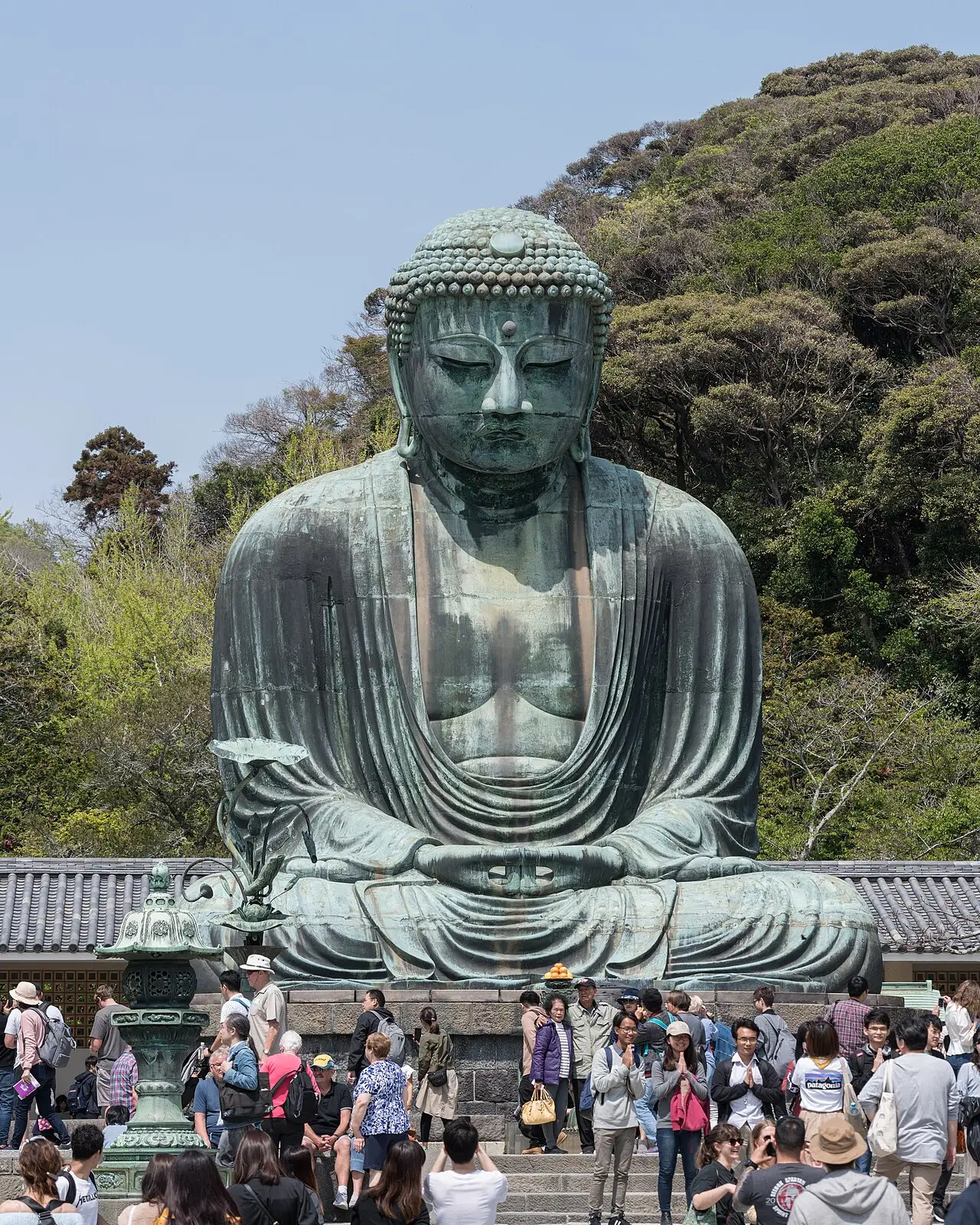
Kotoku-in, home of the 13-meter bronze Great Buddha cast in the 13th century, charges 300 yen general admission (150 yen for kids 6 to 12, under 6 free), with an extra 50 yen if you want to step inside the hollow statue itself, per the temple’s current site. Grounds are open 8:00am to 5:30pm April through September and 8:00am to 5:00pm the rest of the year, last entry 15 minutes before close; the statue’s interior keeps shorter hours, 8:00am to 4:30pm year-round, last entry 10 minutes before. That’s the cheapest real sight on this list and also the one most worth the trip, the statue has sat in the open air since a 1498 tsunami destroyed the hall that used to cover it, which is a piece of real history worth knowing before you see it bare against the sky rather than housed indoors like most Buddhist statues this size.
Hase-dera, the other temple most people pair with it
A short walk or one Enoden stop from Kotoku-in, Hase-dera runs 400 yen admission and holds one of Japan’s largest wooden Kannon statues along with a hillside garden with real ocean views over Yuigahama Beach. Most day-trip itineraries pair these two temples back to back since they’re close enough to walk between in under 15 minutes, splitting them across separate trips would mean paying the Kamakura train fare twice for no real reason.
Yuigahama Beach, a free add-on
Hase-dera sits close enough to Yuigahama Beach that it’s an easy walk down from either temple, free to visit, no admission of any kind. It’s a real working beach, not a manicured tourist overlook, popular with local surfers and swimmers in summer and a nice stretch of coastline to walk the rest of the year. Not a must-do with limited time, but a real zero-cost way to round out the temple-heavy first half of the day if the schedule has room for it.
Komachi Street, the free part of the day
Between the station and Tsurugaoka Hachimangu Shrine runs Komachi Street, a roughly 360-meter pedestrian shopping street lined with food stalls and small shops, free to walk and browse even if you don’t buy anything. This is where a real food budget comes in rather than a fixed admission fee, street snacks here run the same few-hundred-yen range as anywhere else in Japan, easy to fill up on without sitting down for a full meal.
Tsurugaoka Hachimangu, free grounds with a priced extra
Kamakura’s main shrine sits about a 10-minute walk from the station, and the precincts themselves are free to enter, confirmed via Kanagawa Prefecture’s tourism page rather than a third-party guide. The separate treasure hall runs 200 yen for adults, 100 yen for children under elementary school age, and a seasonal peony garden (roughly 500 yen) opens at certain times of year, worth checking the current season before counting on it.
The Enoden tram and the Enoshima extension
The Enoden, a scenic single-track local line connecting Kamakura to Enoshima and Fujisawa, is a real part of the experience, not just transit between sights. A one-day Noriorikun pass runs 800 yen for adults, 400 yen for kids, confirmed on Enoden’s site, and pays for itself once you ride it more than about four times in a day, which a Kamakura-plus-Enoshima itinerary easily clears. The pass also comes with small discounts at Enoshima Sea Candle, Enoshima Aquarium, and Hase-dera, each usable once. Extending the day out to Enoshima island itself adds real costs on top, an aquarium combo ticket runs somewhere around 3,000 to 3,300 yen depending on which source and which season you check, worth treating as a separate add-on decision rather than assuming it’s included in a basic Kamakura day.
What a full DIY day totals
Round trip train (2,000 yen) plus the Great Buddha (300 yen) plus Hase-dera (400 yen) plus the Enoden pass (800 yen) plus a reasonable food and incidentals budget lands a realistic DIY day somewhere between 4,000 and 6,000 yen per adult, roughly $27 to $40, before any Enoshima extension. That’s consistent with independent estimates from multiple sources, not a number we’re inventing, and it covers the classic Kamakura route most first-time visitors are after.
The guided alternative, and what it buys you
A real bookable half-day walking tour covering Kotoku-in runs around $177 per adult on Expedia’s current listing, a two-hour English-guided tour starting mid-morning. That’s roughly four to six times the DIY cost for the same core sight, the real value add is a guide who can explain what you’re looking at in real time and handle the logistics, not a cheaper way to see the Buddha. Longer, more comprehensive guided days covering Hase-dera, Komachi Street, and Tsurugaoka Hachimangu together run considerably higher, some full-day licensed-guide options price well past $500 per person for a private group. There’s a real middle ground too: bus tours bundling Kamakura with Enoshima from Shinjuku show up priced anywhere from roughly 8,765 to 15,500 yen depending on group size and inclusions, cheaper than a private walking tour but still well above DIY, with the tradeoff that bus tours move the group on a fixed schedule rather than letting anyone linger at whichever temple grabs them most.
How it stacks up against the other real day trips
We’ve already covered two other real Tokyo-area day trips on cost and logistics, Hakone and a guided Mt Fuji and Hakone tour, both of which run meaningfully higher than Kamakura once transit passes and attraction tickets stack up, Hakone in particular involves multiple transport modes (train, bus, cable car, ropeway) that Kamakura simply doesn’t need. Kamakura is the cheaper, simpler day out of the two, one train line in, one tram handling the local hop, no multi-leg transit pass required unless Enoshima gets added to the day. If budget or planning time is the deciding factor between the two, Kamakura is the easier yes.
So, DIY or guided
For a family that’s comfortable reading a train schedule and a shrine’s opening hours off a phone, Kamakura is one of the easier day trips out of Tokyo to do without a guide, the sights are walkable distances apart, the Enoden handles the one leg that isn’t, and nothing on this list requires an advance reservation. A guided tour earns its price when the value is the narration and the handled logistics, not when it’s simply a pricier way to stand in front of the same statue. For most families, a train ticket, a few hundred yen in temple admissions, and a Noriorikun pass gets the same real day for a fraction of the cost.
This post has affiliate links. How this works