Nihon Minkaen: Kawasaki's Open-Air Folk Museum Costs 550 Yen, Kids Get In Free
Nihon Minkaen in Kawasaki has 25 relocated Edo period buildings to walk through. Real 2026 admission price, what it includes, and how to get there from Tokyo.

Published on 2 min read
On this page
Nihon Minkaen doesn’t show up on most Tokyo day trip lists, it’s a municipal museum in suburban Kawasaki, not a headline attraction, and that’s exactly why it was quiet when we went. Twenty-five actual Edo period buildings, real farmhouses, samurai residences, merchant houses, a shrine, even a kabuki stage, were relocated here from all over Japan and set up as a walkable open-air village. We went on a clear autumn afternoon in 2023 and had entire houses to ourselves.
What it actually costs
| Ticket | Price |
|---|---|
| Adult | 550 yen |
| High school or university student, or senior (65+) | 330 yen (bring ID) |
| Middle school age and younger | Free |
For our family that day, two adult tickets was the entire admission cost, all three girls were under the free cutoff. 1,100 yen got the five of us into 25 historic buildings for an afternoon.
What’s actually there
The buildings themselves are the draw, real relocated structures you walk in and around rather than replicas behind glass, including a gassho-zukuri farmhouse with the steep thatched roof style from the Shirakawa-go region. Beyond just walking through:
- Indigo dyeing workshops run daily for an extra fee, dye your own handkerchief or bandana to take home.
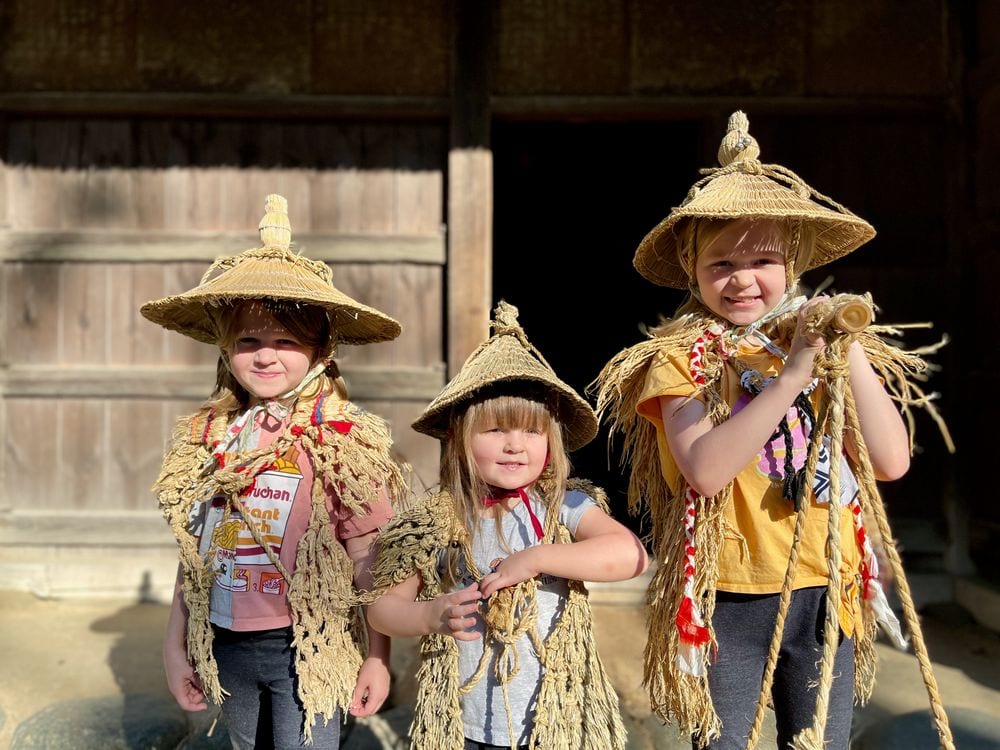
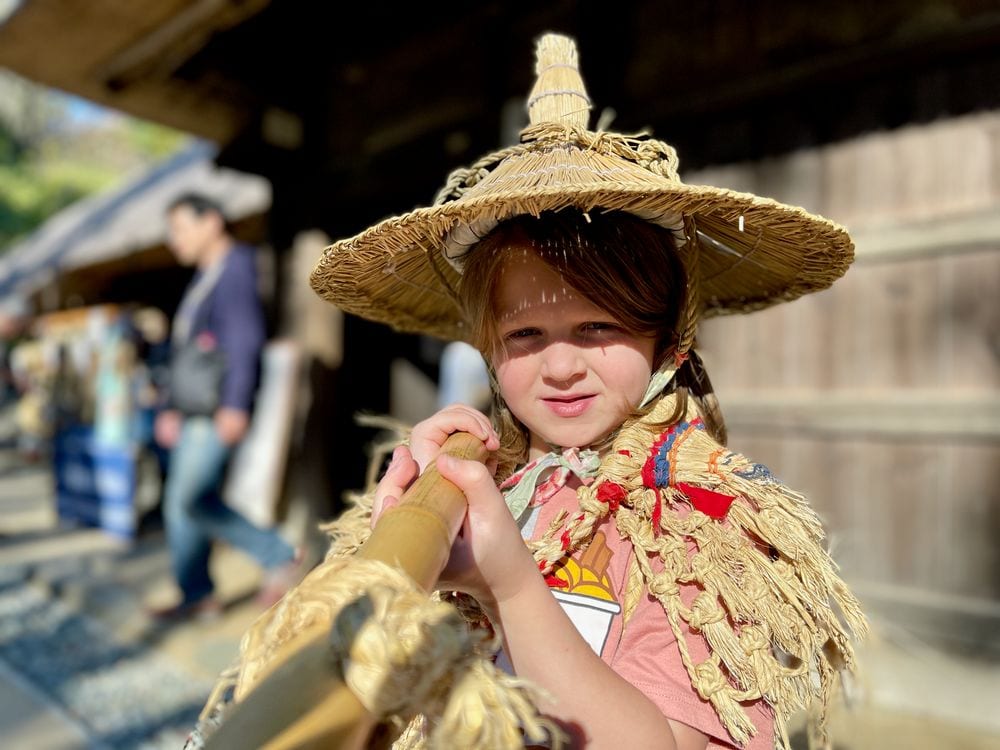
- Weekend craft demonstrations rotate through straw and bamboo craft making, cloth weaving, and other traditional skills, this is where the girls ended up in full straw hats and capes, a hands-on cultural demonstration happening the day we visited rather than something guaranteed every single day.
- A soba restaurant operates inside one of the old farmhouses, if you want lunch without leaving the grounds.
Getting there from Tokyo
- Odakyu Odawara Line: about 20 minutes by express train from Shinjuku (270 yen) to Mukogaoka-Yuen Station, then a 15 minute walk.
- JR Nambu Line: about 30 minutes from Kawasaki Station (350 yen) to Noborito Station, then a 25 minute walk.
Open 9:30 to 17:00 (9:30 to 16:30 from November through February), last admission 30 minutes before close, closed Mondays.
Was it worth it
For 1,100 yen total, this was one of the least crowded, most hands-on afternoons we’ve had in Japan. It’s not flashy, there’s no ride, no photo-op mascot, just genuine old buildings and space to explore them at your own pace, which made it an easy, low-key stop on a trip otherwise full of lines and timed entry slots.