Tokyo Metro Museum: 220 Yen for Japan's First Subway Car
The Tokyo Metro Museum in Edogawa costs 220 yen for adults, 100 for kids. Real Ginza Line history, a driving simulator, and how to get there.

Published on 4 min read
On this page
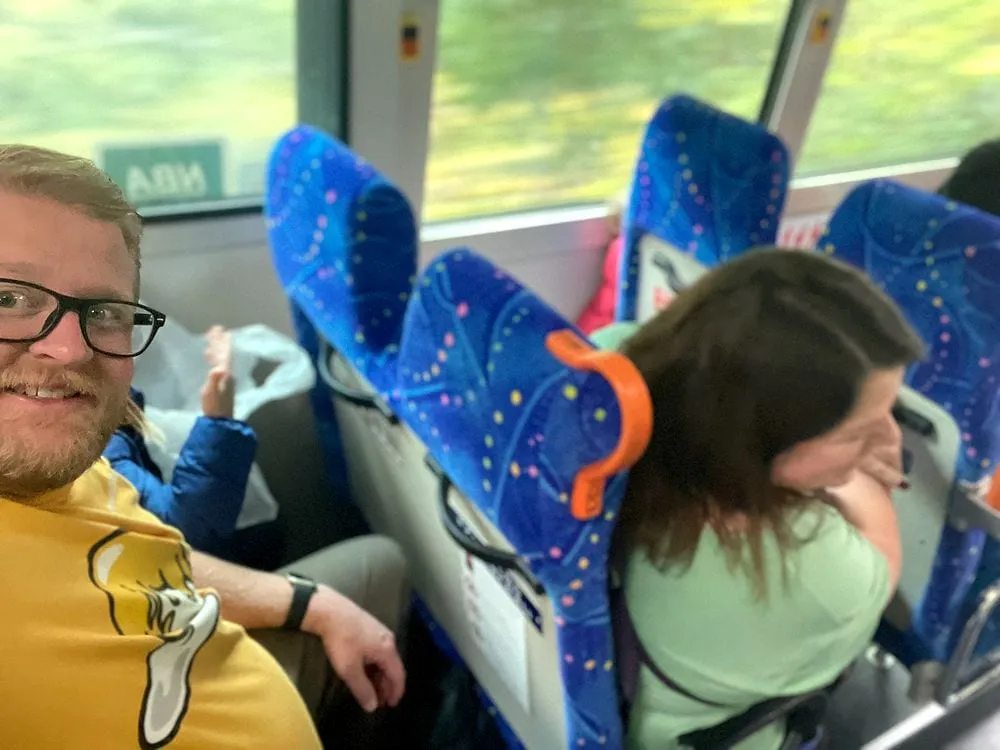
We found the Tokyo Metro Museum, known locally as Chikahaku, almost by accident in November 2023, tucked right underneath Kasai Station on the Tozai Line. It’s the first post we’ve set in Edogawa ward, and it might be the cheapest genuinely well done museum we’ve written up yet, 220 yen a head for adults.
What it costs
| Ticket | Price |
|---|---|
| Adult | 220 yen |
| Child (age 4 through junior high) | 100 yen |
| Under 4 | Free |
Groups of 20 or more get a discounted rate (155 yen adult, 80 yen child) with a phone reservation ahead of time. Open 10:00 to 17:00, last admission 16:30, closed Mondays and over the New Year period. You can pay at the ticket machine with cash or tap a Suica or Pasmo directly, no separate IC card top-up needed first.
What’s actually inside for that price
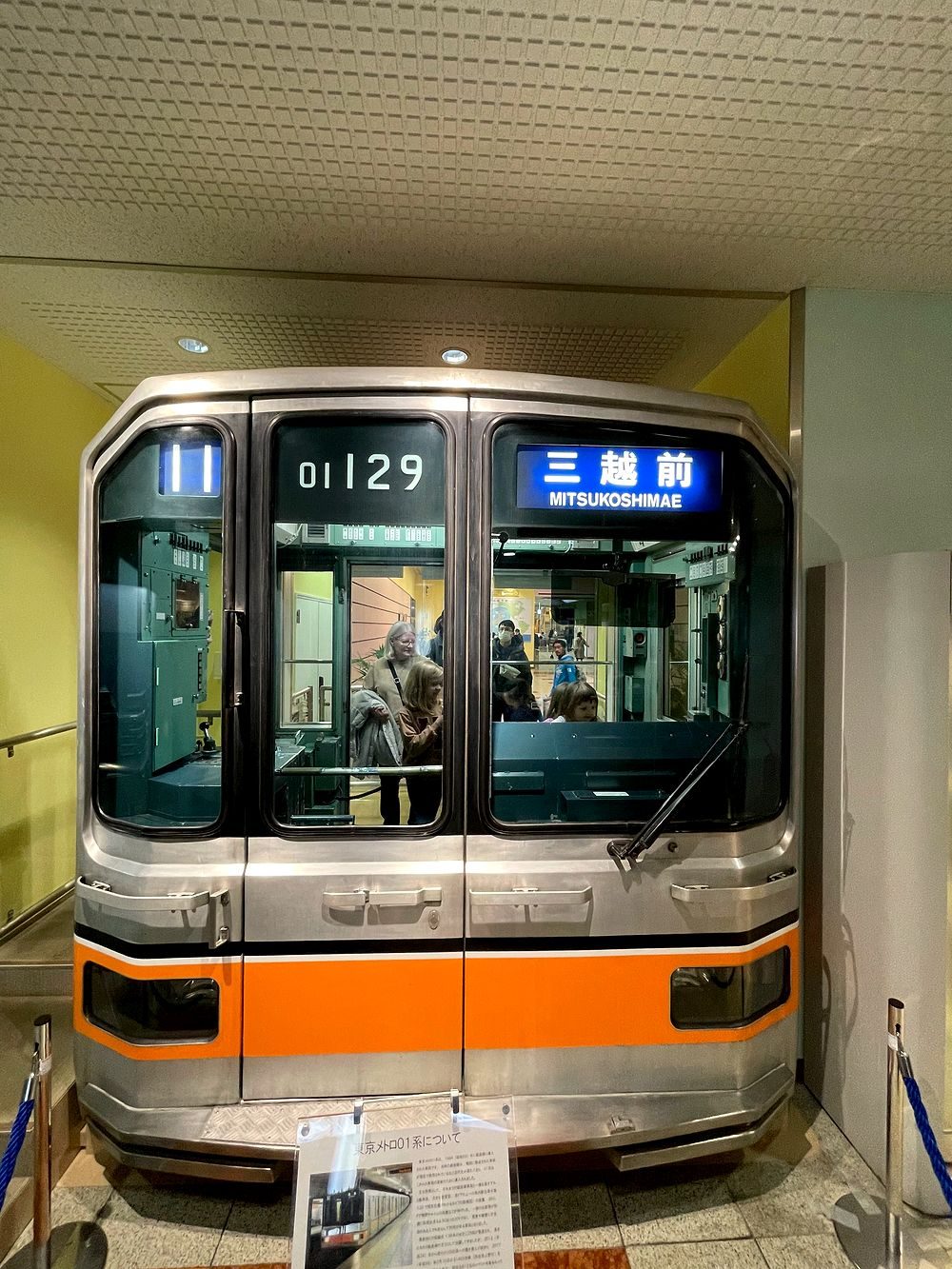
The centerpiece is Car 1001, the very first subway car to run on the Ginza Line when it opened in 1927, Asia’s first subway line, and the car has since been designated an Important Cultural Property of Japan. It sits right past the entrance alongside Marunouchi Line Car #301, so the museum leads with genuine historical rolling stock rather than easing into it.
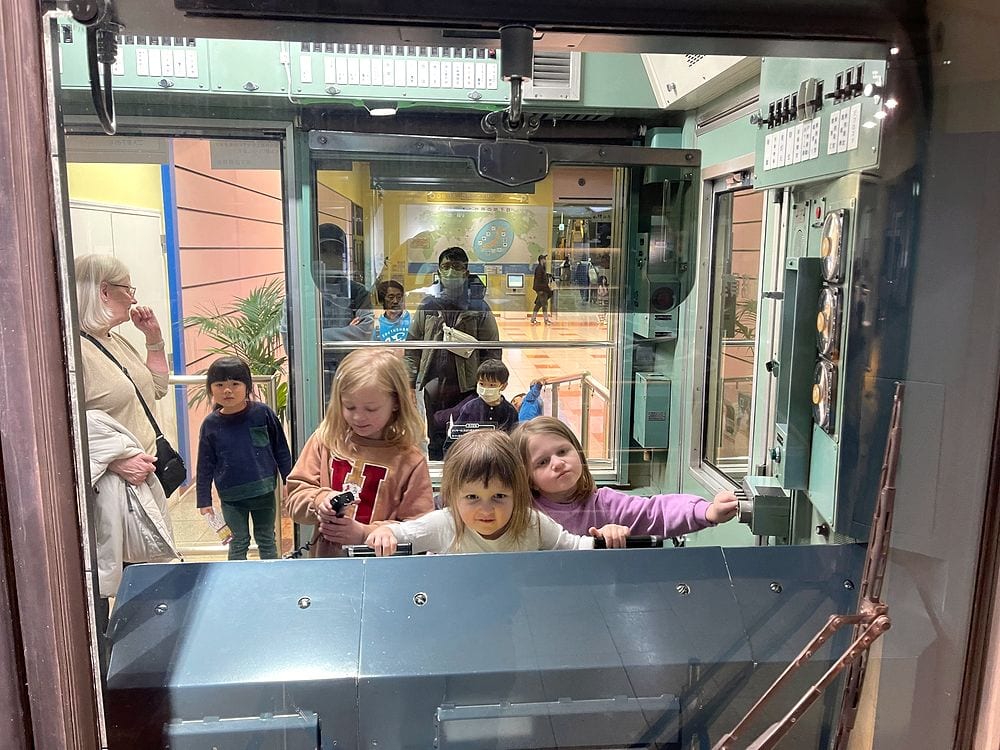
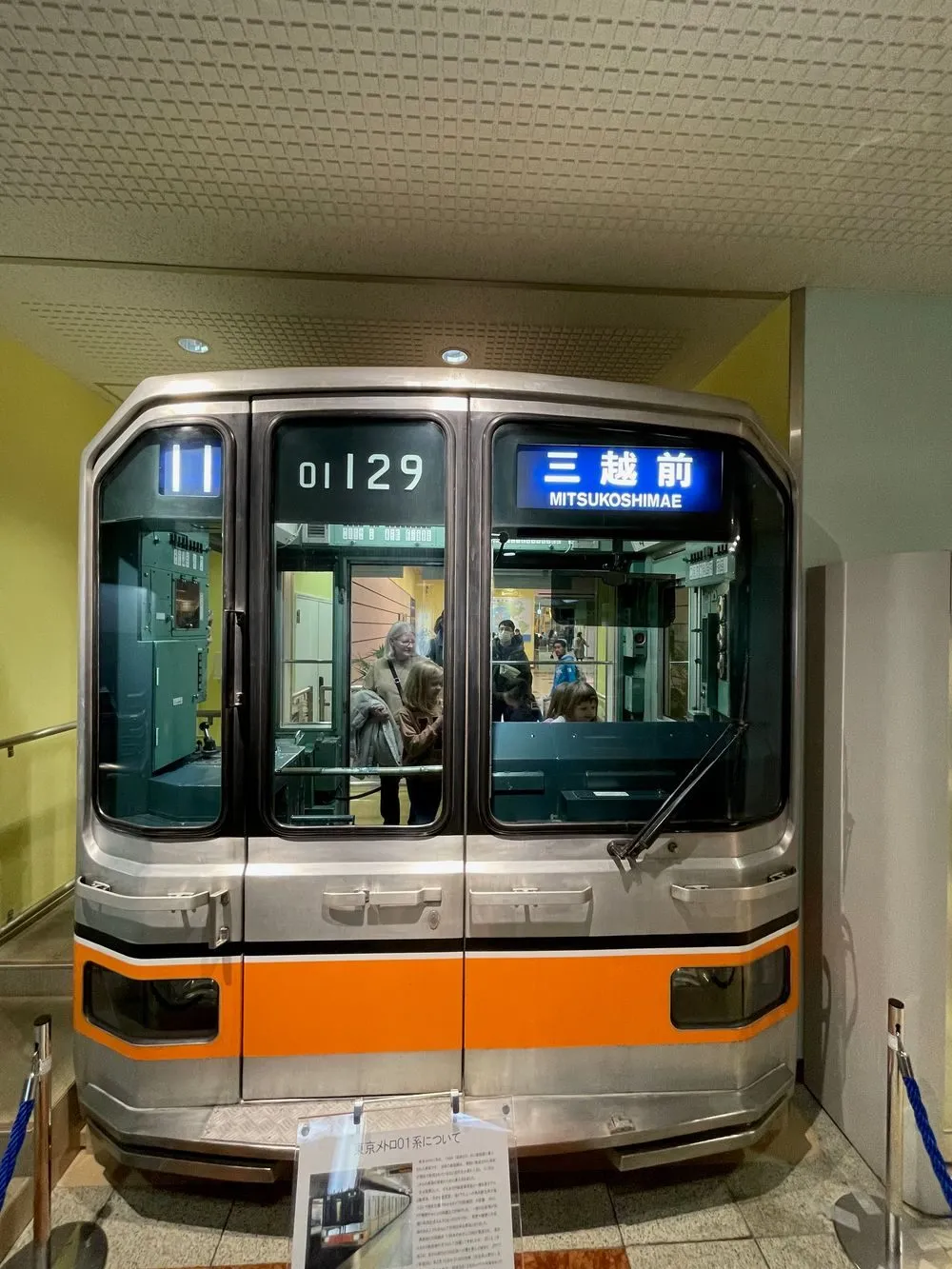
Past the historic cars, the museum’s other draw is a set of full motion driving simulators, kids and adults can sit in a real subway cab replica and drive a simulated route, shaking and vibration included, included in the general admission rather than a separate ticket on top. For 220 yen, that alone makes the museum feel underpriced relative to what’s inside.
Walk in through an actual subway ticket gate and the exhibits are organized in order, past to present to future, starting with a reconstruction of Ueno Station as it looked in 1927 when the Ginza Line first opened as Asia’s first subway line. From there the museum moves into how the tunnels themselves get built, life-size tunnel boring machine sections, cutaway displays showing what a finished tunnel cross-section actually looks like, and hands-on stands explaining track switches and power supply systems in terms a kid can follow without a lecture. The centerpiece for us was the Metro Panorama, a giant diorama of central Tokyo with the entire subway network modeled in miniature, trains actually running on it, timed shows with music and narration four times a day.
Getting there, and a real ticket that covers it
The museum sits directly at Kasai Station on the Tozai Line, worth noting that express trains skip this station, so check you’re on a local or rapid service before you board. If you’re planning a fuller day of Tokyo Metro riding around the museum visit, an unlimited ride pass is worth pricing out against paying per trip:
Tokyo Subway Ticket, 24/48/72 hour unlimited rides
These are affiliate links. We may earn a commission if you book through them, at no extra cost to you. See our legal notice.
Klook code: ADAMANDLINDSKLOOK
Click through to Klook below, then enter code ADAMANDLINDSKLOOK at checkout. This is a real affiliate code, we may earn a commission on the booking too, at no extra cost to you. See our legal notice.
10% off, New Klook user
$50 minimum spend, capped at $50 off, one time use. Valid through December 31, 2026.
3% off, Existing Klook user
$50 minimum spend, capped at $50 off, up to three uses. Valid through December 31, 2026.
1% off, Selected things to do and mobility, including teamLab Planets TOKYO, teamLab Borderless, teamLab Biovortex Kyoto, Japan Shinkansen tickets, SHIBUYA SKY, Warner Bros. Studio Tour Tokyo, and Osaka Amazing Pass
No stated minimum spend for this tier. Valid through December 31, 2026.
50% off, eSIM, new eSIM customers only
No minimum spend, capped at $1.50 saved, one time use. Valid through December 31, 2026.
It covers every Tokyo Metro and Toei Subway line, over 250 stops, redeemable any day within 180 days of booking, and a single 72 hour pass for the family clears the $50 cart minimum for the code’s general tiers easily.
How it compares to the bigger train museum
If train obsessed kids have already done the much larger Railway Museum out in Saitama, run by JR East rather than Tokyo Metro, it’s worth knowing Chikahaku is a genuinely different, smaller scale stop rather than a lesser version of the same thing. The Saitama museum runs 1,600 yen for an adult ticket at the door, over seven times what Chikahaku charges, and centers on JR’s national rail network and Shinkansen history; Chikahaku is compact, cheap, and entirely about the city subway system specifically, the trains actually running under the streets you’ve been walking that day. Neither replaces the other, and 220 yen makes Chikahaku an easy add-on rather than a full day’s plan on its own.
Was it worth it
For a stop that ran us under a thousand yen for two adults and three kids combined, yes, easily. It’s not a flashy, marketed attraction the way Tokyo’s bigger museums are, we found it because Kasai Station happened to be on our route that day, but a museum built around a genuine piece of national transit history, a hands-on driving simulator, and a diorama the kids wanted to watch run twice, at a price that barely registers against a single subway fare, earned its spot on the list without needing to be a headline destination.