Sumida River Walk: Free, and Lit Up for Winter When Grandparents Found Us
A free pedestrian bridge between Asakusa and Skytree, strung with lights the night Adam's parents flew in to meet us. Real history of the walkway, no admission either way.

Published on 6 min read
On this page
Free. The Sumida River Walk, the pedestrian bridge connecting Asakusa and the Tokyo Skytree side of the river, costs nothing to cross, any hour it’s open, lit up for a winter lantern event or not.
What the bridge is
The Sumida River Walk is a pedestrian passage attached to the south side of the Tobu Railway’s own Sumida River railway bridge, the same elevated line running trains between Asakusa Station and Tokyo Skytree Station. It isn’t a separate structure, it rides alongside the existing railway crossing: roughly 160 meters long, 2.5 meters wide, built of steel and reinforced concrete. Partway across, a short stretch of the floor is glass, a straight look down at the water underneath. Tobu Railway’s own opening notice puts the date in June 2020, built together with United Design, Kajima, Tolex, and JR Soken Engineering, and it’s been free and open to the public ever since.
Getting there without paying for it
Tobu’s own figures put the walk from Asakusa Station across the bridge to Tokyo Skytree Town at about 18 minutes on foot, a touch longer than an earlier estimate of 15 minutes the company gave when the walkway first opened, likely just a more conservative number once they had real foot traffic to measure against. The same trip by train, one stop on the Tobu Skytree Line to Tokyo Skytree Station, takes roughly 2 to 3 minutes. We couldn’t pin down a confirmed fare for that single stop from Tobu’s own published tables, short IC card hops like this vary by exact station pair, so we’re not guessing a number here. What’s certain either way: the walk costs nothing at all, and on a clear evening it’s also the only one of the two options with a view.
The name is a pun on a post we’ve already written
The commercial development built into the space under the same elevated railway, shops and restaurants tucked beneath the tracks, is called Tokyo Mizumachi, “mizu” meaning water. It’s a deliberate pair with Tokyo Solamachi, “sora” meaning sky, the 312-shop mall at the base of Skytree itself that we’ve already written about. One town named for the water side of the river, one for the sky side of the tower, same development era, same part of Tokyo, a real naming detail rather than a coincidence. The railway bridge and the elevated track structure were also repainted in what Tobu calls “Skytree White” as part of the same project, specifically so the crossing would read as visually unified with the tower rather than looking like unrelated infrastructure bolted onto an old rail line.
Why it was lit up the night we crossed it
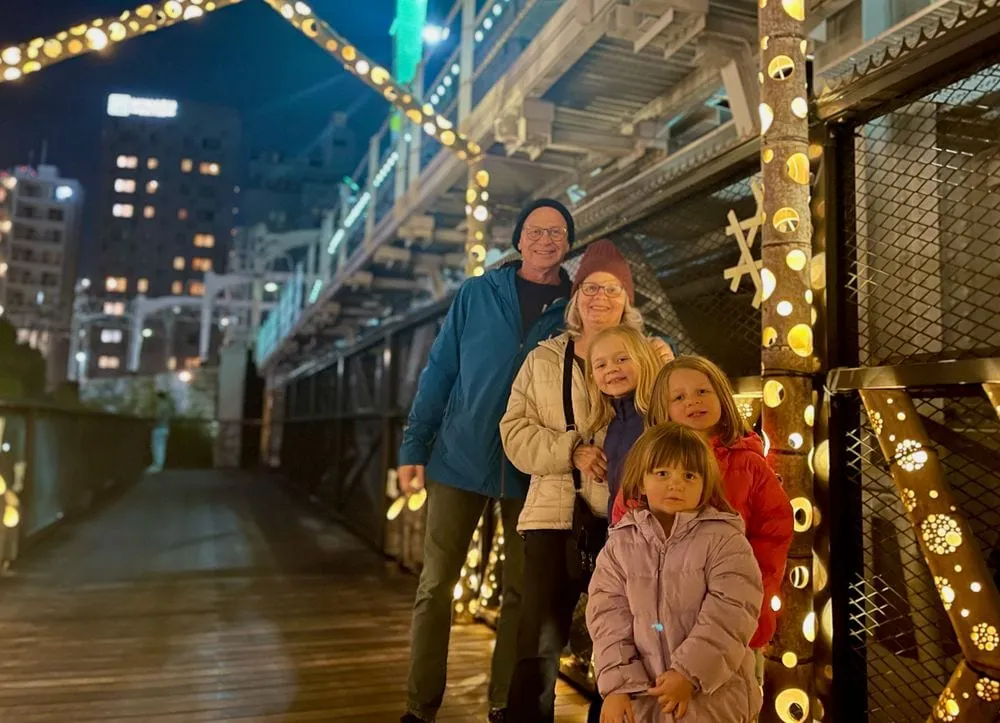
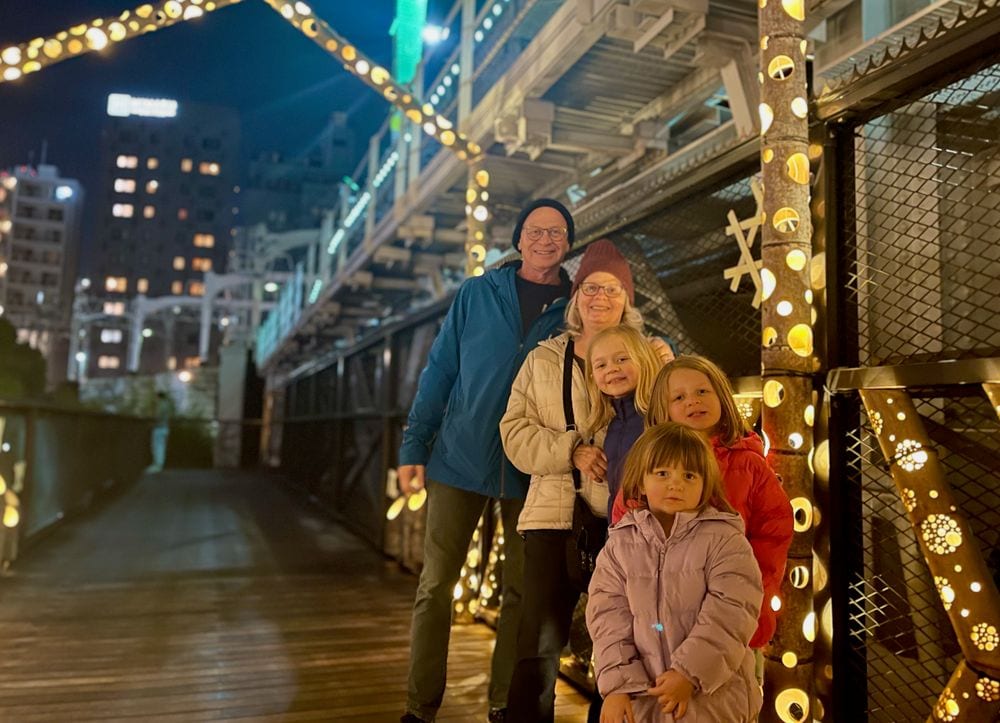
Our photo is dated November 17, 2023. That date lines up with a real, documented seasonal event: Tobu Railway ran a bamboo lantern illumination, part of a “Tokyo Shitamachi Tour” lighting program, along the Sumida River Walk and the adjoining Soyokaze Hiroba plaza in Sumida Park from November 9, 2023 through January 31, 2024. The warm lattice of lights strung along the railings in the photo isn’t the bridge’s baseline nightly lighting, which runs every evening from sunset to the last train in a style matched to Skytree’s own, it’s this specific limited-run winter display, active for exactly the window our visit happened to fall inside. We didn’t plan the timing around it, it was just there the night we crossed. The same lantern route ran further than just our stretch of bridge, connecting Ushijima Shrine on the Sumida side through Sumida Park and the river walk to Tokyo Skytree itself, one continuous lit path tying together several free stops rather than a single isolated display.
Two things to look for if you cross it
Beyond the lights, the bridge has two permanent details worth watching for on any visit, lit up or not. The glass floor section partway across lets you look straight down at the Sumida River while you’re standing on it, not a photo opportunity so much as a different sensation mid crossing. And Skytree’s own mascot character, Sorakara-chan, is worked into the bridge’s design in two hidden spots along the walk, a small detail Tobu added rather than announced loudly, the kind of thing regular crossers notice before first time visitors do.
Why we were on the bridge at all
Adam’s parents, Kim and Terry, flew from the US to meet us partway through this stretch of the trip, an addition to the itinerary rather than something planned from the start. The three girls hadn’t seen their grandparents in person in months. We’d been staying in the Asakusa area, Tokyo Skytree was an easy walk across the river, and the bridge connecting the two sides turned out to be the obvious place to end up after dark on the night they landed: free to cross, already lit, and close to where everyone was staying. Flying two more adults across the Pacific on top of a family trip already in progress isn’t a small logistical lift, but we don’t have the flight cost or booking details to put a real number on it here, and that’s not ours to publish. What we do have is the setting: a free bridge, lit for a winter event neither side of the family knew about in advance, the first place everyone stood together after an arrival that had been months in the planning on one end and a surprise on the other.
What else is free along the same stretch
The Sumida River Walk sits inside a run of free riverside space. Sumida Park itself, on both the Taito and Sumida sides of the river, has no admission at any time of year, cherry blossoms in spring, the same bamboo lantern displays in winter most years since. The bridge is open 7:00 to 22:00 with no stated closed days, and bicycles are allowed across only if walked, not ridden, worth knowing if anyone’s tempted to pedal straight through. None of it requires a ticket, a reservation, or a minimum purchase, a rarity close to a landmark as recognizable as Skytree.
What costs money nearby, if you want it to
Nothing about the walk itself is bookable, there’s no ticket to buy for crossing a free bridge. Two things a short distance away are: the Skytree observation decks themselves, which we’ve already written up with real current pricing and a Klook listing, and the Sumida River water bus routes departing from Asakusa, which we covered alongside the real Flamme d’Or sculpture a few blocks from this same bridge, with its own Klook listing and discount code. Both of those posts already carry the relevant affiliate links for this stretch of river, repeating them here would just be the same link twice rather than anything new, so we’re pointing to them instead of duplicating.
Was it worth crossing
Completely, and it cost exactly nothing either direction. A free pedestrian bridge between two of Tokyo’s bigger draws turned out to be the actual backdrop for a real family moment, grandparents arriving mid trip, lit for a winter event we hadn’t gone looking for, the kind of free infrastructure that ends up mattering more than anything we paid for that day.