Tokyo's Ginkgo Trees: When They Turn Yellow, and Why They're Everywhere
A free apartment-window view of Tokyo's ginkgo trees turning gold, right on schedule. Real history of the city's official tree, no ticket required.

Published on 4 min read
On this page
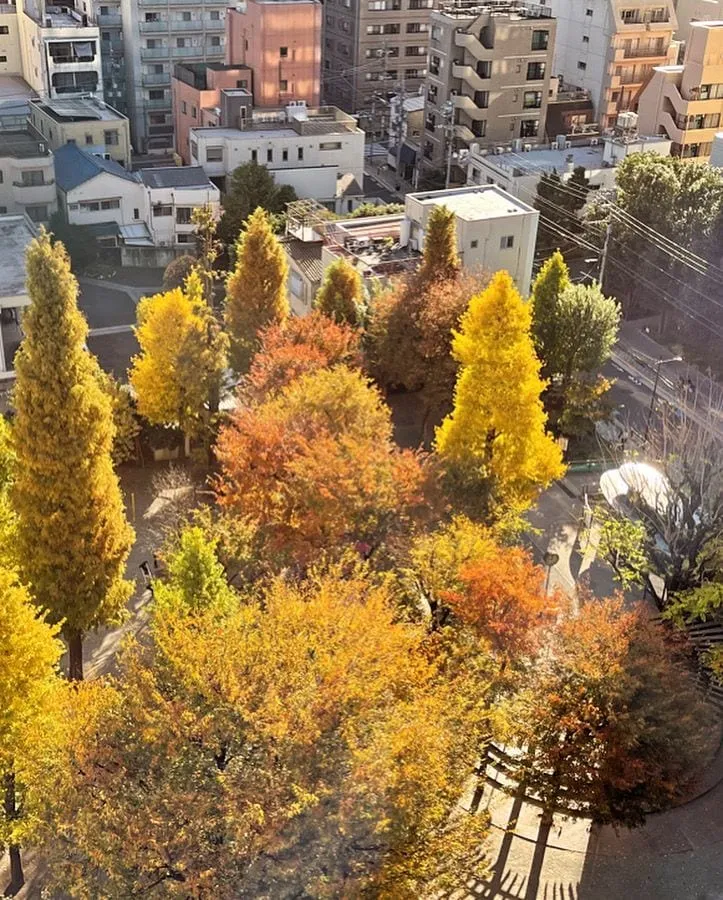
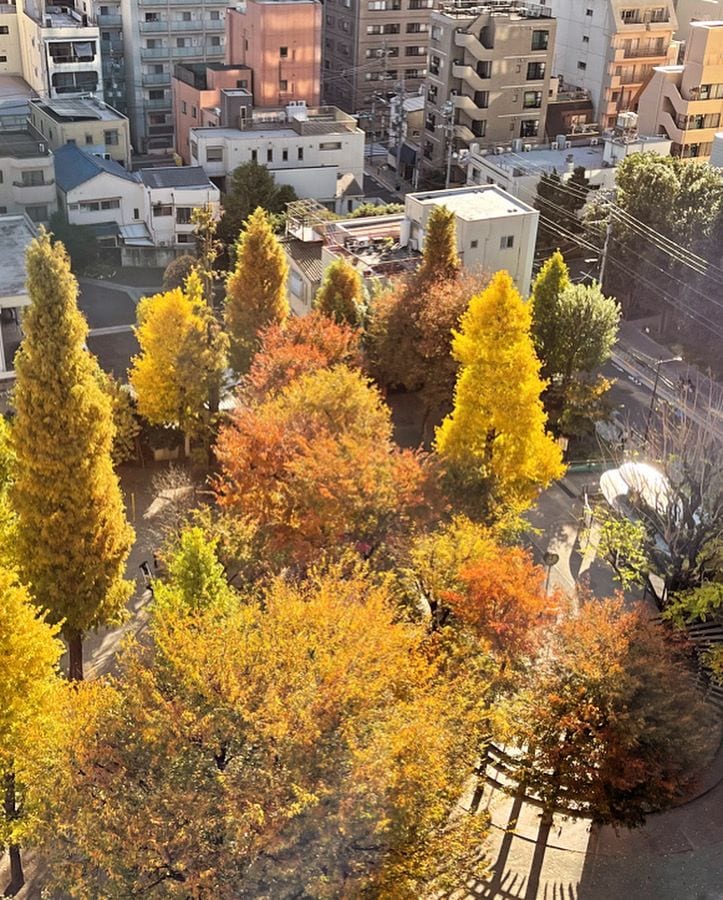
November 29, 2023, a straight-down view from our Taito apartment window, a small neighborhood green space turned almost entirely gold and orange. We never found out the park’s official name. We didn’t need to, the view was free either way, and the timing turned out to match a real, documented pattern rather than luck.
The yellow trees have an official status
The ginkgo, icho in Japanese, has been Tokyo’s official tree since November 8, 1996, chosen by the metropolitan government and worked into the city’s own fan-shaped leaf symbol. No single confirmed reason explains why ginkgo specifically won the designation over anything else, the closest documented explanation is practical rather than ceremonial: the tree is everywhere already, a common roadside planting across the city, and it tolerates urban pollution and compacted soil better than most species, a living fossil (ginkgo predates most other living tree lineages) that just happens to hold up well on a Tokyo sidewalk. We’re not picking a single origin story as confirmed here, the roadside-prevalence explanation is the one that shows up most, not an official government statement.
Our timing lined up with the real average
Our photo is dated November 29. Tokyo’s ginkgo trees typically reach peak yellow within a few days of November 26 or 27 in an average year, with full color sometimes stretching into the first week of December depending on how warm or cold the preceding weeks ran. Maples usually peak slightly later, into early December. A photo taken November 29 lands almost exactly inside that typical window, not an unusual late-autumn fluke but close to the calendar date Tokyo’s own trees average most years. Warmer autumns push the color later, a sudden cold snap pulls it earlier, so the exact date shifts year to year, but the general stretch, late November into early December, holds up consistently across the sources we checked.
A tree with a longer history than most living things
Ginkgo is an old species, a lineage that predates most of the trees around it by a wide margin, often described as a living fossil because its closest relatives died out tens of millions of years ago while ginkgo itself kept going. That same toughness showed up in a real, well documented way in Hiroshima: ginkgo trees near the 1945 atomic bombing survived in far greater numbers than other species nearby, and several are still standing today, known in Japan as hibakujumoku, “survivor trees.” Seeds and seedlings from those specific trees have since been sent to gardens around the world as living symbols of peace. None of that history is visible in an ordinary Tokyo street tree, but it’s the same species quietly doing the same thing it’s done for tens of millions of years, turning yellow on schedule every November.
The smell nobody mentions in the photos
Only female ginkgo trees produce the familiar round fruit, and that fruit is the reason the species has a genuine reputation problem in autumn. The fleshy coating around each seed contains butyric acid, the same compound behind the smell of rancid butter, released as the fruit splits and decays on the pavement below. It’s strong enough that some cities, including parts of Osaka, send workers out to shake fruit down from female trees overnight before it can be stepped on and spread. Most street plantings now favor male cultivars specifically to avoid the problem, though male and female saplings look identical when young, which is part of why the smell still shows up unpredictably in older plantings across Japan. Our own view was high enough up to miss all of it, a detail worth knowing before standing directly under one in late November regardless.
Other free places to see the same thing
Jingu Gaien isn’t the only named option if a planned avenue sounds better than an unnamed park. Showa Kinen Park in Tachikawa has two ginkgo-lined paths, Canal Avenue and Katarai no Icho Namiki, each roughly 200 meters long. Hikarigaoka Park in Nerima has its own 200 meter avenue lined with about 40 mature ginkgo trees, generally quieter than Jingu Gaien’s more famous stretch. All three, like the park below our own window, cost nothing to walk through.
What it costs to see
Nothing, in either version. A famous ginkgo avenue and an anonymous neighborhood park both turn the same color on roughly the same schedule, and neither charges admission to look. The only real cost difference between the two is logistics, getting to a named spot during its single peak week versus simply being somewhere in Tokyo with a tree nearby in late November, which is most places. For any family traveling on a budget already, autumn color in Tokyo is one of the few seasonal spectacles that doesn’t require a ticket, a reservation, or even leaving wherever you happen to be staying that week.
Was it worth the view
Completely, and we didn’t plan for it at all. A photo taken out of simple curiosity at a window turned out to land almost exactly on the real average peak date for Tokyo’s official tree, the kind of free, unplanned moment that only looks deliberate in hindsight. No ticket, no named park, no crowd, just good timing and a window facing the right direction in late November.