Tombori River Cruise or Just Walking Dotonbori: Which One's Worth Your Yen
A 2023 photo from a Dotonbori canal boat deck led us to compare the paid Tombori River Cruise against the free street-level walk we've already written up.

Published on 5 min read
On this page
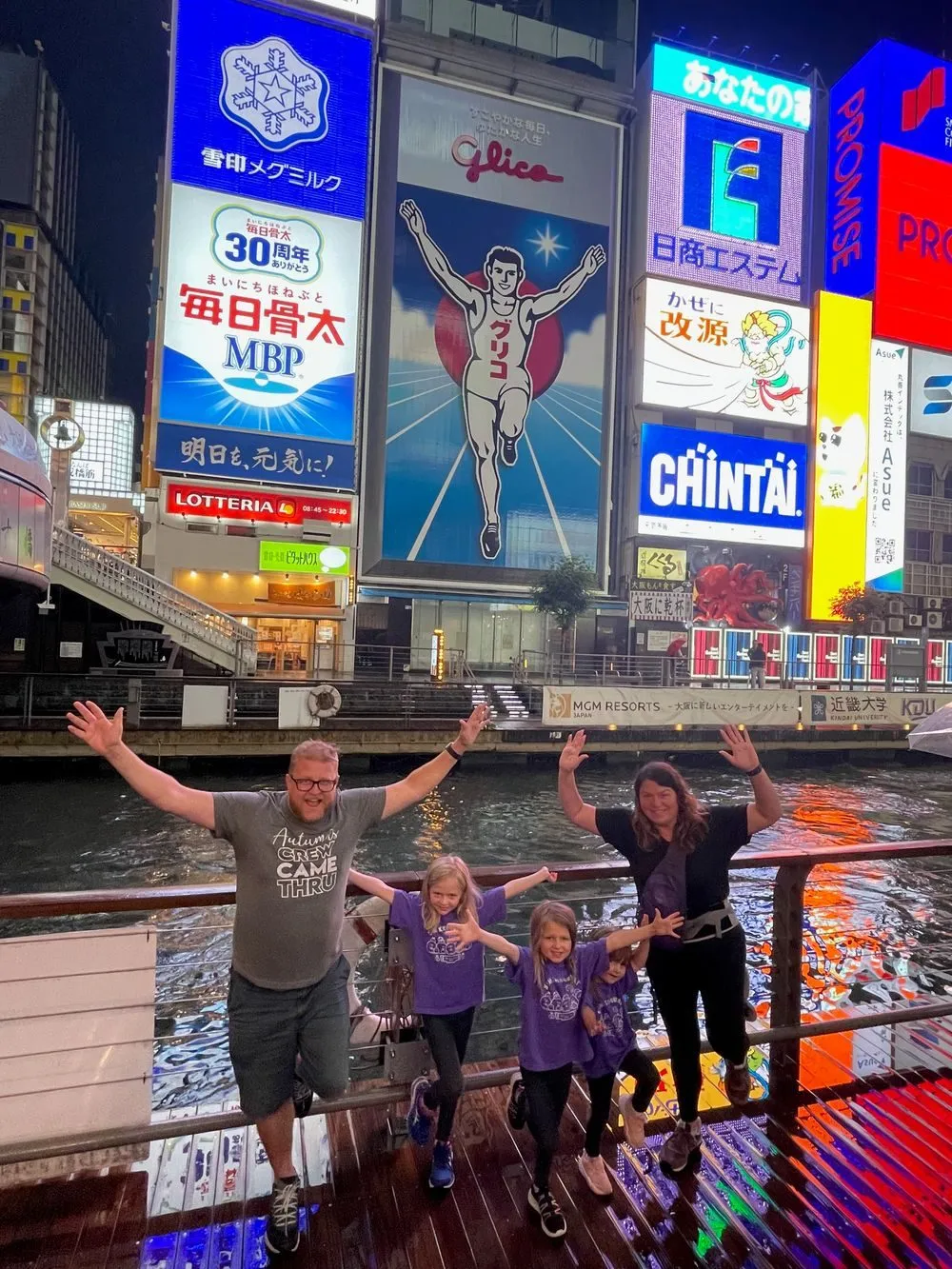
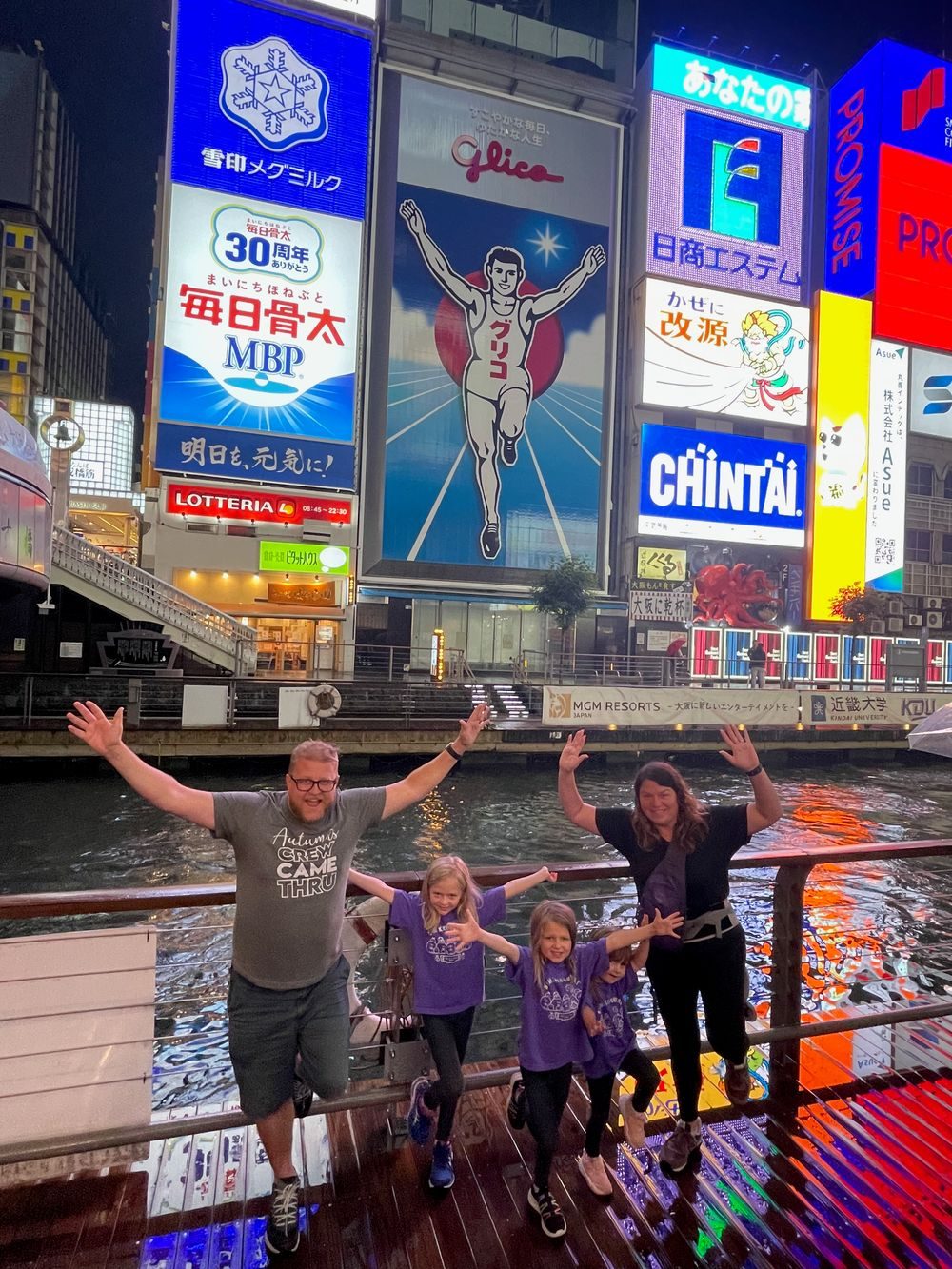
June 8, 2023, a boat deck on the Dotonbori canal, the Glico Man sign glowing directly behind the whole family. We’ve already written about walking Dotonbori for free, street level, no ticket required. This photo is from a different real visit, a different vantage point entirely, a boat on the water looking up rather than a sidewalk looking across.
The paid option: Tombori River Cruise
A 20 minute boat ride through the Dotonbori canal, narrated along the way, boarding at Tazaemonbashi Pier near the Don Quijote Dotonbori store. Pricing here is inconsistent across sources we checked, official tourism pages listed anywhere from 900 to 2,000 yen for an adult ticket depending on which version of the page we found, with student and child tiers running lower where listed. Boats run roughly every 30 minutes between 11:00 and 21:00, same-day tickets only sold at the dock booth, no phone reservations, and the ride regularly fills up, arriving early for a same-day slot matters more than the exact fare. The Osaka Amazing Pass and Osaka e-Pass both cover admission, worth knowing if either pass is already part of a trip. The same Klook listing we booked from also bundles in a longer option, a 100 minute Naniwa Exploration Cruise led by a rakugo performer, traditional Japanese comic storytelling, covering more of central Osaka’s waterways than the short Tombori loop alone, a real upgrade path for anyone who wants more than 20 minutes on the water.
The canal itself has a disputed origin story
The canal dates to 1612, construction started under an administrator named Nariyasu Doton. He died during the 1615 Siege of Osaka before it was finished, and two collaborators, Yasui Kuhei and Hirano Tojiro, completed the project by that September. It was renamed Dotonbori in his honor by Osaka Castle’s new lord shortly after. Here’s the part most tourist guides get wrong: popular legend credits a different man, a merchant named Yasui Doton, with personally funding the whole canal out of his own fortune, a story popular enough that a monument to him was erected in 1915. A 1965 court case, brought by a real descendant of one of the actual builders, formally determined Yasui Doton never existed, a fictional figure attached to the project well after the fact. Some tourism sites still repeat the funded-it-himself version as settled history anyway, we’re not picking that one.
The free option: walking the same canal
We covered this already, Dotonbori’s street-level walk costs nothing at any hour, no ticket, no schedule, no capacity limit. Anyone can stand on Ebisubashi bridge and get essentially the same Glico Man photo a cruise passenger gets from the water, just from a few meters higher up and without the canal stretching out underneath. The free walk wins on flexibility, stay as long as you want, leave whenever, no departure time to catch.
What the boat adds
The cruise’s real advantage isn’t a better photo, it’s a different angle on the same stretch of water: looking up at the bridges and signage from canal level rather than down at the water from a sidewalk, passing directly underneath Ebisubashi and the other bridges crossing Dotonbori rather than just walking over them. The narration (in Japanese, per every source we checked, so non-Japanese speakers are along for the ride rather than following commentary) adds some local context a self-guided walk doesn’t provide on its own. Twenty minutes is also a usefully contained activity for a family managing younger kids, a fixed start and end rather than an open-ended walk that can run long or short depending on energy levels.
The sign itself, both ways
Whichever vantage point you see it from, the Glico Man running man sign has real history behind it. Ezaki Glico installed the first version in 1935, representing the company’s energy-boosting Glico caramel candy, decades before neon became standard across the rest of Dotonbori’s signage. It’s been redesigned five more times since, each new version timed to technology or branding shifts, including tie-ins with events like the World Cup and support messages for the Hanshin Tigers. The current sign, the sixth version, switched from neon to LED in October 2014 and is the one in both our boat photo and the existing street-level post, the same running figure that’s been part of this exact stretch of canal for nine decades now, regardless of whether you’re looking at it from a sidewalk or a boat deck.
The bridge itself carries its own landmark
Ebisubashi, the bridge most people stand on for the classic Glico Man photo, has its own famous neighbor: Kani Doraku, a crab restaurant whose giant mechanical crab sign has marked one end of the bridge since 1960, predating the current sixth-generation Glico sign by more than five decades. Between the running man and the crab, this single stretch of canal carries two of Osaka’s most photographed pieces of signage within sight of each other, one advertising candy, one advertising dinner, both older than most of the buildings now surrounding them.
What else nearby already costs money
Dotonbori sits close to several things we’ve already written up with real current pricing rather than re-deriving them here: Osaka Castle’s 1,200 yen tower admission a short ride away, and Universal Studios Japan’s 8,900 to 11,900 yen gate pricing for anyone extending the day into a theme park visit. None of that is required to enjoy either version of the canal itself, walking or cruising, but it’s worth knowing what’s nearby if a Dotonbori stop is one stretch of a longer Osaka day rather than the whole itinerary.
A real, bookable option if the boat sounds worth it
Osaka Dotonbori Naniwa Sightseeing Boat
These are affiliate links. We may earn a commission if you book through them, at no extra cost to you. See our legal notice.
Klook code: ADAMANDLINDSKLOOK
Click through to Klook below, then enter code ADAMANDLINDSKLOOK at checkout. This is a real affiliate code, we may earn a commission on the booking too, at no extra cost to you. See our legal notice.
10% off, New Klook user
$50 minimum spend, capped at $50 off, one time use. Valid through December 31, 2026.
3% off, Existing Klook user
$50 minimum spend, capped at $50 off, up to three uses. Valid through December 31, 2026.
1% off, Selected things to do and mobility, including teamLab Planets TOKYO, teamLab Borderless, teamLab Biovortex Kyoto, Japan Shinkansen tickets, SHIBUYA SKY, Warner Bros. Studio Tour Tokyo, and Osaka Amazing Pass
No stated minimum spend for this tier. Valid through December 31, 2026.
50% off, eSIM, new eSIM customers only
No minimum spend, capped at $1.50 saved, one time use. Valid through December 31, 2026.
Which one’s worth it
If the budget is zero or the schedule is unpredictable, walk it, the free version gets you most of the same view and all of the flexibility. If a contained 20 minute activity sounds useful for managing a group of kids, or the angle from the water sounds appealing on its own, the cruise is a real, bookable option that isn’t expensive even at the higher end of the fares we found. Neither one is the wrong call, they’re answering slightly different questions, free and flexible against paid and fixed, for a view of the same sign either way.