The Age Cutoff That Catches Families Out at Heiwa no Mori Park
Ota's Heiwa no Mori Park has a real, free climbing area and a 360 yen obstacle course next door. One detail about ages splits the two, and it's easy to miss.

Published on 7 min read

On this page
Most “free playground” listings for Tokyo don’t mention that this one isn’t just one playground, it’s two, right next to each other, with different ages, different prices, and different rules attached to each. We found that out by accident on an October afternoon in Ota, and it’s the kind of detail that’s easy to miss if you’re planning around a map pin rather than the fine print.
What’s really at Heiwa no Mori Park
Heiwa no Mori Koen sits in Ota Ward, roughly a 20 minute walk from Omori Station, with Heiwajima Station also within reach depending on which side of the park you’re approaching from. It’s a sizable municipal park, but the part that matters for a family with kids is split into two distinct, separately run play areas sitting side by side.

Why it’s called Peace Forest
The name isn’t decorative. The park sits on Heiwajima, “Peace Island,” a reclaimed landmass Japan began building in the bay starting in 1939. During the war it held the Tokyo Main POW Camp, where Allied prisoners were detained, and after the surrender it briefly held Japanese war-crimes suspects, Hideki Tojo among them, before their trials. The island’s name itself, a prayer for peace rather than a description of what had happened there, came out of that period. The park opened in 1982 on a former canal that had been filled in, named Heiwa no Mori Koen specifically to carry Ota Ward’s own standing wish for lasting peace, and in 1984 the ward made a formal Peace City Declaration with a memorial statue built to mark it. None of that history is visible from the climbing equipment, there’s no plaque at kid height explaining any of it, but it’s worth knowing before you write this off as just another municipal playground with a nice-sounding name.
The free side: built for small kids
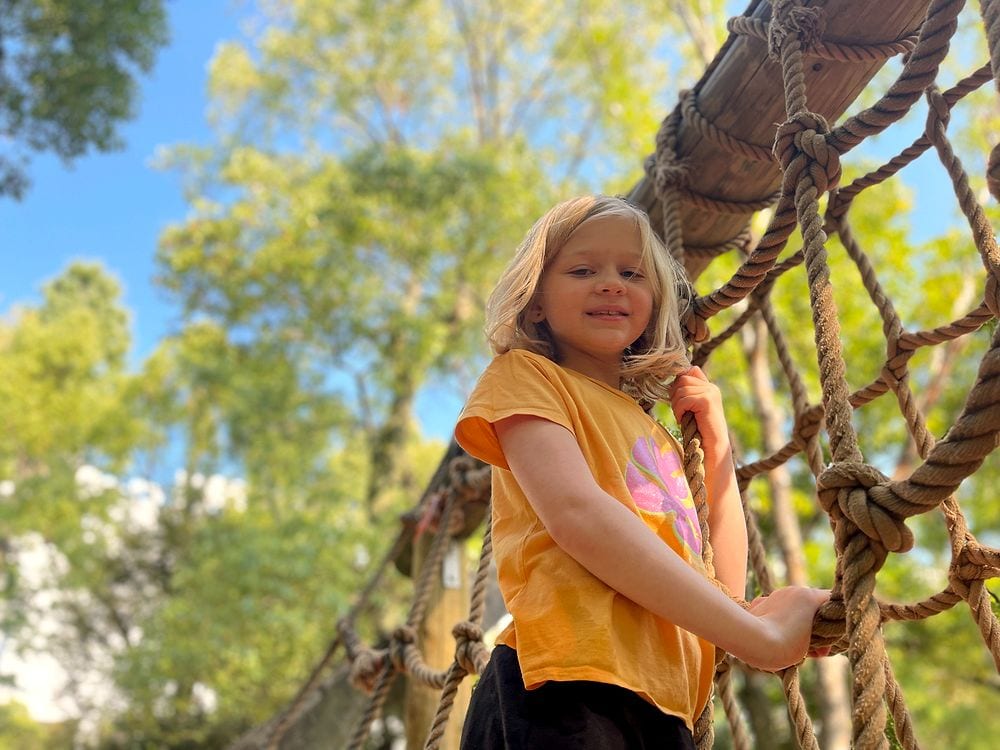
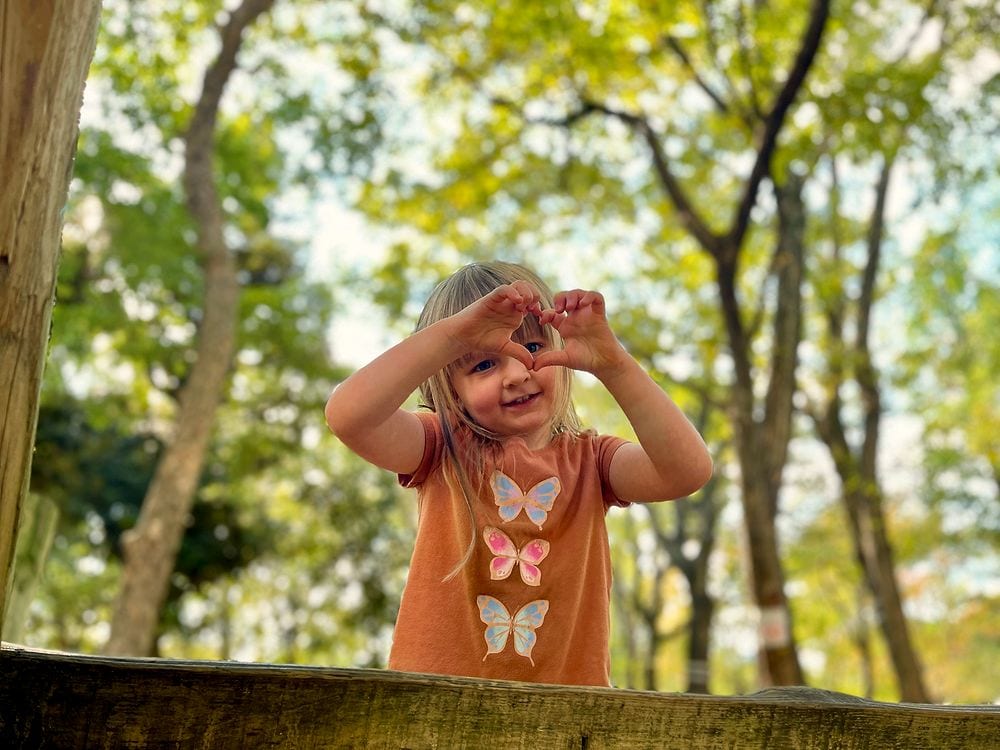
Right next to the main course is a free equipment area explicitly designed for children under elementary school age. There’s no gate fee, no ticket booth, nothing to book. The equipment has real names, not just generic play structures: a Mammoth Slide, a rope-climbing Spider Log, a rope-net Hope Box, and a tunnel called Snake Diving. Our girls were young enough that October that this is almost certainly the side we were on, rope nets and climbing frames sized for kids well under ten, not the full obstacle course next door. We don’t have a ticket stub to prove it either way, but the equipment in our own photos matches this free side’s real, named structures closely enough that it’s the honest read.
The paid side: a real 40-obstacle course
Next door is the park’s actual draw for most visitors: a full Field Athletic course with 40 numbered obstacles spread across a shaded, wooded stretch of the park, climbing walls, rope walks, floating logs, and a water-crossing section among them. This one isn’t free. Current pricing runs 360 yen for an adult or high schooler, 100 yen for a child in the elementary-to-junior-high range, roughly matched by a separate source listing the same course for ages 8 to 13 specifically. The two descriptions don’t line up perfectly on the exact cutoff, which is itself a reason to confirm the current age rule at the gate rather than assume. Hours run 9:30 to 16:00, and the course closes entirely on Mondays, a closure that applies to this paid field specifically, we couldn’t independently confirm whether the free equipment next door follows the same closed day.
The real catch
Here’s the detail that’s easy to miss planning from a map listing alone: this isn’t one flexible playground that scales with your kid’s age, it’s two separately gated areas with a real seam between them. The free side is built for kids young enough that elementary school hasn’t started yet. The paid course picks up around elementary age and runs through junior high. A family with one younger kid and one old enough for real climbing walls will likely end up splitting the group between the two areas rather than doing one obstacle course together, worth knowing before you’ve already walked the 20 minutes from the station expecting a single playground to fit everyone. And if a Monday is the only day that works for the trip, call ahead (03-3766-1607) to confirm the paid course is open that day, rather than finding out at the gate.
Pack for the water crossing
If your kids do end up on the paid course, the water-crossing section is a real obstacle, not a figure of speech, and the changing rooms with showers and lockers aren’t there for decoration. Bring a change of clothes and shoes that can get wet and muddy, and don’t plan the obstacle course for the same outfit you’ll want in photos afterward. We didn’t need any of this ourselves, staying on the free side meant dry shoes the whole visit, but it’s a real detail that would have caught us out if our girls had been a couple of years older.
How this compares to a neighborhood playground
We’ve written before about the small, unnamed playgrounds tucked under train tracks in residential Tokyo neighborhoods, the kind with a swing set and a slide and nothing else, no name you could search for and no equipment worth describing individually. Heiwa no Mori Park is a different category of free entirely, a named destination with real infrastructure, equipment with its own product names, and a paid professional course next door for when a family outgrows the free side. If a residential playground is a five-minute pressure release between temples, something you stumble into on a walk, this is closer to a half-day outing worth planning around on its own, closer in scale to the zoos and museums we’ve covered than to a street-corner swing set.
Side by side
| Free equipment area | Paid Field Athletic | |
|---|---|---|
| Who it’s for | Under elementary school age | Elementary through junior high (sources differ slightly, roughly 8-13) |
| Cost | Free | 360 yen adult/high schooler, 100 yen child |
| What’s there | Mammoth Slide, Spider Log, Hope Box, Snake Diving | 40 obstacles: climbing walls, rope walks, floating logs, water crossing |
| Hours | Not independently confirmed | 9:30 to 16:00, closed Mondays |
| Amenities | None noted | Showers and lockers in the changing rooms |
Getting there
Omori Station is the station most listings point to, about a 20 minute walk to the park. One source instead names Heiwajima Station as the entry point via a shopping street leading to the park, so check which station sits closer to your own route before committing to one. Either way, it’s not a station right at the gate, factor the walk into how much energy your kids have left for climbing once you arrive.
Was it worth it
Completely, and we didn’t spend a yen to find that out. The free side alone gave our girls a real, varied climbing structure, not a generic swing set, and it held their attention longer than most paid attractions we’ve written up on this site. If a future trip lines up with kids old enough for the paid 40-obstacle course, that’s worth the 360 yen on its own merits, a real obstacle field is rare to find built into an ordinary municipal park. The real planning lesson here isn’t about whether Heiwa no Mori Park is worth the trip, it clearly is, it’s about checking which side of the park your kids qualify for before you’ve already made the walk from the station.