Cherry Blossoms or Hydrangeas: Two Free Flower Seasons in Japan
Sakura season gets all the attention, but Japan's June hydrangeas are just as real and even easier to see for free. Two flower seasons, two real family visits, side by side.

Published on 5 min read
On this page
Everyone plans a Japan trip around cherry blossoms. We’ve done that too, and written up exactly what that costs. What we hadn’t covered is the other real flower season we’ve stumbled into: hydrangeas, blooming on an ordinary Katsushika street two months after the sakura crowds went home, no festival, no planning, no ticket of any kind.
Cherry blossoms: a real festival, free to walk, paid extras
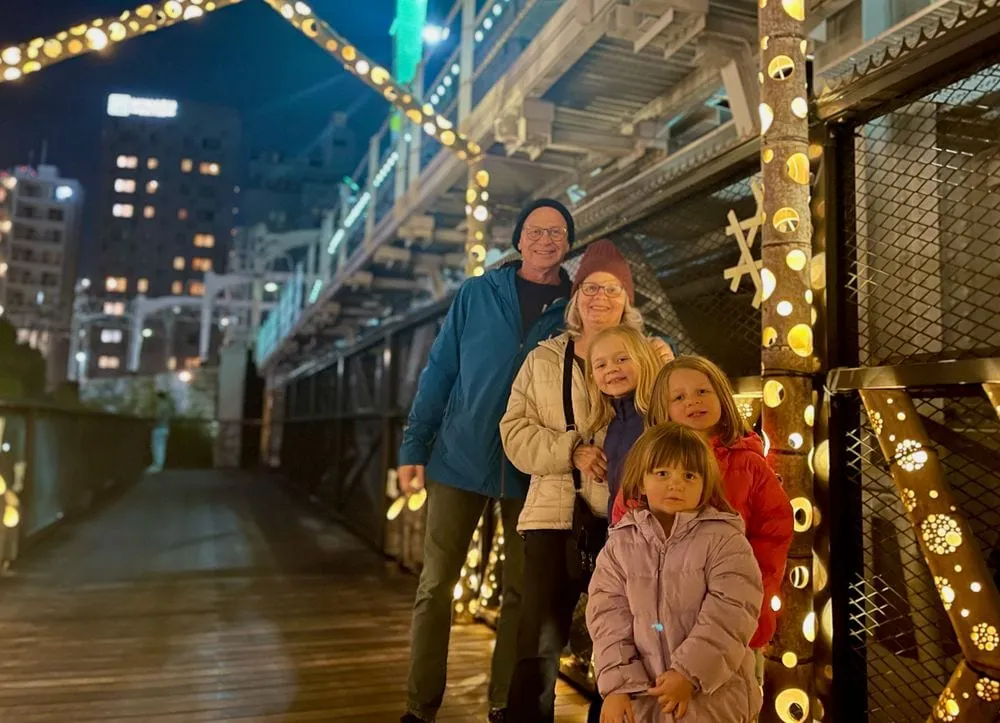
Ogimachi Sakura Festival ran April 3 to 5, 2026, in Osaka’s Kita Ward, and walking into the park to see the blossoms in full bloom cost nothing, same as watching the live stage performances. We were based in Osaka for weeks that spring, so we didn’t have to force the timing, the festival’s three days happened to line up with peak bloom. The trees stayed lit after dark too, a different, still-free version of the same view.
Ogimachi Sakura Festival
These are affiliate links. We may earn a commission if you book through them, at no extra cost to you. See our legal notice.
Klook code: ADAMANDLINDSKLOOK
Click through to Klook below, then enter code ADAMANDLINDSKLOOK at checkout. This is a real affiliate code, we may earn a commission on the booking too, at no extra cost to you. See our legal notice.
10% off, New Klook user
$50 minimum spend, capped at $50 off, one time use. Valid through December 31, 2026.
3% off, Existing Klook user
$50 minimum spend, capped at $50 off, up to three uses. Valid through December 31, 2026.
1% off, Selected things to do and mobility, including teamLab Planets TOKYO, teamLab Borderless, teamLab Biovortex Kyoto, Japan Shinkansen tickets, SHIBUYA SKY, Warner Bros. Studio Tour Tokyo, and Osaka Amazing Pass
No stated minimum spend for this tier. Valid through December 31, 2026.
50% off, eSIM, new eSIM customers only
No minimum spend, capped at $1.50 saved, one time use. Valid through December 31, 2026.
That’s where the free part ends, though. A beer garden set up for the festival ran 2,000 yen, and sky lanterns were 4,400 yen, both real add-ons on top of a free walk through the park.
Hanami, flower viewing, didn’t start as a cherry blossom tradition at all. It began in the Nara period (710 to 794) as a Chinese-influenced custom centered on plum blossoms, and only shifted to sakura during the Heian period that followed. Emperor Saga held a cherry blossom garden party at the imperial court in 812 CE, a celebration that became an annual fixture by 831 CE. For centuries it stayed an aristocratic event, open only to imperial courtiers and elite samurai, until the Tokugawa Shogunate planted cherry trees in public spaces around Edo in the 1600s, turning a court ritual into something merchants and farmers could take part in too. The free festival we walked through in Osaka is a direct descendant of that same decision, made roughly four centuries earlier, to put the trees where everyone could reach them.
Hydrangeas: no festival, no ticket, no plan
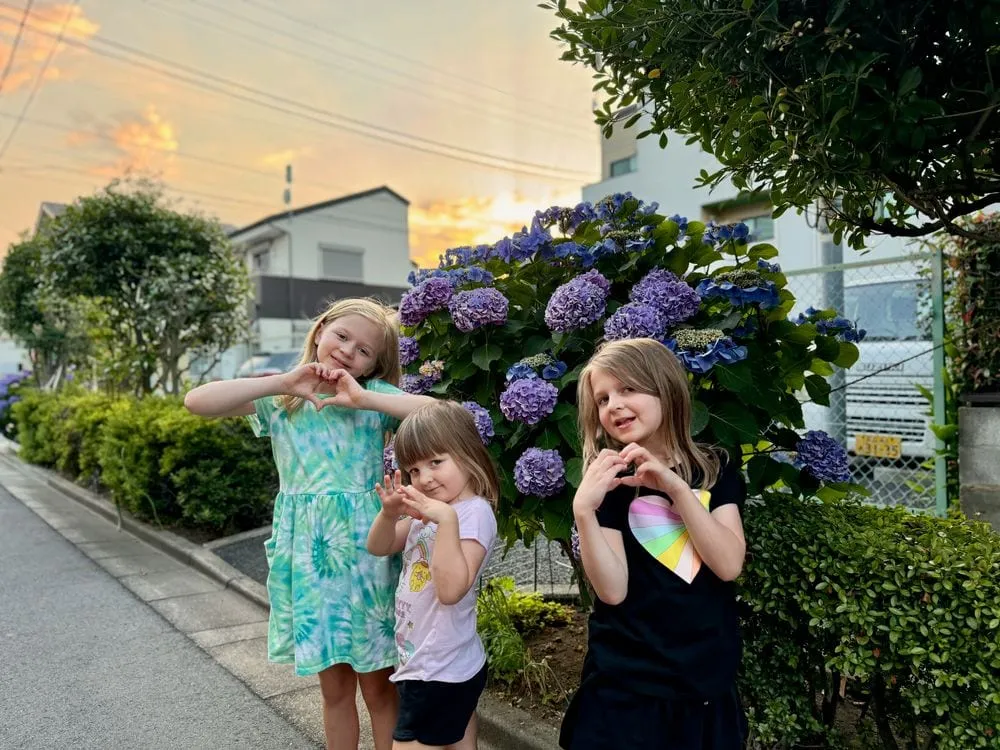
Two months later and a different city entirely, we were walking a quiet residential street in Shibamata, Katsushika, in mid-June, and the hydrangea bushes lining the sidewalk were in full bloom, deep purple and blue clusters at eye level with the girls. No park gate, no festival stage, no sky lanterns for sale, just a neighborhood street that happened to be covered in flowers at exactly the right week of the year.
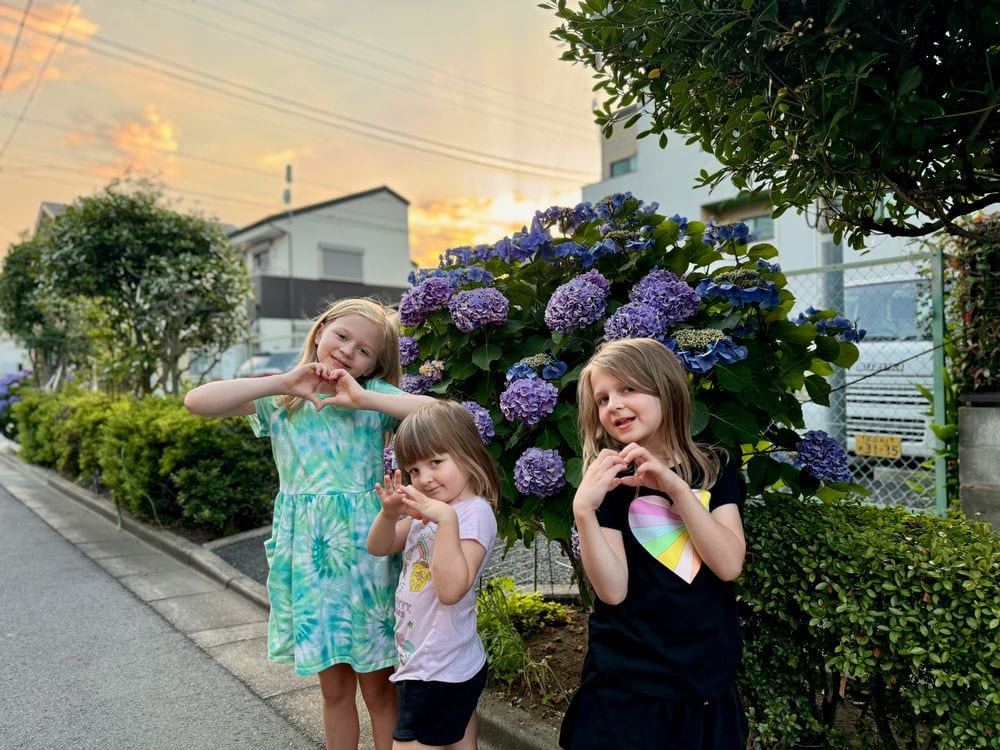
Hydrangeas, ajisai in Japanese, bloom from early June through early July, timed to the rainy season rather than to a festival calendar, which is part of why they get less attention from visitors planning a trip around a specific bloom date. They’re not a recent addition to the national flower rotation either: native hydrangeas show up in the Man’yōshū, Japan’s oldest poetry collection, compiled in the 8th century. Their color shifts with the soil they grow in, more acidic soil pushes them toward blue, and that built-in unpredictability has made them a real symbol of transience and gratitude in Japanese aesthetics, the same wabi-sabi idea that runs through a lot of the country’s seasonal traditions.
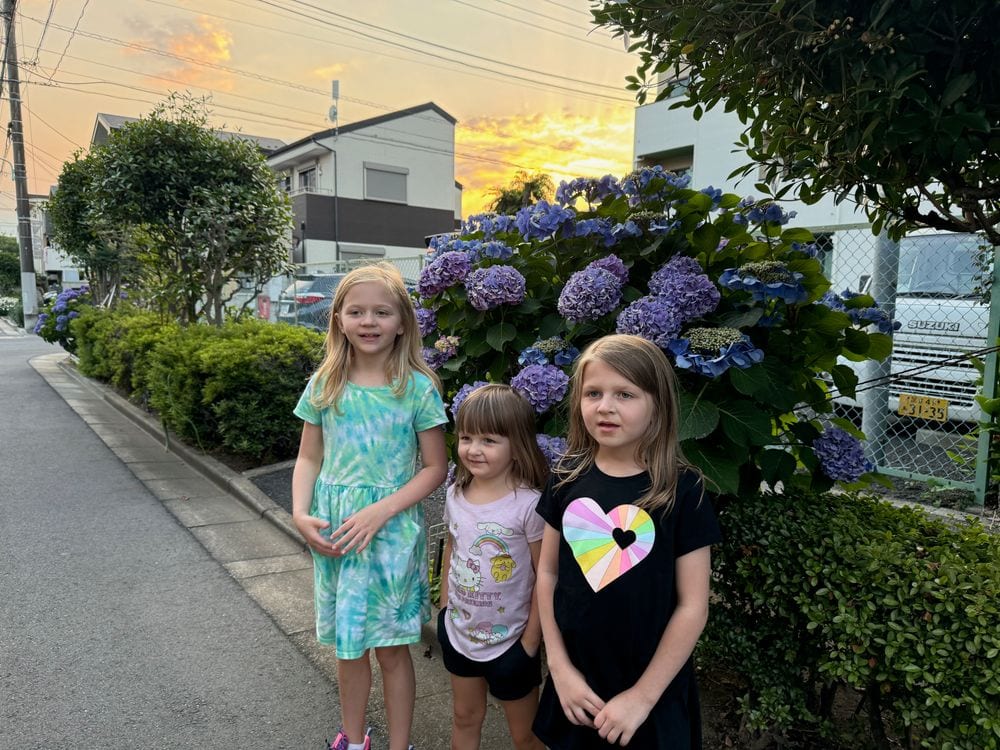
If you want a dedicated hydrangea destination rather than a lucky neighborhood walk, Tokyo’s Bunkyo Hydrangea Festival is a real, well-known option with thousands of plants, and Kamakura’s Meigetsu-in, nicknamed Hydrangea Temple, is the famous paid version of what we saw for free: over 2,500 bushes lining the stone paths, 500 yen admission during bloom season, a further 500 yen for the inner sanctuary garden. We can’t speak to either firsthand, we found ours by accident on a regular walk rather than by planning around it, but it’s worth knowing a real paid, organized hydrangea experience exists if a quiet residential street isn’t dramatic enough for the trip you’re planning.
Doing both with three kids
The two seasons made for a different kind of day with the girls, too. The cherry blossom festival meant managing a crowd, lining up for the beer garden if we wanted it, working around a stage schedule, the normal logistics of a planned event with three kids in tow. The hydrangeas needed none of that. We weren’t managing anything, just walking somewhere we already needed to be, and the girls stopped on their own without being herded toward a photo spot. For a family that spends a lot of a Japan trip moving between timed entries and reservations, an unplanned five minutes in front of a hedge full of flowers did something a festival can’t: it cost nothing in patience as well as yen.
Side by side
| Cherry blossoms | Hydrangeas | |
|---|---|---|
| Season | Late March to early April | Early June to early July |
| Where we saw them | A planned festival, Osaka | An unplanned street, Tokyo |
| Base viewing cost | Free | Free |
| Real paid extras | Beer garden 2,000 yen, sky lanterns 4,400 yen | None, no festival infrastructure at all |
| Crowds | Festival-level, timed around peak bloom | None, an ordinary sidewalk |
Was it worth it, both times
Completely, for almost opposite reasons. The cherry blossom festival was worth building a day around, the atmosphere and the paid extras add something a quiet walk can’t. The hydrangeas were worth it precisely because we didn’t build anything around them, a free, unplanned few minutes that turned into some of our favorite photos from that stretch in Katsushika. If a Japan trip only has room for one flower season, sakura’s reputation is earned, it’s the bigger event with the longer history of public access behind it. But if the dates land in June instead, don’t assume the trip missed its flower moment, just start looking at the hedges along whatever street you’re already walking down, the odds are better than most visitors realize that something’s already in bloom right next to you, free, with no festival schedule to plan around.