What's Free at Ueno Toshogu, and What Isn't
A 1631 pagoda, technically inside Ueno Zoo, visible for free from Toshogu Shrine's own grounds. Real admission prices for the shrine's two paid sections too.

Published on 5 min read
On this page
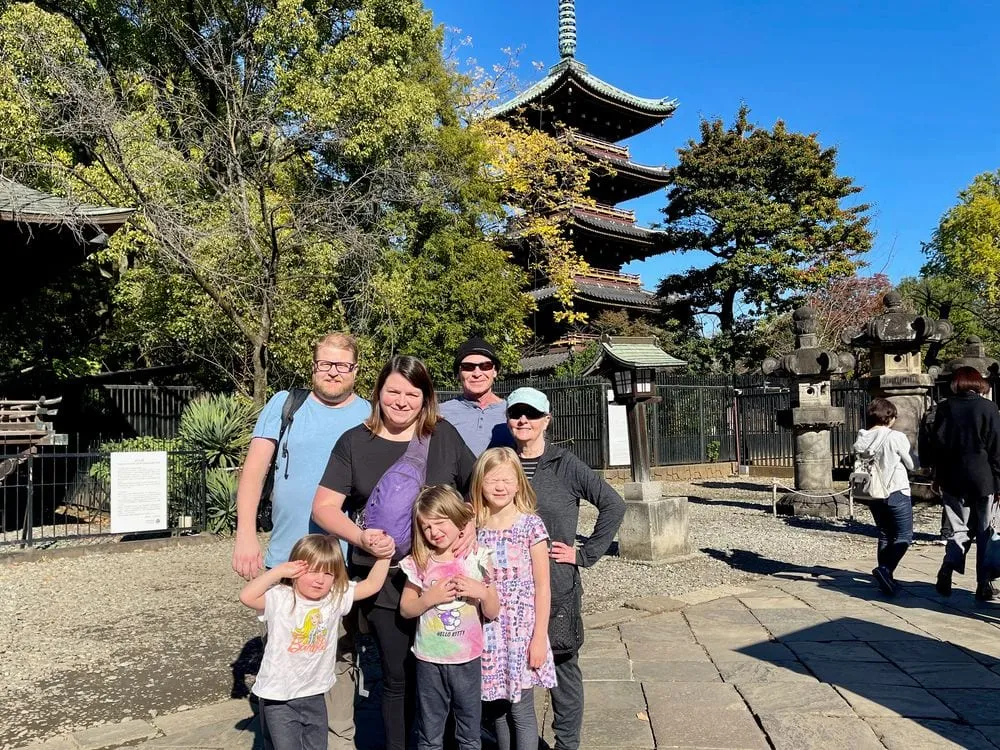
We’d already written up Ueno Zoo’s admission price when we found ourselves back in the same park a different November afternoon, standing in front of a five-story pagoda none of our zoo research had mentioned. It turns out the pagoda technically belongs to the zoo now, sitting inside its enclosure, but you don’t need a zoo ticket to see it. You need Ueno Toshogu Shrine instead, and that shrine has its own real split between what’s free and what isn’t.
What’s free: the approach, the lanterns, and the pagoda view
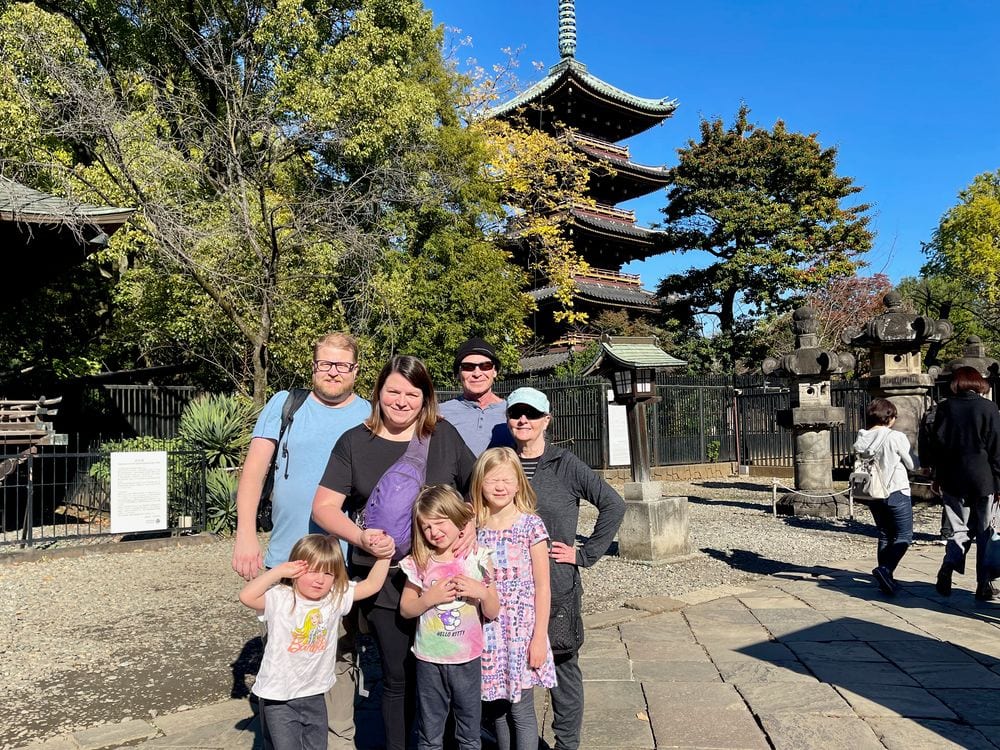
Toshogu Shrine’s outer grounds are free to walk, from the entrance path up to the Karamon Gate, a stretch lined with roughly 250 copper and stone lanterns, every one of them donated by a daimyo loyal to the Tokugawa when the shrine was rebuilt in 1651. Forty-eight of those bronze lanterns are formally designated Important Cultural Properties, a level of historical protection usually reserved for things sitting behind glass in a museum, here lining an ordinary free footpath instead. The five-story pagoda is visible from this same free section even though it sits on land that was handed over to Ueno Zoo in 1958 and now falls inside the zoo’s own fence line. No ticket, no gate, just a clear sightline to a structure most zoo visitors walk right past without realizing it predates the zoo by nearly three centuries.
What costs money: the inner shrine and the peonies
Past the Karamon Gate, Toshogu splits into two separate paid sections. Entering the inner worship area, close enough to see the Kinshikiden Golden Hall, the Gongen Shrine, and a large camphor tree planted centuries ago, costs 500 yen, though the main hall itself stays closed to visitors regardless, viewable only from outside even once you’ve paid. A separate peony garden charges 700 yen and only opens during two seasonal windows, January 1 through mid-February and mid-April through late May, outside of which there’s nothing to see there even with a ticket in hand.
Who the shrine itself honors
The gold leaf and the carved mythical beasts covering the shrine buildings trace back to that same 1651 rebuild, commissioned by Tokugawa Iemitsu, the third shogun, to honor his grandfather Tokugawa Ieyasu, founder of the entire Tokugawa shogunate. The original shrine on this site dates to 1627, built not long after Ieyasu’s death, but it’s the 1651 version, Iemitsu’s grander reconstruction, that still stands today, the same building whose free outer grounds and paid inner hall split the shrine in two for a modern visitor. A shrine honoring Ieyasu this directly, this close to the center of Edo-era power, explains why the daimyo donations came in at the scale they did, lining up for the honor of having their family’s lantern stand at the gate of a shogun’s own memorial shrine.
The pagoda’s own real history
Toshikatsu Doi, the feudal lord of the Sakura domain, donated the original pagoda in 1631, during the early Edo period when Kan’eiji Temple, the Tokugawa family’s own temple, dominated this part of the city. That first structure burned down in 1639 and was rebuilt, the version still standing today. Kan’eiji itself didn’t survive nearly as well: founded in 1625 by the monk Tenkai, it became one of Edo’s largest, wealthiest temples before the Boshin War of 1868 nearly destroyed the entire complex in fighting between Meiji forces and shogunate loyalists. The temple grounds were converted into one of Japan’s first Western-style public parks, opening in 1873, which is the Ueno Park every visitor walks through today. The pagoda survived that destruction and ended up donated to the city of Tokyo in 1958, administratively folded into the newly expanding zoo grounds around it rather than staying with what was left of the shrine.
Getting there, and pairing it with the zoo
Toshogu sits a short walk from Ueno Station’s Park Exit, the same entrance most visitors use for the zoo, Ueno Park’s ponds, and its museum cluster, so it’s not a separate trip so much as a five minute detour on the way to whichever of those was already the plan. We’ve already covered Ueno Zoo’s own admission (600 yen for an adult) separately, and that ticket still applies if the goal is seeing the pagoda up close from inside the enclosure, surrounded by the zoo’s own paths and signage. Toshogu’s free grounds are the better choice if the pagoda itself, rather than the zoo around it, is the actual draw, since paying 600 yen for zoo admission to see a structure visible for free from a few hundred meters away isn’t a trade worth making on its own.
Was it worth the detour
Completely, and we didn’t spend a yen finding out. We’d already paid for the zoo once on an earlier trip and could have assumed the pagoda was something we’d only see again behind that same ticket counter. It isn’t. A free walk through Toshogu’s outer grounds gets you the same view, plus three centuries of real history neither the zoo’s own signage nor our own earlier post about it had covered. If a Tokyo itinerary already has Ueno Park on it for the zoo, the museums, or the cherry blossoms, the free half of Toshogu is worth the extra ten minutes, the paid halves only if the peony timing lines up or the inner hall specifically interests you.