A Wednesday Evening at Tokyo Dome: Chunichi Dragons vs. the Giants With Three Kids
A different Tokyo Dome night than our other posts: the visiting Chunichi Dragons, a 4-2 final, and the real logistics of an evening game with three young kids.

Published on 8 min read
On this page
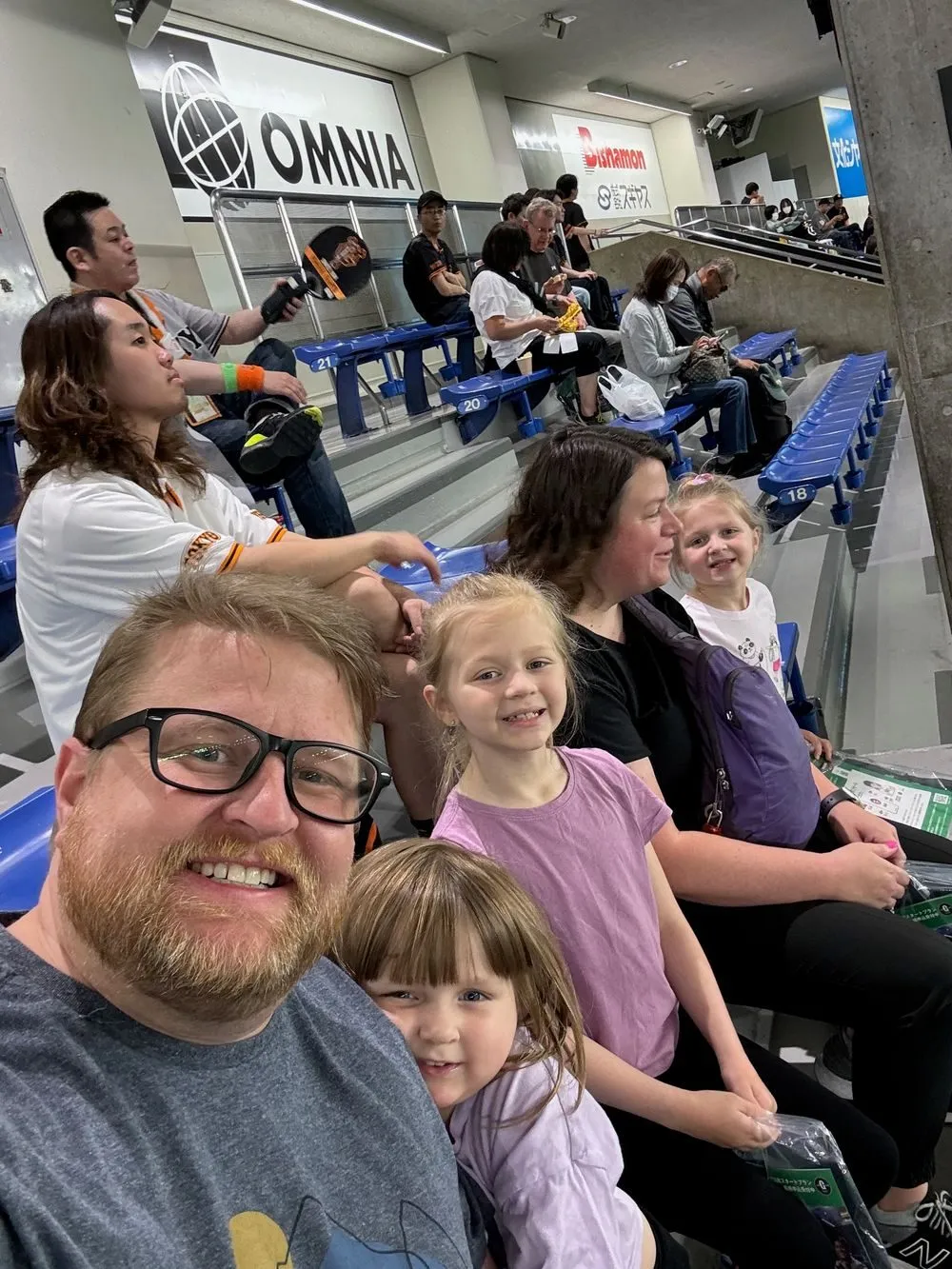
Wednesday, May 22, 2024, 5:00 in the evening, five of us filing into Tokyo Dome for a game that wouldn’t let out until well past the girls’ usual bedtime. We’ve already written up a Yomiuri Giants night at this same stadium, and a separate post on what the vendor-poured beer costs, both from other visits. This one’s a different game entirely, a different opponent, a different final score, and a different problem to solve: how three young kids hold up through a weeknight game that runs close to four hours.
A different opponent than our other Tokyo Dome posts
The Giants were playing the Chunichi Dragons that night, visiting from Nagoya in the Central League, and the scoreboard tells the real story better than memory does: Chunichi 4, Giants 2, with Chunichi scoring three runs in the sixth to pull ahead for good.
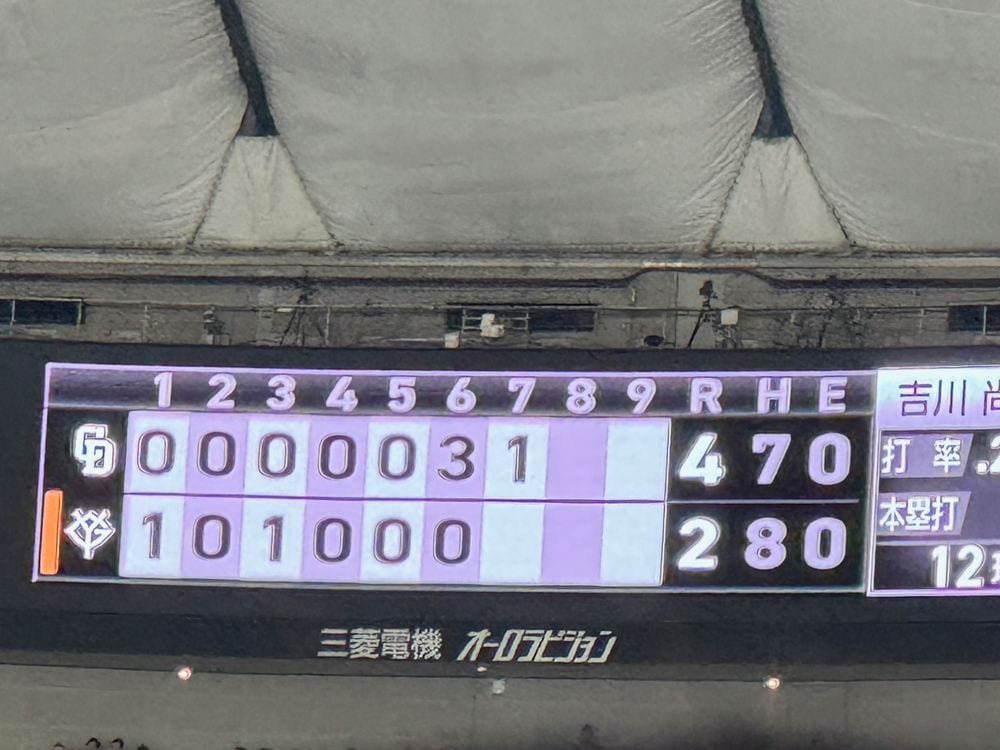
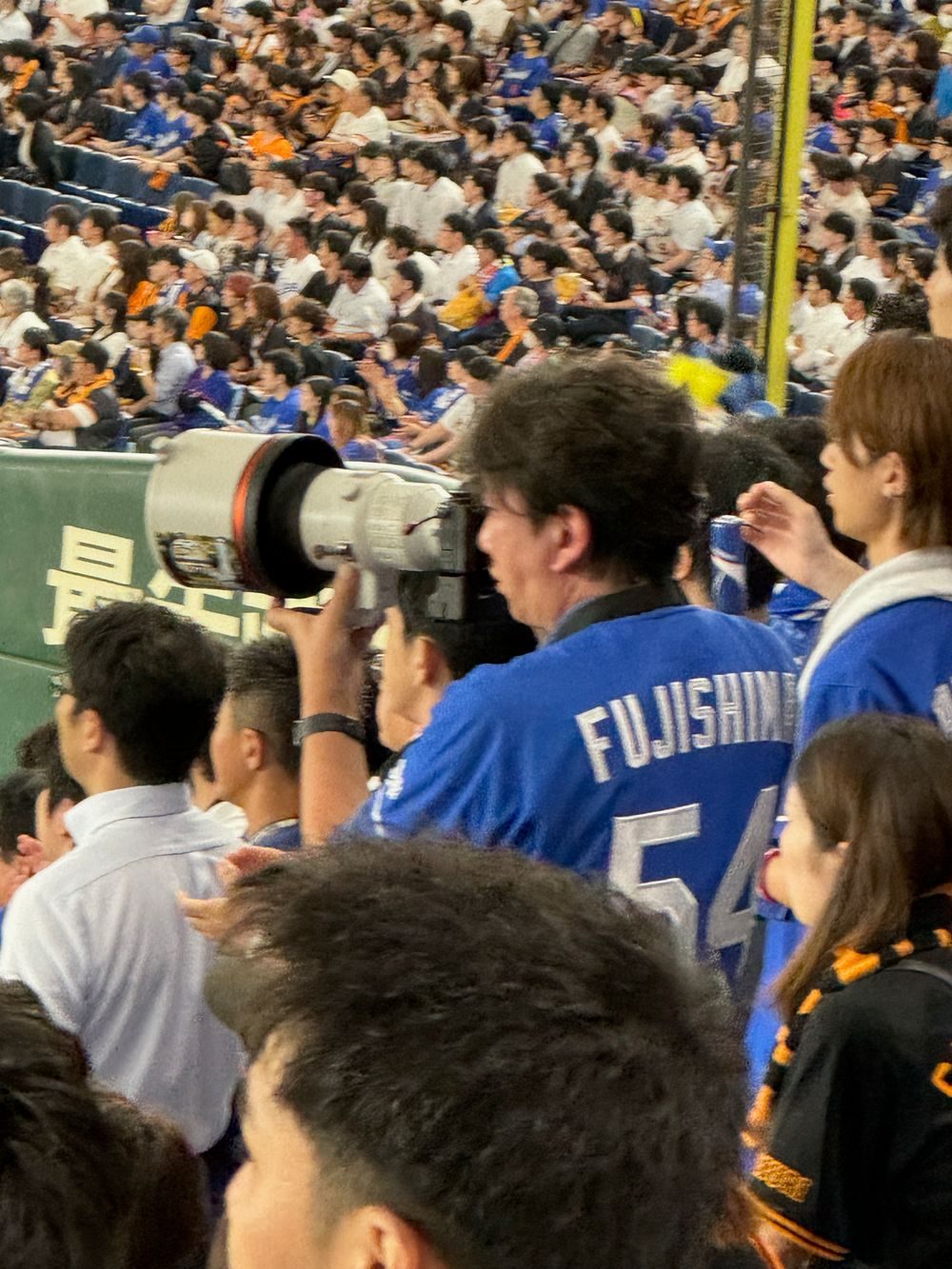
The Dragons are one of Nippon Professional Baseball’s original teams, founded January 15, 1936, as the Nagoya Club. They cycled through five different names over the following years, Sangyo, Chubu Nippon, Nagoya Dragons among them, before settling permanently on Chunichi Dragons in 1954. “Chunichi” translates to “Central Japan,” a nod to the Chubu region around Nagoya the team represents, and “Dragons” has stuck for seven decades now. A visiting Dragons fan in a personalized jersey sat a few rows from us, reading FUJISHIMA 54, and that’s not a made-up name on a souvenir shirt, Kento Fujishima is a real Dragons pitcher, drafted in 2016, debuted for the club in April 2018, and still on the roster wearing that same number. A fan traveling from Nagoya to cheer him on at an away game in Tokyo, roughly a 100 minute Nozomi shinkansen ride each way, says something about how regional loyalty works in NPB: the Dragons are Nagoya’s team the way the Giants are Tokyo’s, and that loyalty follows the roster to road games rather than staying home.
Inside the Big Egg
Tokyo Dome itself has its own real history neither of our other two posts got into. It opened March 17, 1988, Japan’s first covered, domed stadium, built on the site of a former velodrome right next to Korakuen Stadium, the open-air ballpark it replaced as the Giants’ home. Its nickname, the Big Egg, comes from the roof’s actual engineering: an air-supported structure, a flexible membrane held up over the whole stadium by keeping the air pressure inside very slightly higher than outside, no internal columns or trusses holding it up the way a conventional roof would. Walking in from street level, none of that is obvious, it just looks and feels like an indoor stadium, but it’s a different construction method entirely than most domed venues built since, most of which switched to rigid retractable roofs decades ago.
We already covered the price, this time it’s the clock
We’re not re-deriving ticket prices or beer prices here, both are already covered honestly on this site with real current numbers (Reserved C seats start around 2,200 to 2,500 yen depending on the date category, a vendor-poured draft runs 1,000 yen since a March 2026 increase). What’s different about this particular night is timing. Gates and our seats by 5:00, first pitch not long after, and the game didn’t wrap until close to 9:00, nearly four hours door to door once you count getting out of the stadium and back to where we were staying. That’s a late finish for kids who’d normally be in bed an hour or more before the last out.
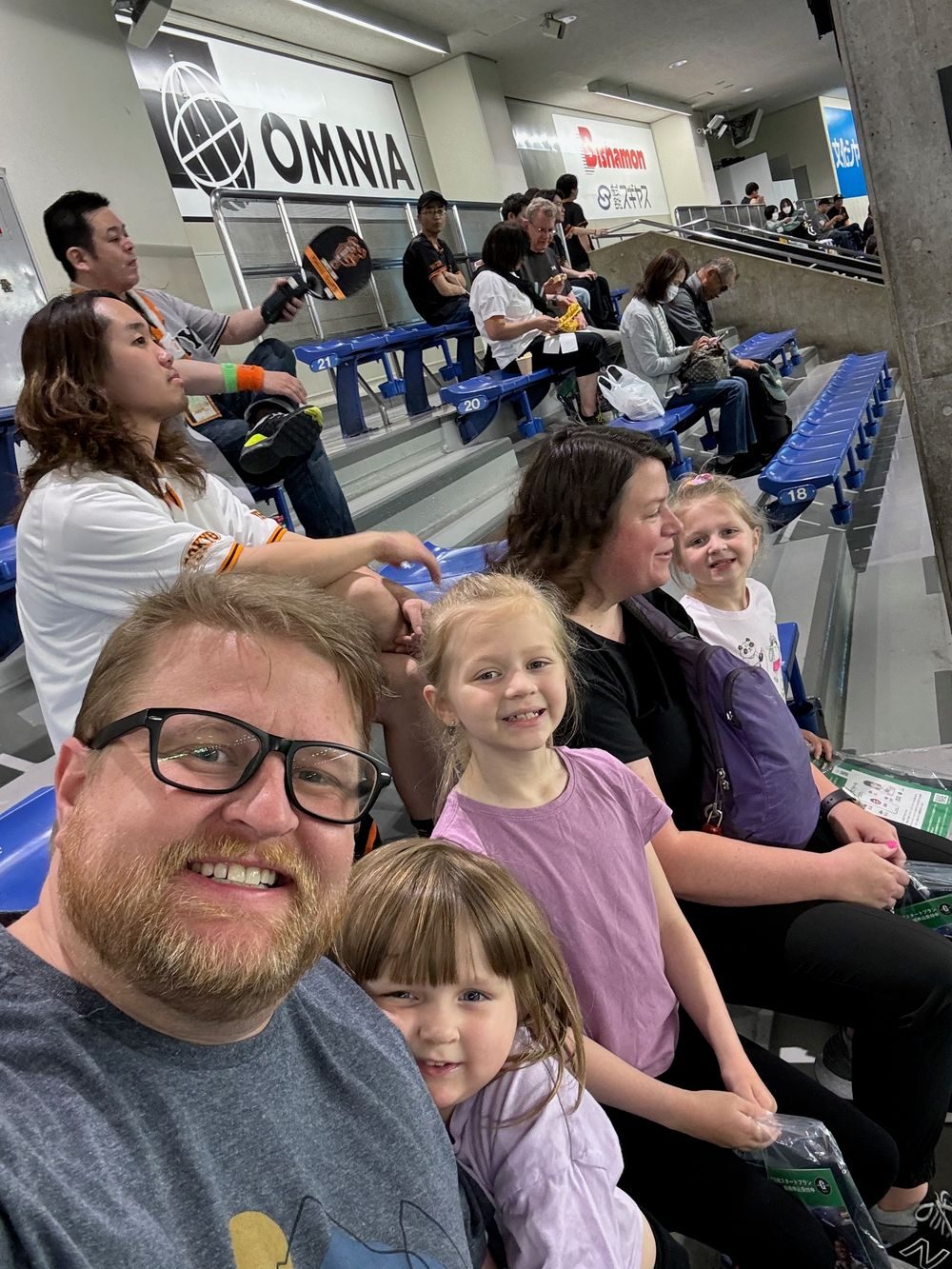
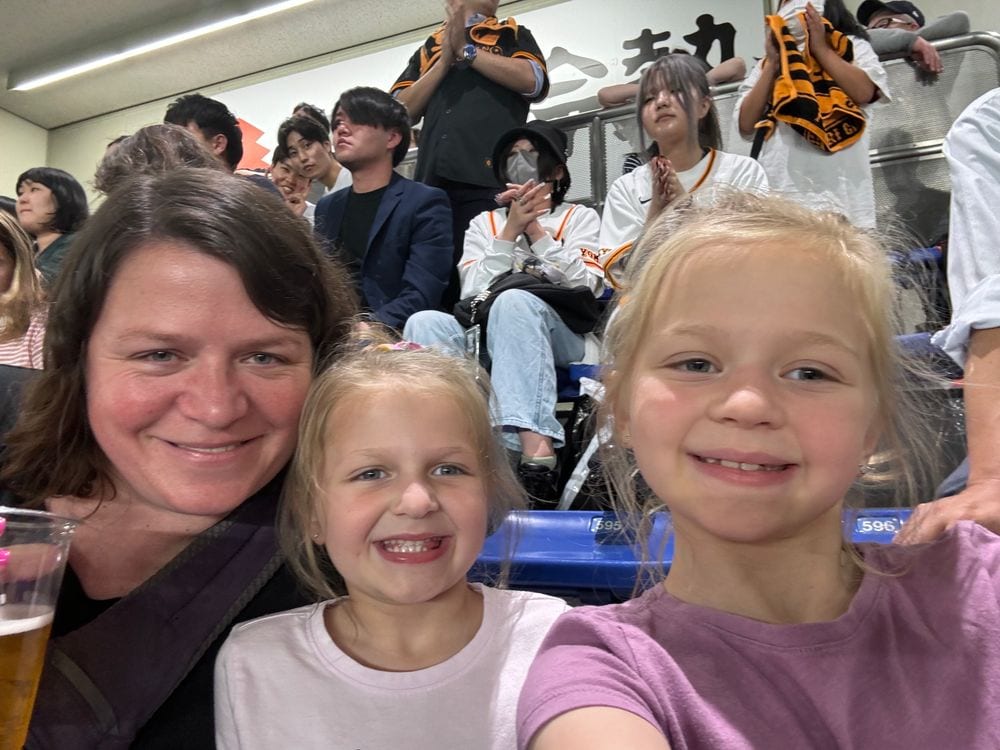
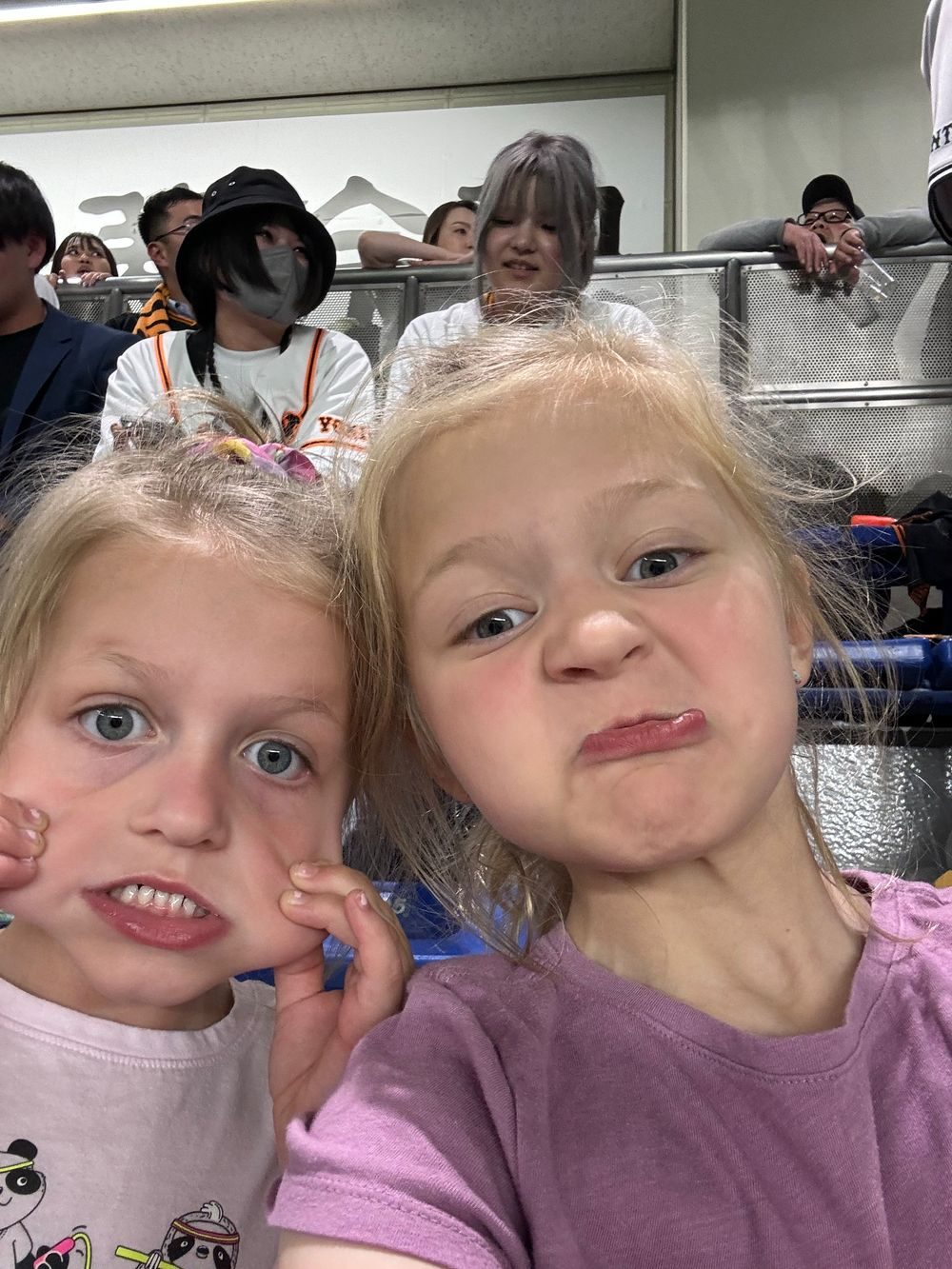
The honest answer to how three kids handle a four hour evening game is that the stadium itself does most of the work. Vendors walking the aisles, a scoreboard that changes every few minutes, a crowd loud enough to be its own entertainment, it’s a different kind of engagement than asking a kid to sit still through a movie or a formal dinner. Nobody in our group was watching every pitch, adults included, and that was fine. If we’d booked an early afternoon game instead of a weeknight evening one, we’d have avoided the late finish entirely, worth considering if a late bedtime is a harder limit for your own kids than it was for ours that night.
The cheering culture is part of the ticket price
One thing that doesn’t show up in either of our other Tokyo Dome posts: Japanese pro baseball’s organized cheering sections, oendan, are a show of their own. Each team’s dedicated cheering section runs its own chants, trumpet lines, and synchronized routines for specific players, home and away fans physically separated into their own blocks so neither side’s chanting steps on the other’s. Watching a visiting Dragons section in blue hold its own against a home Giants crowd in orange and black was as much a part of the night as anything happening on the field, and it’s not something a photo of a seat price or a beer cup can really capture.

Lucky 7, the one tradition that isn’t about the score
Right as the top of the seventh inning wound down, we got the real answer to something we’d wondered about since the Klook listing for Giants tickets bundles in an official supporting towel: why a towel, specifically. Turns out it’s the Giants’ actual version of Lucky 7. A lot of NPB teams run the seventh inning with a jet-balloon release, Hanshin Tigers fans famously blow up yellow balloons striped to look like tiger tails, but balloons and an air-supported indoor roof don’t mix well, so the Giants’ home tradition at Tokyo Dome runs on trumpets, taiko drums, and that same towel instead: spread out and waved overhead through the inning, turned a different direction whenever the Giants score. The whole section around us joined in, towels and all, even with Chunichi already up on the scoreboard by that point, it’s a tradition built into the inning itself, not a reaction to who’s winning. We hadn’t bought the towel bundle for this particular game, so we watched rather than waved, but it’s the one detail from that Klook listing that finally made sense in person.
Why the opponent changes from night to night
NPB splits into two six-team leagues, the Central League (Giants, Tigers, Dragons, Swallows, BayStars, Carp) and the Pacific League (SoftBank Hawks, Seibu Lions, Lotte Marines, Rakuten Eagles, Orix Buffaloes, Nippon-Ham Fighters), and for most of the regular season each team plays only within its own league, 25 games against each of its five rivals. Chunichi is one of those five Central League rivals the Giants face repeatedly across a season, which is why a Dragons game at Tokyo Dome isn’t a rare or special pairing, just one of the regular rotation, unlike the briefer interleague window in late May and early June when Central and Pacific teams cross over and play each other instead. Knowing the schedule’s shape going in is useful for planning: a Giants-Dragons date like ours is a normal in-season matchup you can expect to see come up again, not a one-off.
Getting there and what to bring for a long one
Suidobashi Station, on the JR Chuo-Sobu Line and the Toei Mita Line, sits right at the Dome’s edge, and Korakuen Station on the Marunouchi and Namboku lines is just as close from the other side, either one works depending on which direction you’re coming from. For a weeknight evening game specifically, we’d pack differently next time: a light layer each, the Dome’s air conditioning runs noticeably cooler than the May evening outside, snacks beyond what the vendors sell since a four hour stretch is a long time to rely entirely on stadium food for three different kids’ appetites, and a plan for the walk back to the station afterward, which gets crowded fast once a sold-out-feeling crowd all heads for the exits inside the same few minutes.
Book through Klook
Same real, bookable ticket listing as our other Giants post, it covers any home game at Tokyo Dome, not a specific opponent, so it’s the right link regardless of who’s visiting on a given night:
Yomiuri Giants match ticket
These are affiliate links. We may earn a commission if you book through them, at no extra cost to you. See our legal notice.
Klook code: ADAMANDLINDSKLOOK
Click through to Klook below, then enter code ADAMANDLINDSKLOOK at checkout. This is a real affiliate code, we may earn a commission on the booking too, at no extra cost to you. See our legal notice.
10% off, New Klook user
$50 minimum spend, capped at $50 off, one time use. Valid through December 31, 2026.
3% off, Existing Klook user
$50 minimum spend, capped at $50 off, up to three uses. Valid through December 31, 2026.
1% off, Selected things to do and mobility, including teamLab Planets TOKYO, teamLab Borderless, teamLab Biovortex Kyoto, Japan Shinkansen tickets, SHIBUYA SKY, Warner Bros. Studio Tour Tokyo, and Osaka Amazing Pass
No stated minimum spend for this tier. Valid through December 31, 2026.
50% off, eSIM, new eSIM customers only
No minimum spend, capped at $1.50 saved, one time use. Valid through December 31, 2026.
Was it worth the late night
Yes, but we’d pick an earlier start time next time if the schedule allowed it. The game itself, a real Central League matchup with a 1936-founded franchise visiting, a genuine final score instead of a generic “we went to a game” write-up, gave the evening more texture than we expected walking in, and the kids held up far better through the noise and the vendors than they would have sitting still for the same four hours somewhere quieter. If you’re planning around a specific opponent or you just want the latest start time slot open, check the matchup and first-pitch time before booking, not just the date, since that’s the one detail that decides whether you’re walking out at a reasonable hour or carrying a sleepy kid through Bunkyo at 9:30 at night like we were. None of the girls remembered the final score by the time we got back, but two of them still had their peace-sign photo as a phone background for weeks afterward, which is probably the more honest measure of whether a kids’ night at the ballpark landed.