Our First Cherry Blossom Season in Japan Started at a Garden That Isn't Free
Our first hanami in Japan was at Shinjuku Gyoen, one of the rare cherry blossom spots in Tokyo that charges real admission. Real price, real history, real photo.

Published on 4 min read
On this page
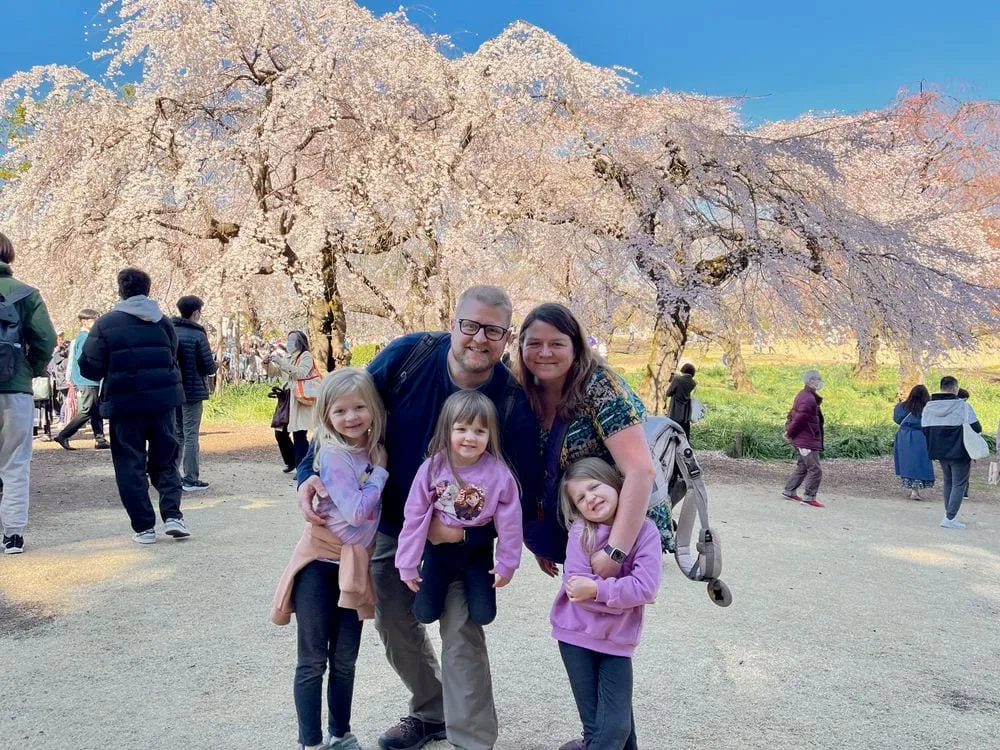
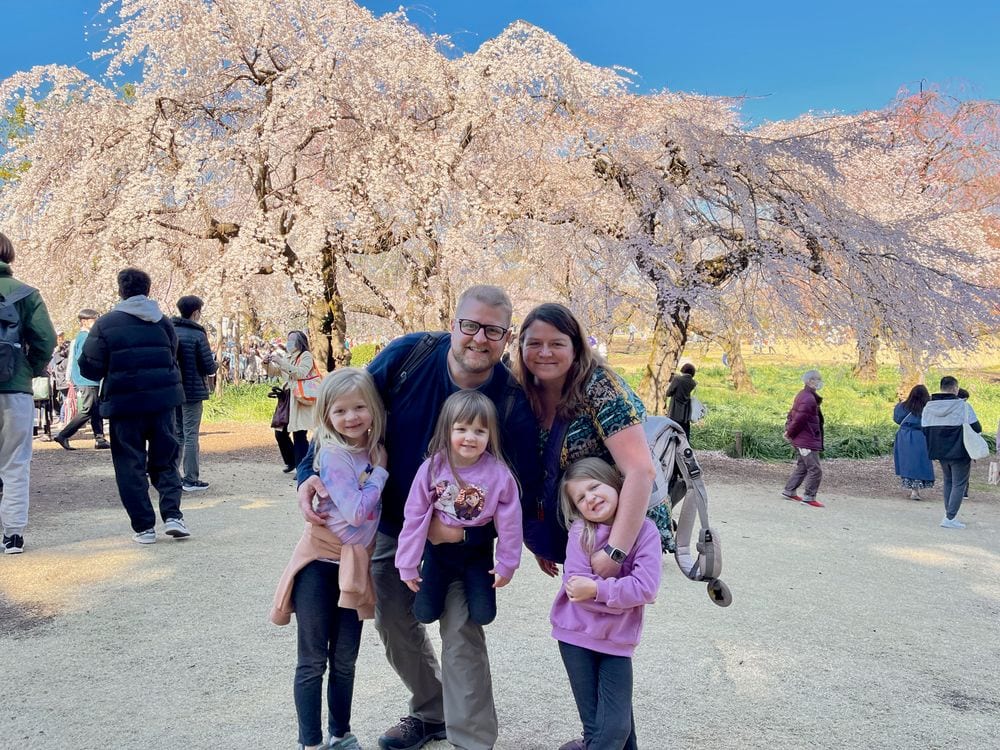
March 19, 2023, our first cherry blossom season in Japan, and the five of us are squeezed into a gap between two enormous weeping cherry trees, blossoms so full they’re bending the branches toward the ground, a crowd of other families doing the exact same thing a few feet away in every direction. We didn’t know yet that we’d picked one of the only hanami spots in the city where getting through the gate meant paying for a ticket first.
The one detail that makes this spot different
We’ve already written up a free cherry blossom festival in Osaka and the hydrangeas that follow a couple months later, both zero-yen stops. Shinjuku Gyoen isn’t that. Admission runs 500 yen for an adult, kids 15 and under get in free, and students and seniors 65 and up pay a discounted 250 yen with ID. It’s a real gate, a real ticket line, at a destination most hanami guides lump in with the city’s free park spots without flagging the difference.
Shinjuku Gyoen National Garden ticket
These are affiliate links. We may earn a commission if you book through them, at no extra cost to you. See our legal notice.
Klook code: ADAMANDLINDSKLOOK
Click through to Klook below, then enter code ADAMANDLINDSKLOOK at checkout. This is a real affiliate code, we may earn a commission on the booking too, at no extra cost to you. See our legal notice.
10% off, New Klook user
$50 minimum spend, capped at $50 off, one time use. Valid through December 31, 2026.
3% off, Existing Klook user
$50 minimum spend, capped at $50 off, up to three uses. Valid through December 31, 2026.
1% off, Selected things to do and mobility, including teamLab Planets TOKYO, teamLab Borderless, teamLab Biovortex Kyoto, Japan Shinkansen tickets, SHIBUYA SKY, Warner Bros. Studio Tour Tokyo, and Osaka Amazing Pass
No stated minimum spend for this tier. Valid through December 31, 2026.
50% off, eSIM, new eSIM customers only
No minimum spend, capped at $1.50 saved, one time use. Valid through December 31, 2026.
Why a hanami spot would charge admission at all
The short answer is that Shinjuku Gyoen isn’t a city park, it’s a managed national garden with real upkeep behind the fee. The land goes back to 1590, when Tokugawa Ieyasu granted it to his vassal Naito Kiyonari, and by 1772 the Naito family had built a formal garden there called Tamagawa-en, fed by surplus water from the Tamagawa Aqueduct. The grounds later passed to the Imperial Household, redesigned around 1906 by French landscape architect Henri Martinet into the three-style layout still standing today: a French formal garden, an English landscape garden, and a traditional Japanese garden, all inside the same 58.3 hectare property. The Imperial family’s own cherry blossom viewing tradition moved here in 1917. It wasn’t opened to the public at all until May 21, 1949, after the war transferred it out of Imperial hands, which makes the admission fee less a tourist markup and more a holdover from a garden that spent most of its existence as private, maintained grounds rather than open city land.
What that history gets you
Around 900 cherry trees across more than a dozen varieties bloom in a staggered sequence from late March into April, which is part of why Shinjuku Gyoen stays a reliable bet even if a trip’s dates miss a specific park’s single peak week elsewhere in the city. That staggered bloom is itself a product of the garden’s mixed design: different cherry varieties were planted across the French, English, and Japanese sections over different eras, rather than one single planting all timed to flower together, so walking from one garden style into the next can mean walking from trees past their peak into trees still opening. The three-garden layout means the scenery itself changes shape as you walk, too, manicured rose beds and a straight tree-lined allée in the French section giving way to open lawns in the English one and a traditional pond garden, complete with teahouses, in the Japanese section, something that isn’t true of most single-style hanami parks built around one park design from the start. Reservations are required on the highest-demand dates during peak season, worth booking the Klook ticket above ahead of a specific date rather than counting on walking up and finding the gate open.
Getting there
Shinjuku Gyoen sits about a 10 minute walk from the south exit of Shinjuku Station, the busiest train station in the world and a transfer point most Tokyo itineraries pass through anyway, which makes the garden an easy add-on rather than a special trip across the city. The Shinjuku-gyoenmae Station on the Tokyo Metro Marunouchi line sits even closer, a few minutes’ walk directly to one of the garden’s other gates. Either route works without needing a taxi or an extra train change, which isn’t true of every garden or park we’ve covered on this site.
Was it worth the ticket
Completely, and not just because it was our first one. Most of Tokyo’s cherry blossom spots are free precisely because they’re ordinary city parks that happen to have cherry trees in them, which is also why they can feel identical from one to the next. Shinjuku Gyoen’s fee buys a different kind of garden entirely, the imperial-era landscaping and the three distinct styles aren’t something a free neighborhood park replicates, and 500 yen a head is a small price for a photo we’re still looking at more than two years later. Three kids under 10 at the time, free admission for all of them under the 15-and-under rule, meant the whole outing cost us 1,000 yen total for two adult tickets, less than a single ride at most of the paid attractions we’ve covered since. If a Tokyo trip only has room for one paid hanami stop among all the free ones, this is the one we’d point back to first.