Ten Days in Asakusa, September 2025
Real nights from an extended September 2025 stay in Asakusa: yakitori, grill-it-yourself wagyu, quiet side-street Skytree views, and a stranger who recognized us.

Published on 8 min read
On this page
Ten days in Asakusa in September 2025, spread across a stay long enough that the neighborhood stopped feeling like a place we were visiting and started feeling like a place we were living. We’ve already written up the free side of Senso-ji from this same stretch, the temple grounds cost nothing and the pagoda lit up at night is one of the best free things in Tokyo. This is everything else from those ten days: the nights that didn’t make that post, the ordinary dinners, and one very Asakusa moment we didn’t see coming.
The first night: yakitori, no plan
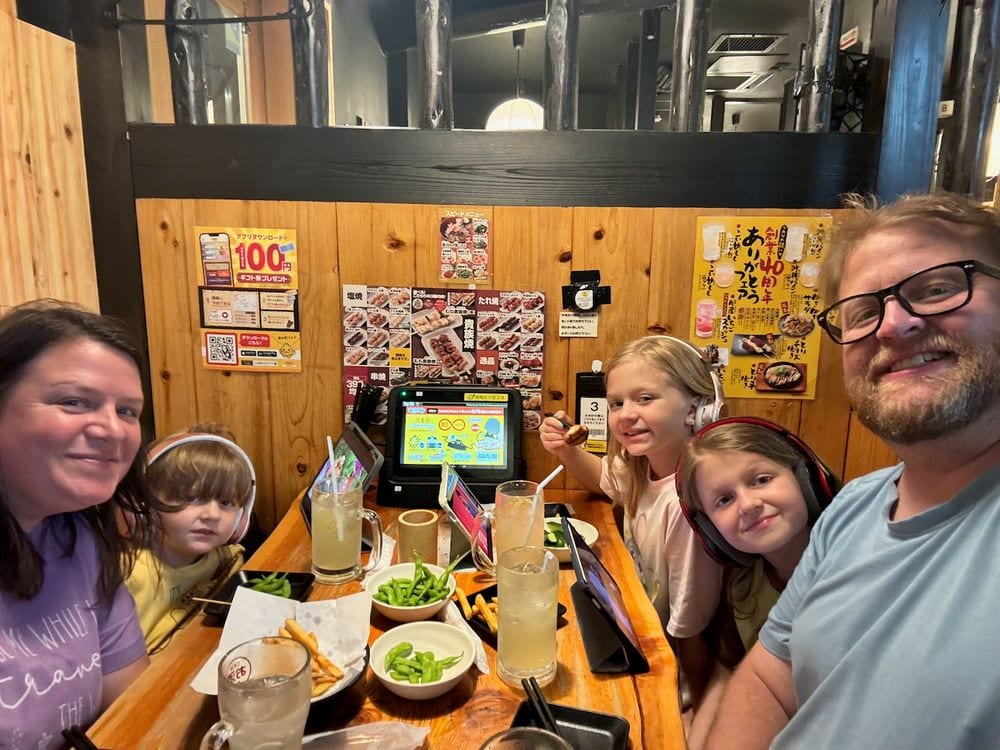
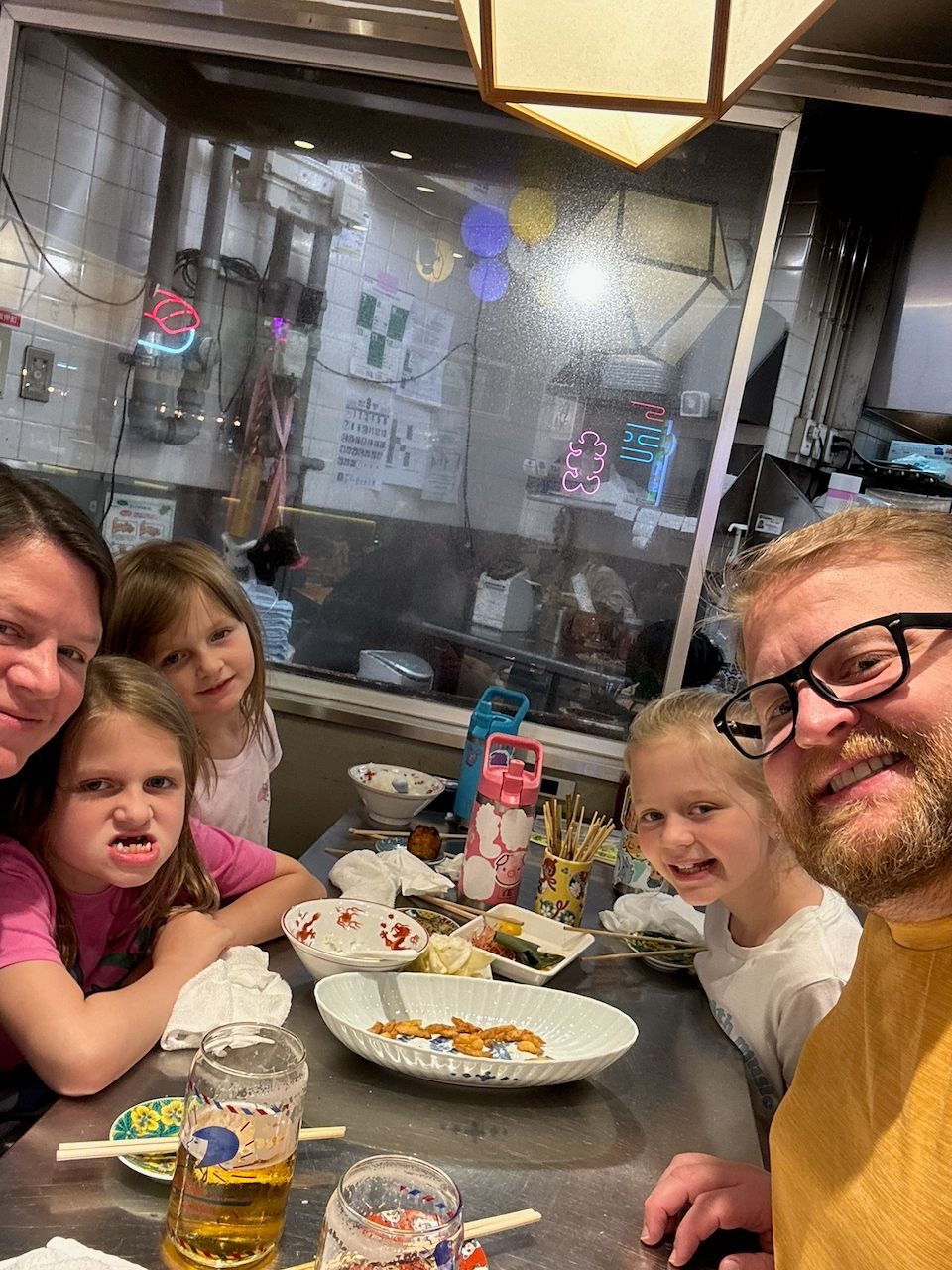
We landed on a yakitori spot on the first night without much research, the kind of decision that’s easy in Asakusa because there’s a grilled-skewer counter or a wooden-booth izakaya on nearly every block. Edamame arrived before the skewers did and was gone before they showed up, which is about as accurate a description of dining out with three kids as we can give.
Mascots on every corner
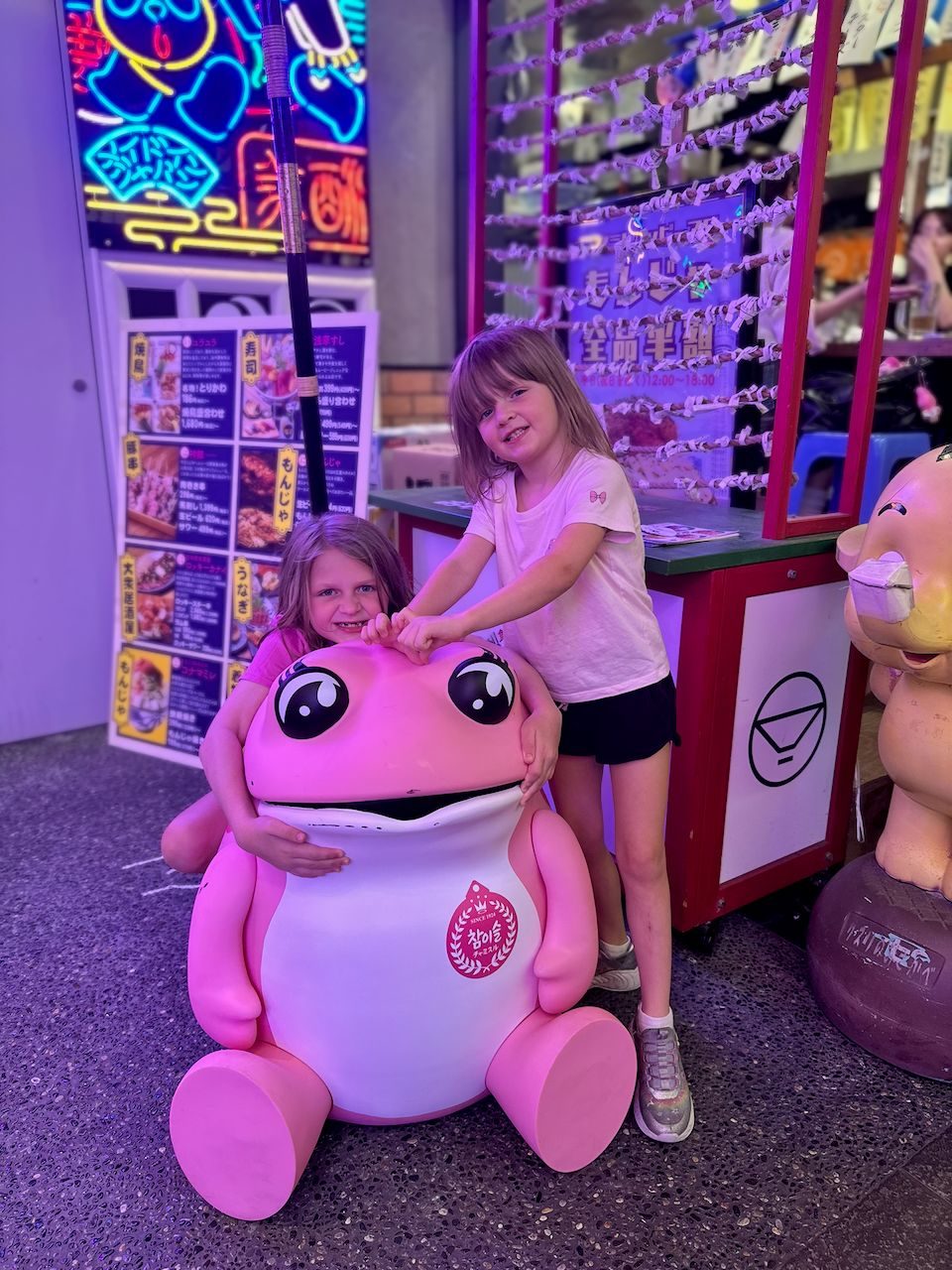
A few nights later we went looking for dinner again and got sidetracked by a giant pink frog standing outside a restaurant, which is a normal enough experience in Asakusa’s backstreets to barely register after a few visits. Storefront mascots are everywhere in this neighborhood, not tourist-facing installations but the kind of low-effort marketing every small restaurant seems to have a version of, and two kids who’d stop for every single one of them turned what should have been a five-minute walk into twenty.

What changes after a week in one neighborhood
A two-night stay in Asakusa looks completely different from a ten-day one. By the third or fourth day we weren’t checking a map before dinner, we had a rough sense of which block had the yakitori counter, which convenience store had the better onigiri selection, and which side streets were worth the extra five minutes for the Skytree view. None of that saved us money in any way we tracked, but it changed the texture of the trip: fewer decisions made from a guidebook, more made from having walked the block before. Staying long enough for a neighborhood to become familiar rather than a checklist item is its own kind of value, even if it’s the kind that never shows up on a receipt.
Free views that don’t show up in any guidebook
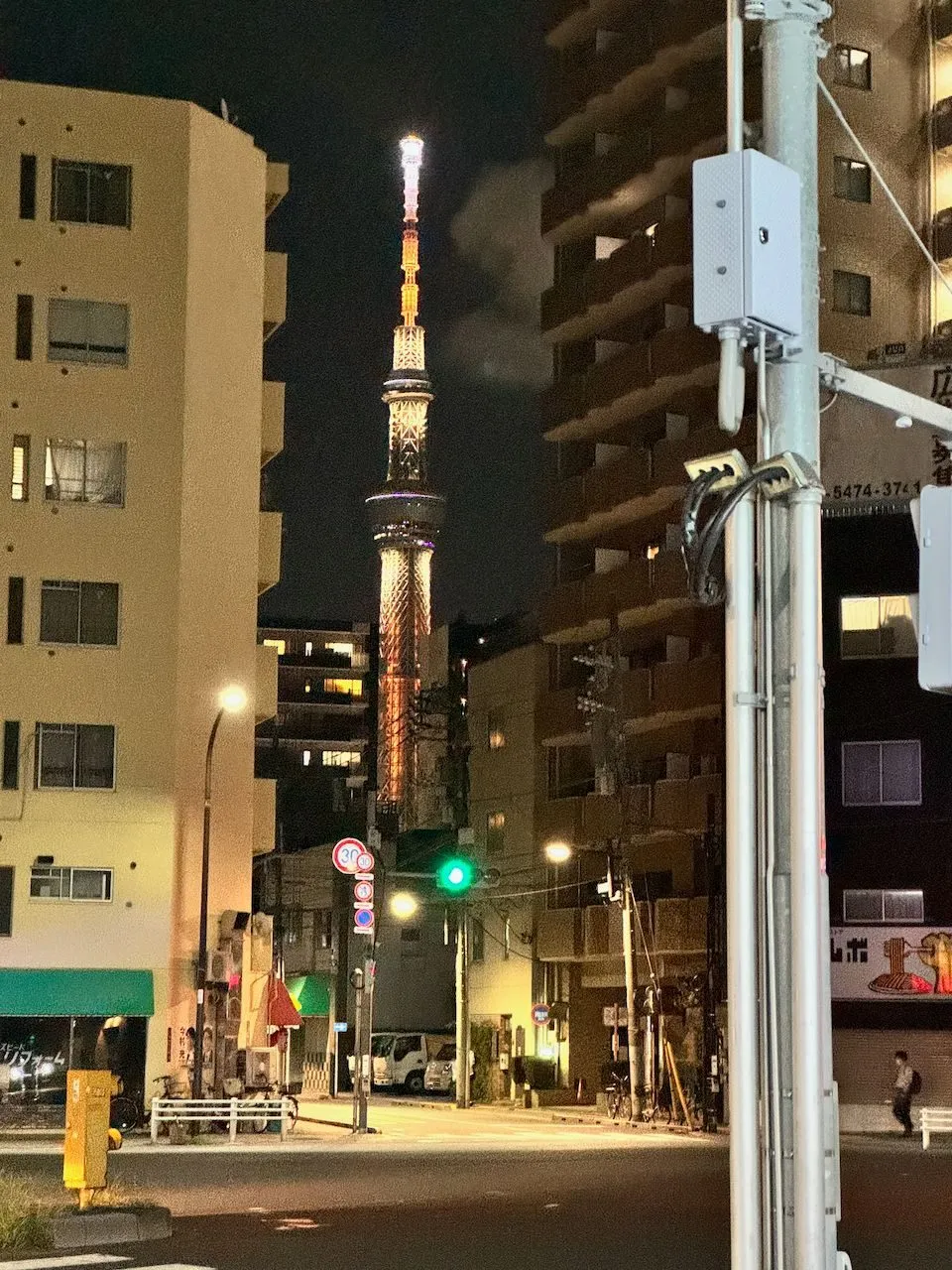
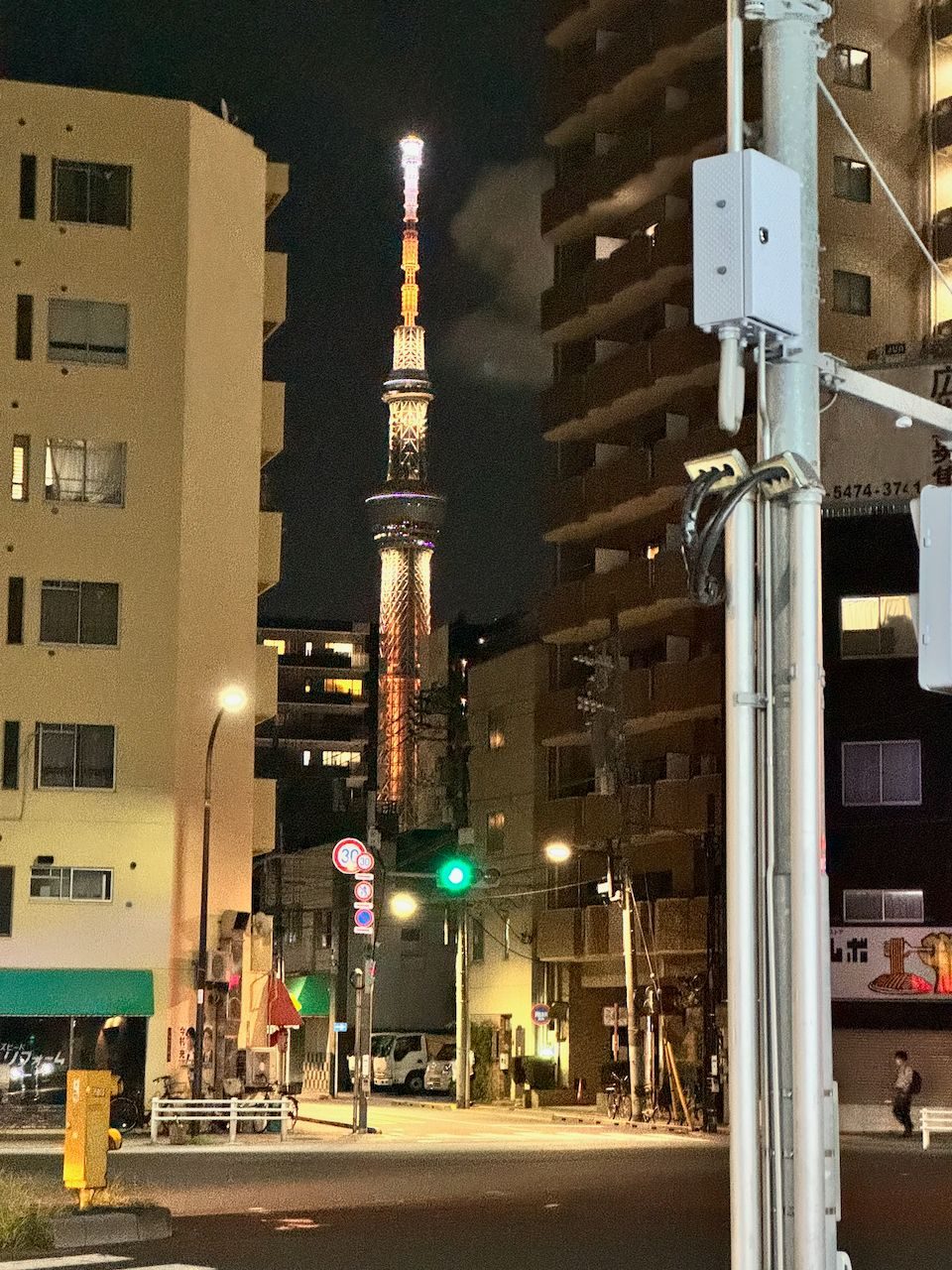
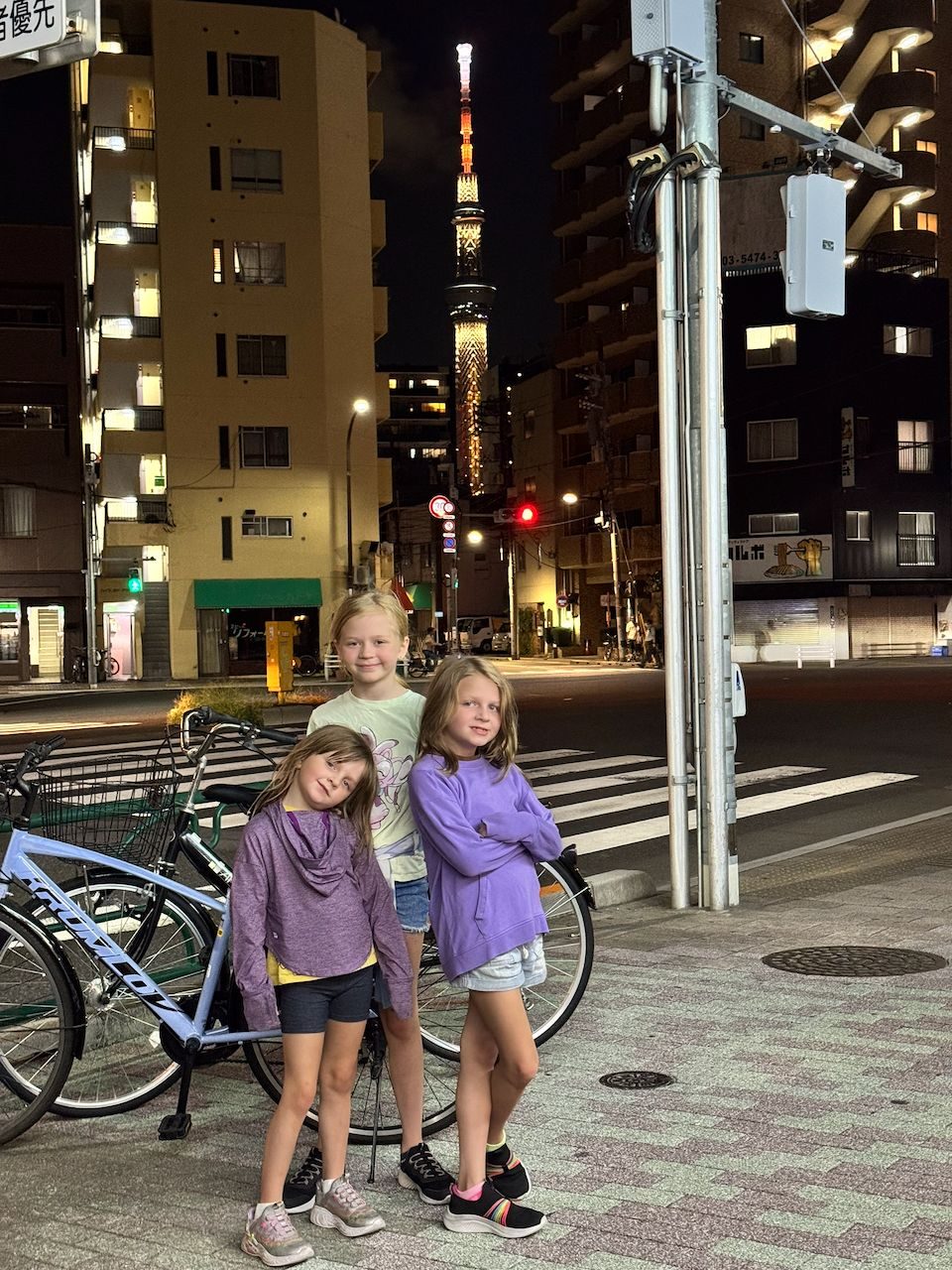
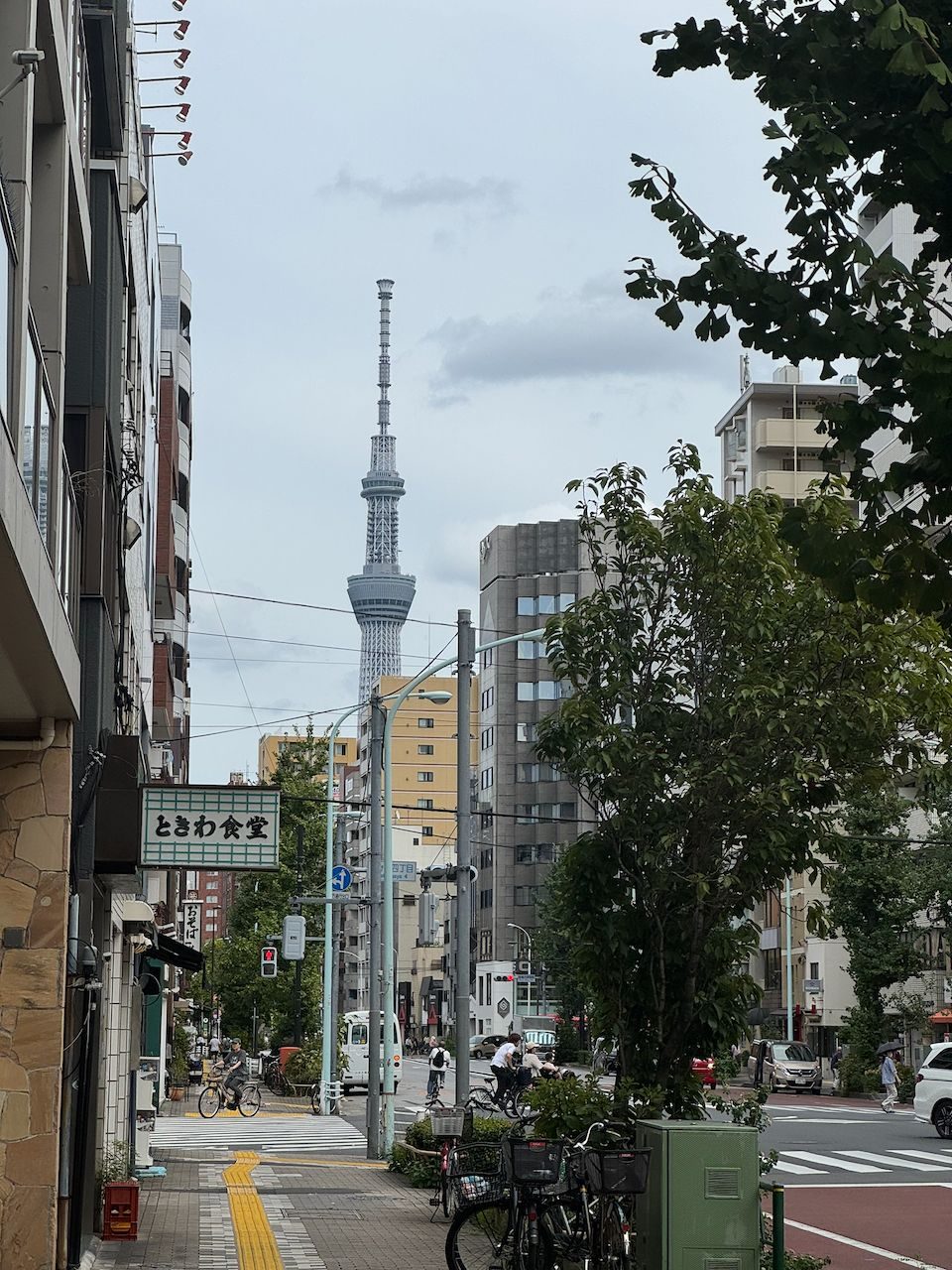
Twice on this stay, days apart, we ended up on quiet residential side streets with Tokyo Skytree framed perfectly at the far end between low apartment buildings, no crowd, no photo line, nobody else stopping to look. One of those streets, in the Iriya area at the edge of Taito, still had a decades-old diner sign hanging over the sidewalk, the kind of shop that’s clearly been there since long before the Skytree existed and doesn’t seem especially impressed by it. These views cost nothing and take no planning, they’re just what a lot of ordinary Taito side streets look like after dark, and they’re arguably a better photo than most of what you’d pay a viewing deck for.
Asakusa has two personalities depending on which direction you walk from the station, and a ten-day stay makes the split obvious in a way a day trip never does. Toward Senso-ji and Nakamise-dori, it’s the version everyone photographs: lanterns, souvenir stalls, a steady flow of tourists day and night. A few blocks the other direction, past where the foot traffic thins out, it’s ordinary residential Tokyo, bicycles parked outside apartment buildings, small family-run shops that have no reason to cater to visitors, and a night sky with the Skytree rising over the rooftops like it’s just part of the furniture. Both versions are real Asakusa, and most visitors only ever see the first one.
The wagyu night, up close
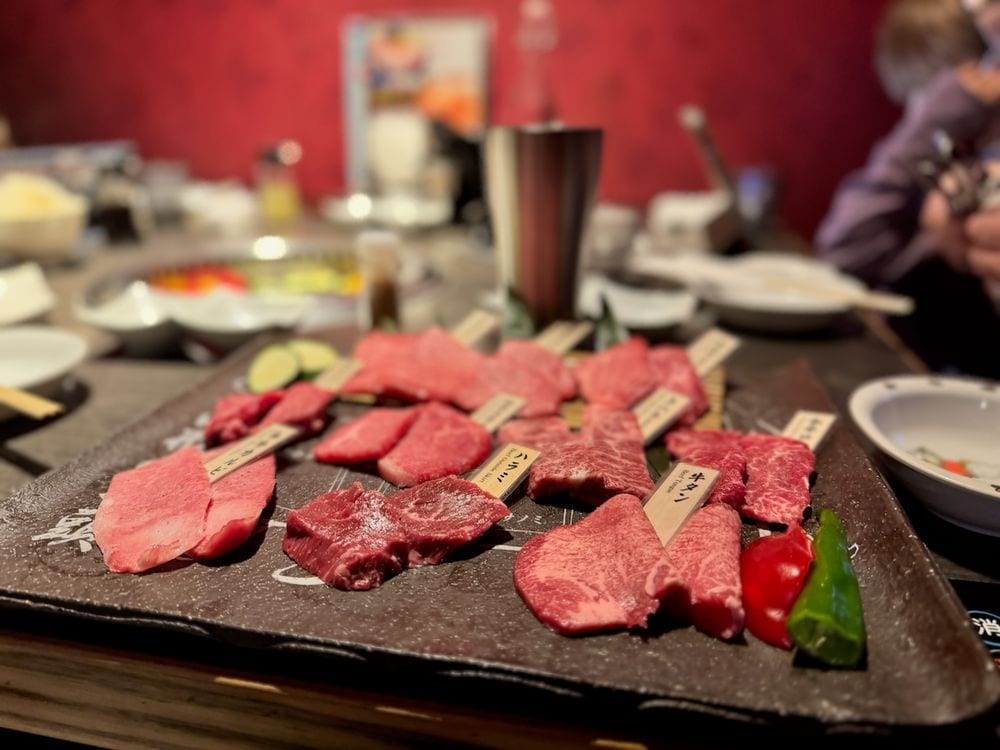
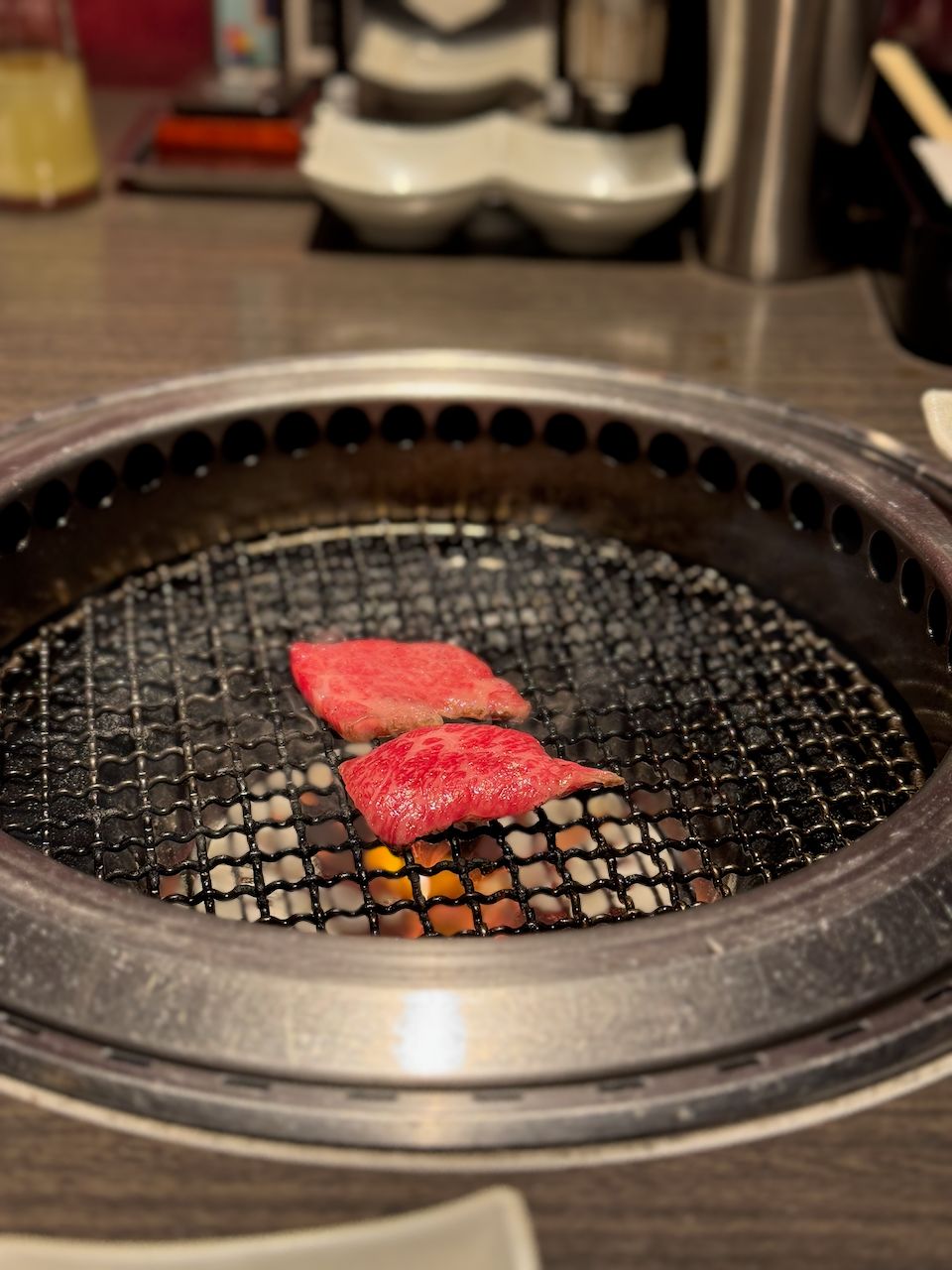
We mentioned the grill-it-yourself wagyu night briefly in the Senso-ji post as the splurge alternative to a cheap yakitori dinner, but didn’t show what that table looks like: a slate board of raw cuts, each one individually labeled on its own small wooden tag, laid out so you know exactly what you’re about to put on the coals before you touch it. This is a different format entirely from the A5 wagyu yakiniku dinner we’ve written about from an Osaka trip, that one arrived pre-arranged on a single platter from the kitchen; this one hands you the raw cuts and a live grill and leaves the cooking to you. Real per-person pricing for this category of dinner in Japan typically lands in the same broad range as any A5-grade yakiniku course, roughly 8,000 yen and up depending on the cuts and the restaurant, whether the kitchen grills it for you or you do it yourself at the table. The labeled tags matter more than they sound like they would once the grilling starts: with five different cuts on one board, it’s easy to lose track of which piece came from where, and the small wooden markers meant nobody at the table had to guess whether a given piece needed thirty seconds or two minutes over the coals. It also turns dinner into something closer to a shared activity than a meal that arrives finished, which is part of why a splurge like this reads as an event rather than just an expensive plate of food.
Back at Senso-ji, one more time
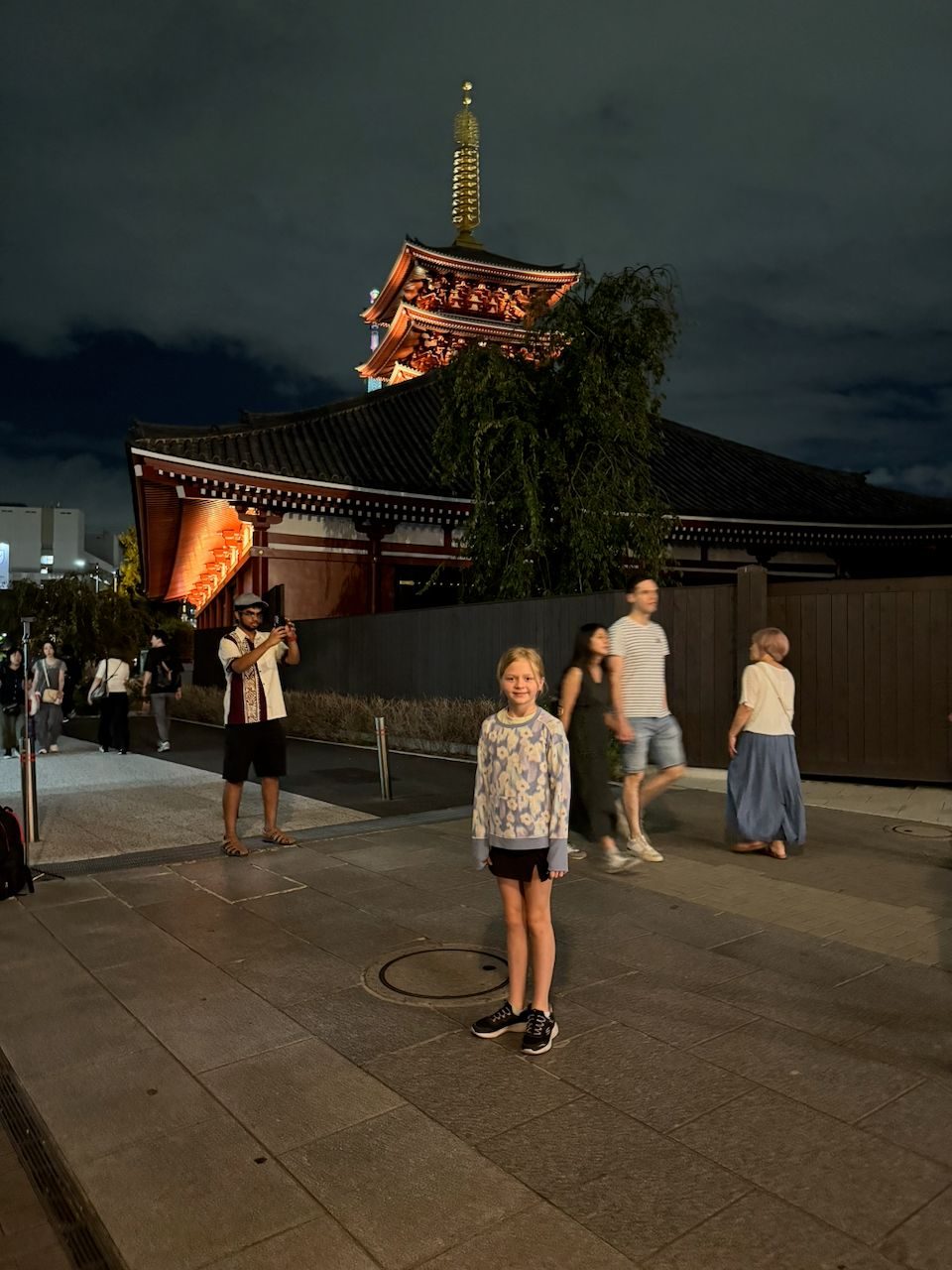
We went back to the temple itself once more near the end of the stay, and it’s worth saying plainly: the pagoda lit up at night doesn’t get less impressive the fourth or fifth time you’ve stood in front of it. Lily in particular has reached the point of being a genuine Asakusa regular, recognizing the same lantern-lined path and the same night lighting without needing to be told where to stand for a photo.
A stranger on the street
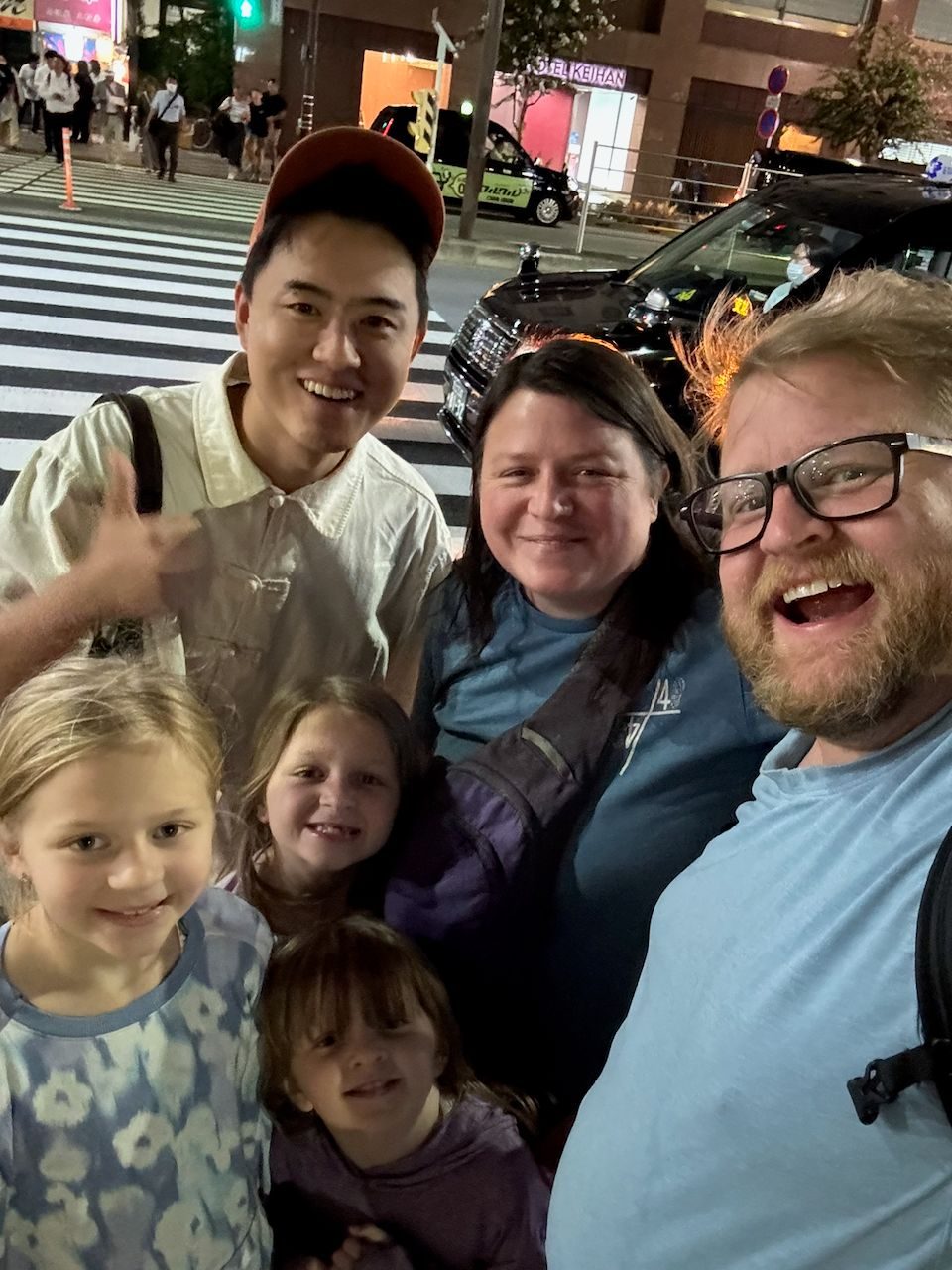
The last night of the stay, a subscriber to our family’s travel channel spotted us on a street corner in Asakusa and stopped to say hi. It’s one of the stranger side effects of documenting a trip publicly, that somewhere between the airport, the temple, and a random side street, someone recognizes your face from a phone screen rather than in person first. It cost nothing, took two minutes, and is exactly the kind of moment that doesn’t show up on any itinerary or cost breakdown but ends up being one of the things we remember most clearly from the whole stay.
What the food cost across ten days
Stack the two dinners we’ve shown here against each other and the range across just this one stretch runs from a flat-priced yakitori counter, the kind where nearly everything lands around 300 yen an item, up through a grill-it-yourself wagyu night that likely landed in the same broad 8,000-yen-and-up per-person range as any A5-grade yakiniku course we’ve researched from a separate Osaka trip. That’s roughly the same spread we found comparing a cheap izakaya night against an A5 wagyu splurge in Osaka: a family can eat extremely well in Japan on a flat-rate chain budget most nights, and still have room in the same week for one dinner that costs ten times as much, without either one feeling like the wrong call for the night it happened on. Ten days in one neighborhood is long enough to hit both ends of that range more than once, which is part of why a longer stay ends up being a more honest picture of what food costs here than any single dinner would be on its own.
Why ten days instead of two
Most guides treat Asakusa as a half-day stop: temple, shopping street, lunch, done. Staying ten days meant we ate at enough different counters to stop needing a recommendation, found the side streets with the good Skytree views by accident rather than by searching for them online, and got recognized on the street by someone who’d been following along the whole time. None of that shows up on a typical itinerary, and none of it required a ticket. The temple is still the single best free thing to do here, that part hasn’t changed, but the rest of what makes Asakusa worth ten days instead of two is everything that happens in between the attractions, not the attractions themselves. A shorter trip would have given us the pagoda and the shopping street and called it done; the longer one gave us a pink frog mascot, two different quiet-street Skytree views, a stranger who already knew our names, and a much better sense of what an ordinary week costs here, not just a single best-case evening. We’ll go back to Asakusa again, probably more than once, and every time the plan will likely be the same one that worked this time: pick a base, stay longer than feels necessary at first, and let the ordinary nights fill in around whatever the one big attraction on the list turns out to be.