A Cheap Yakitori Night Out vs an A5 Wagyu Splurge in Osaka
Two real Osaka dinners at opposite ends of the scale: a casual izakaya night with beer and grilled skewers, and an A5 wagyu yakiniku feast.

Published on 6 min read

On this page
Two more real Osaka nights out, on opposite ends of the price scale from each other. One is a casual izakaya stop for beer and grilled skewers, the kind of dinner that needs no reservation and no plan. The other is an A5 wagyu yakiniku spread, cuts of beef marbled enough to look almost unreal on the plate. Neither is the “normal” night, but between them they cover most of what eating out in Osaka looks like.
The cheap side: beer and skewers
An izakaya run is the easiest dinner decision in Japan. Walk in, grab a table, order a round of drinks and a handful of skewers, and the whole thing is usually resolved before anyone’s had time to overthink the menu. Yakitori, skewered and grilled chicken, runs 100 to 200 yen a stick at a typical casual spot, climbing toward 300 yen for better cuts and staying under that everywhere that isn’t specifically a high-end skewer counter. Torikizoku, the country’s biggest yakitori chain, prices its entire menu at a flat 390 yen a plate as of this year, food and drink alike, which gives a sense of just how cheap this category can run when a chain builds its whole business model around it.
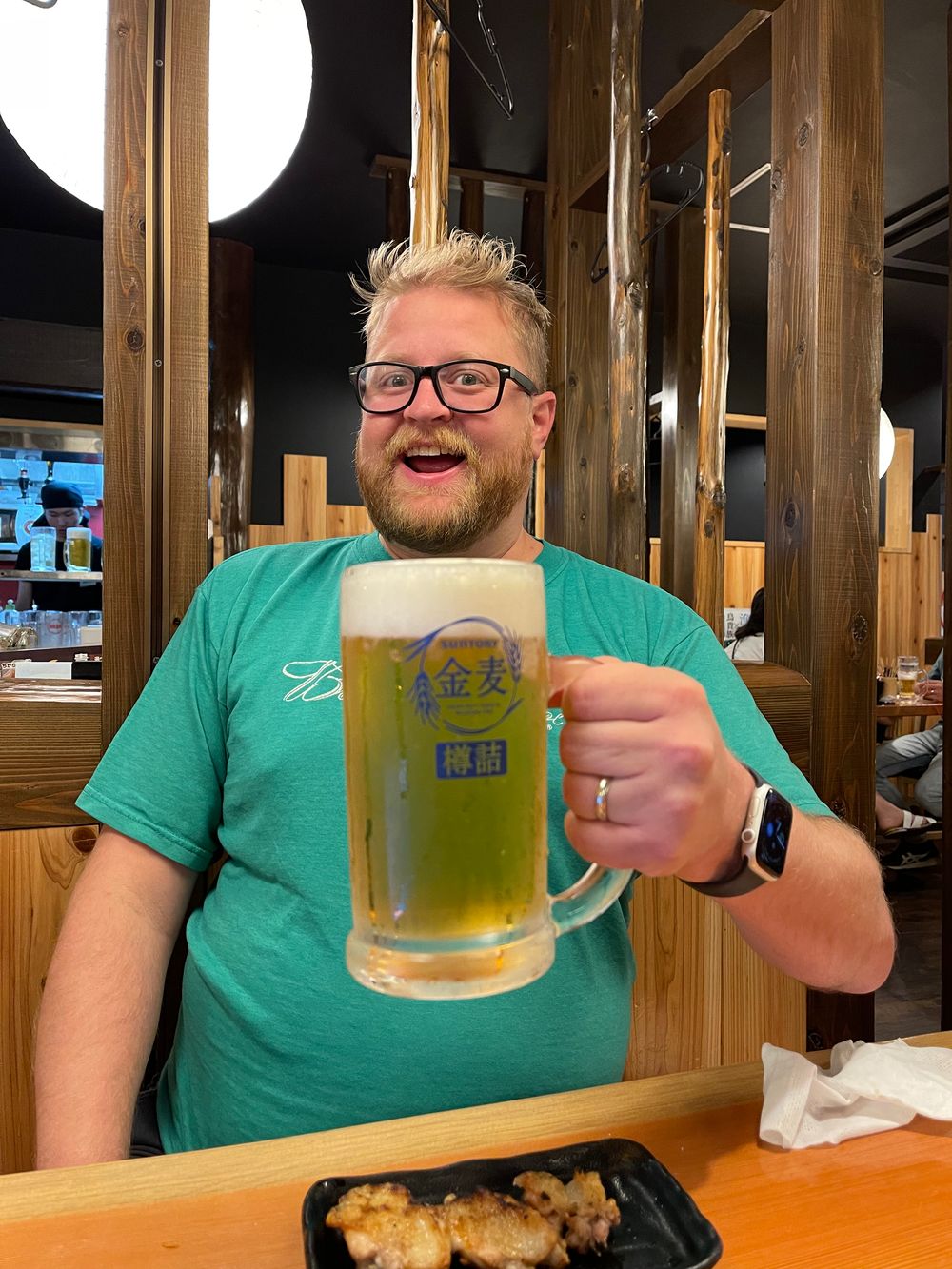
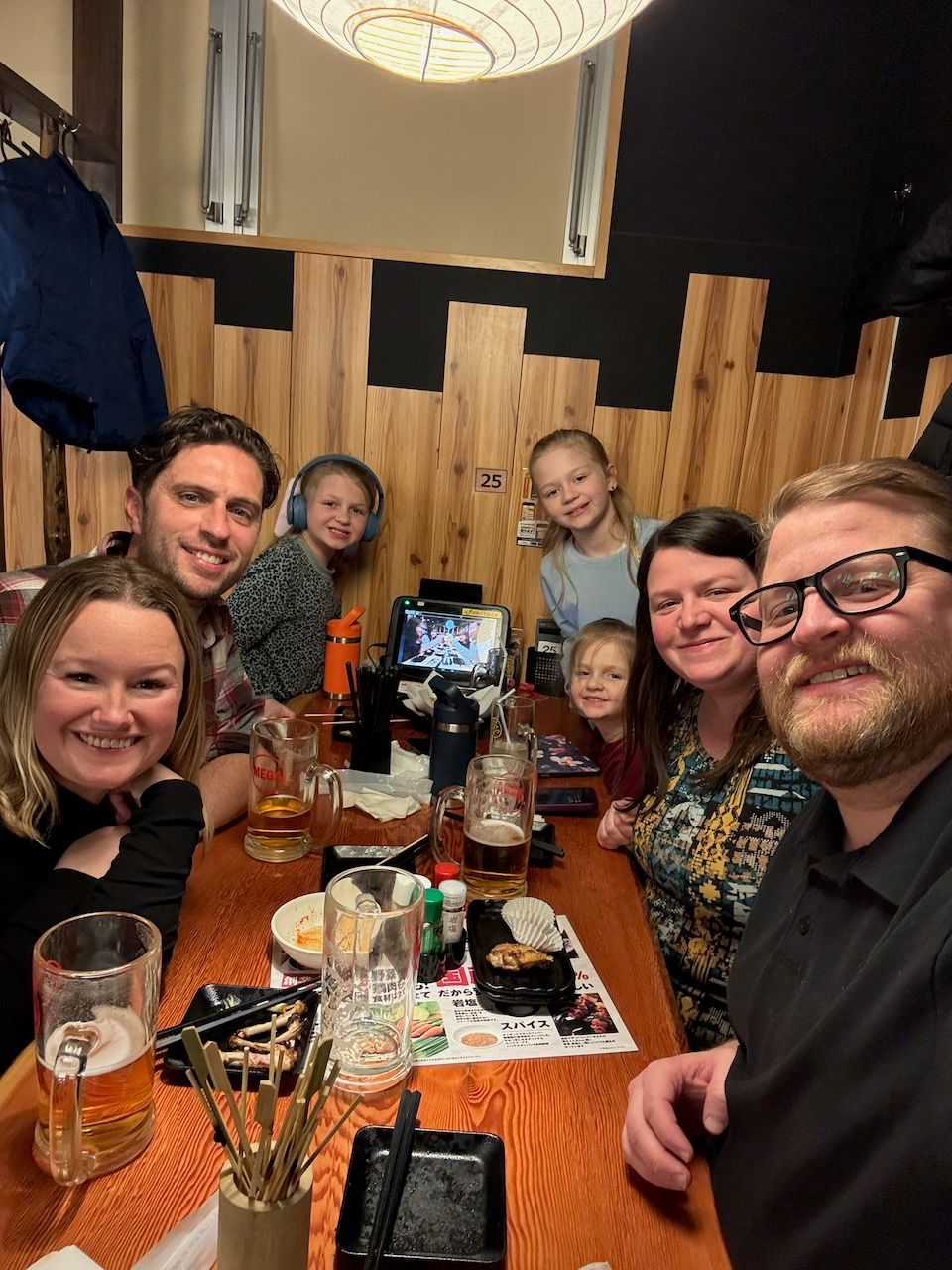
The beer follows the same logic. A standard draft, what most izakaya menus list as a jokki, runs 500 to 800 yen at a typical spot, with smaller pours starting around 290 to 390 yen at the cheaper chains and a full-size mug like the one in our photo landing comfortably in that middle range. None of it requires advance planning, a reservation, or even much Japanese beyond pointing at a menu photo, which is most of why this is the default dinner on a night that doesn’t have anything else scheduled.
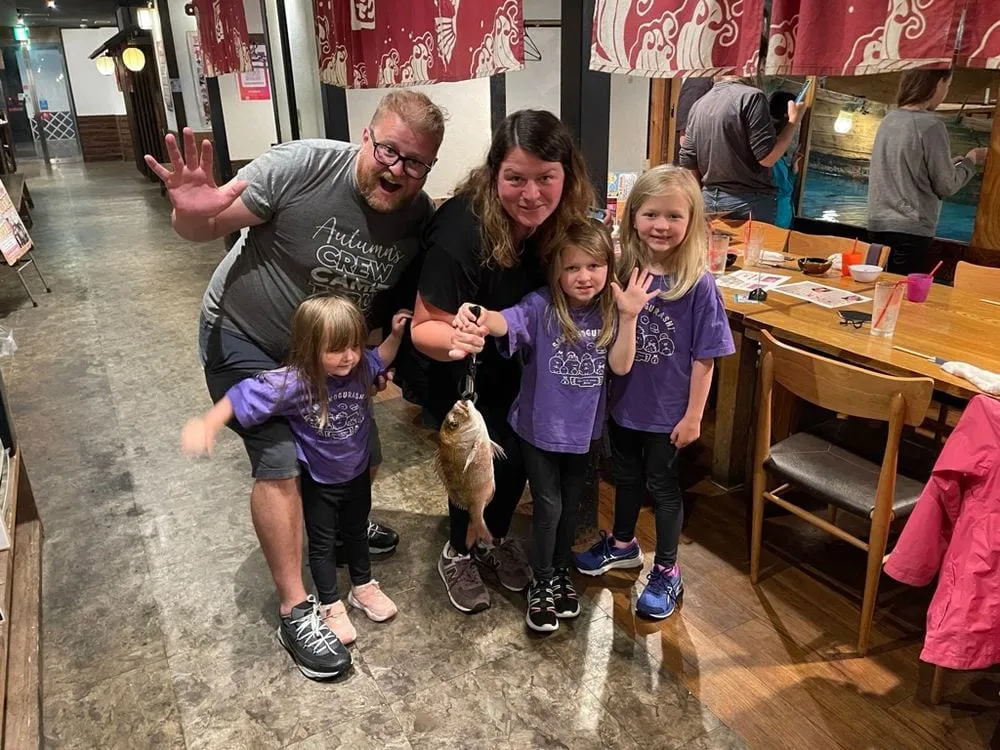
A different Osaka night that first got filed under this same “izakaya” bucket turned out, once a clearer photo of it surfaced, to be something else entirely: a dinner at Zauo in Namba, a restaurant built around catching your own fish from indoor tanks rather than ordering it off a menu. Real prices and how that one works are their own post, not a skewer-and-draft-beer night at all despite the surface similarity of a whole fish on the table.
The splurge side: A5 wagyu yakiniku
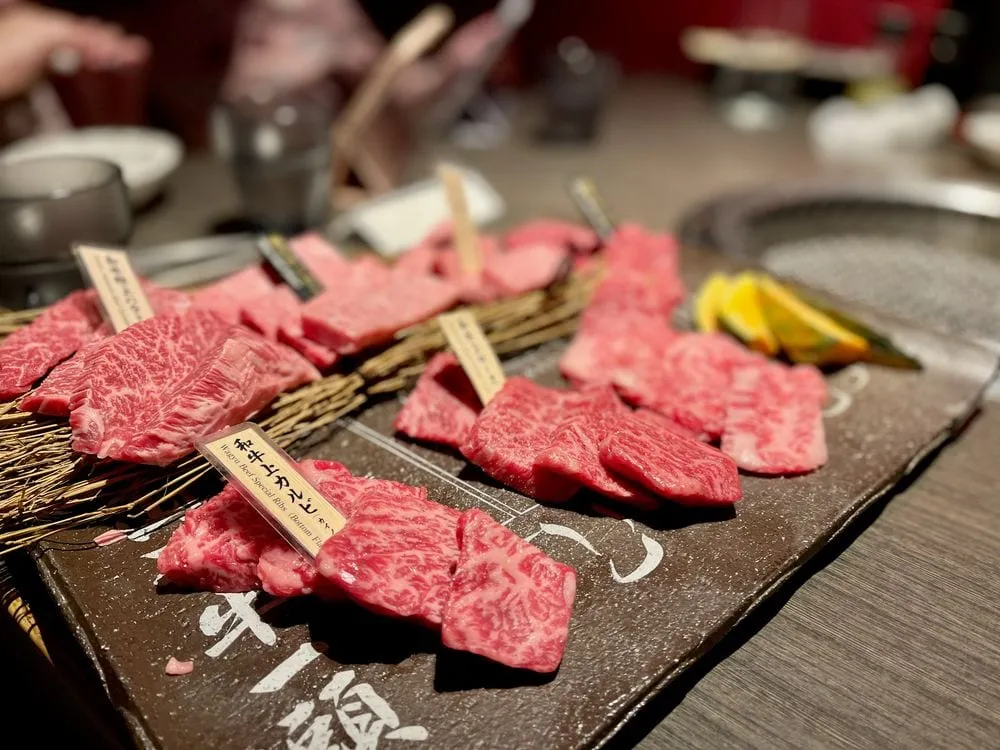
On the other end of the scale, an A5 wagyu yakiniku dinner is a deliberate decision, not a default one. A5 is the top grade on Japan’s beef scoring system, and a satisfying course at a solid Osaka yakiniku restaurant runs somewhere between 8,000 and 12,000 yen a person, with the high end of the market pushing past 20,000 yen depending on the cuts and the restaurant’s reputation. Osaka’s yakiniku scene tends to split into three rough tiers: all-you-can-eat spots under 5,000 yen a person for a reliably good but not top-grade meal, mid-range restaurants around 10,000 yen, and the high-end A5 specialists at 10,000 to 20,000 yen and up. Our night landed in that upper bracket, a real difference from the flat 100 to 390 yen decisions on the cheap side of this comparison.
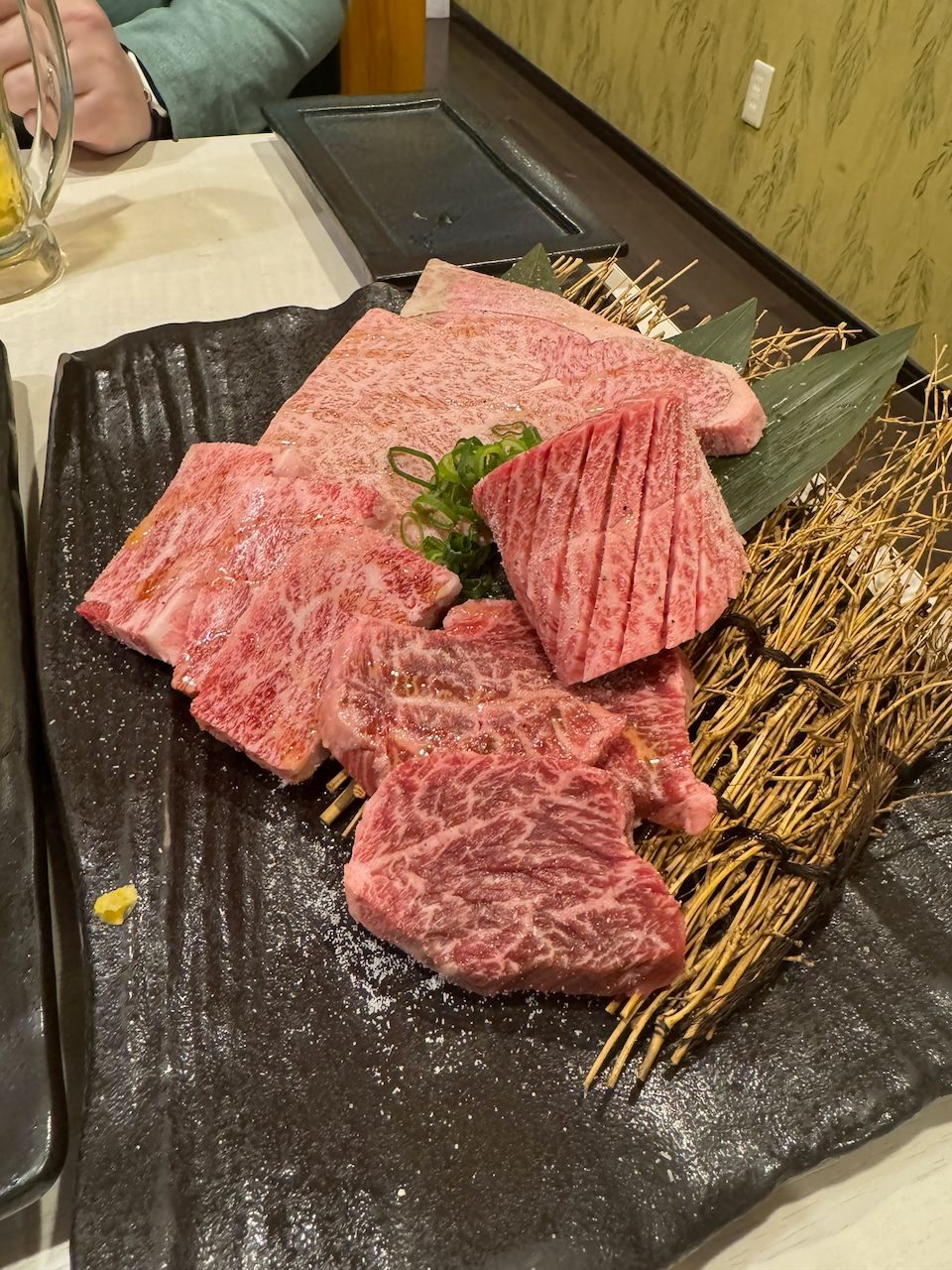
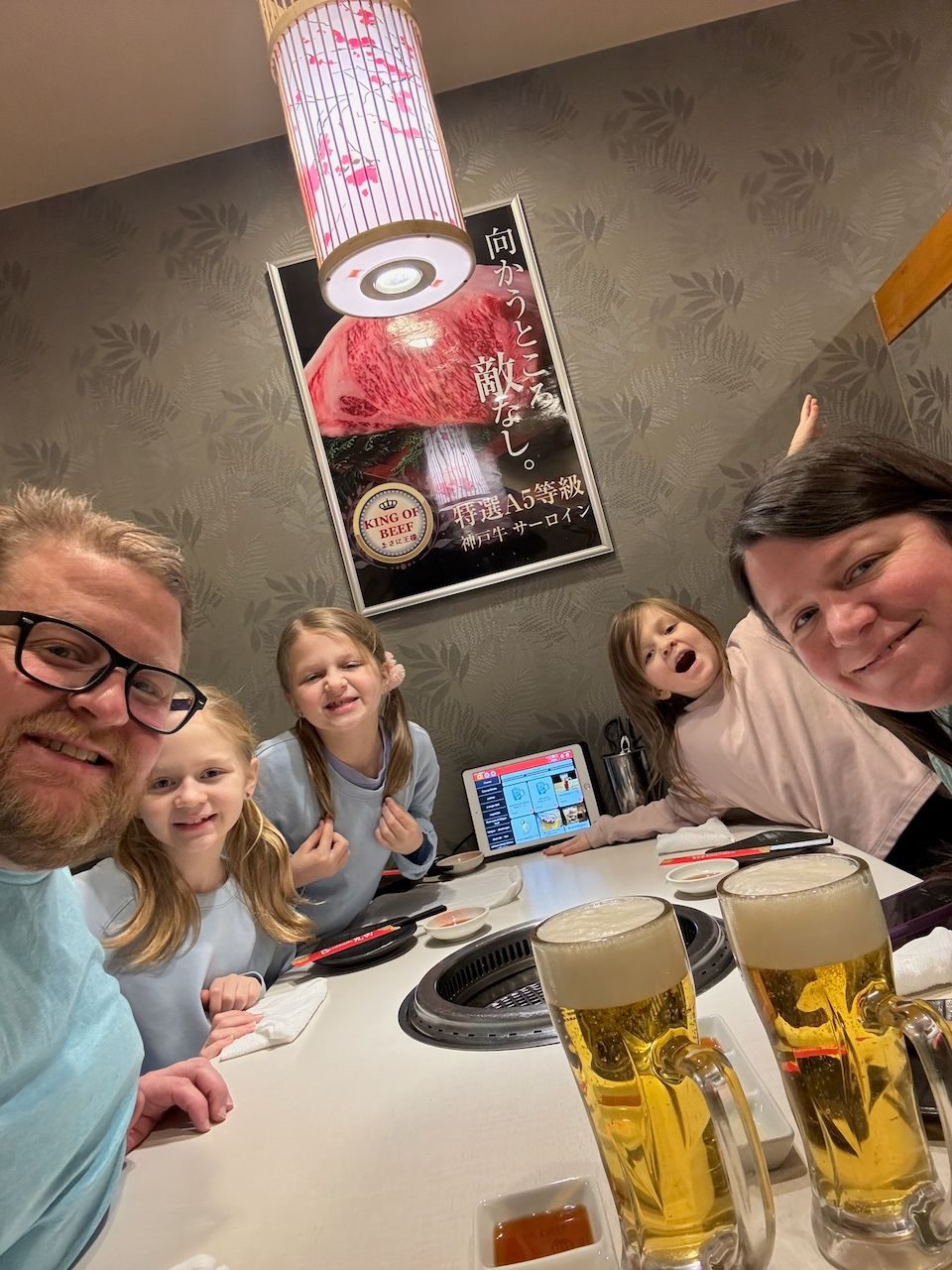
We didn’t come away with an itemized receipt from that night, so we’re not claiming an exact total here, but the restaurant’s own in-house A5 sirloin poster and the tablet ordering system are both consistent with the mid-to-high end of Osaka’s yakiniku market rather than a budget all-you-can-eat spot, and the real per-person ranges above are what a family should expect walking into a similar restaurant today.
Side by side
| Izakaya night | A5 wagyu yakiniku | |
|---|---|---|
| Skewer or cut | 100-300 yen a stick | Part of an 8,000-20,000+ yen course |
| Draft beer | 500-800 yen a mug | Included or ordered separately |
| Reservation | Walk in, no wait | Often booked ahead |
| Per person, roughly | Under 1,500 yen for a full round | 8,000 yen and up |
That’s somewhere between a five and fifteen times difference per person, depending on which end of the yakiniku market you land in, and neither meal is trying to be the other.
Bringing three kids to either one
Both of these categories turned out to be more family-friendly than the price gap between them would suggest. Izakayas get a reputation as an adults-only drinking spot, but plenty of them, ours included, are perfectly relaxed about a table with three kids in the mix, especially before the later evening crowd shows up and the room shifts toward a younger, louder scene. Ordering is simple enough that a picky kid can usually find something plain off the skewer list, chicken thigh or a plain rice ball, without anyone needing to negotiate a special order. The yakiniku side worked just as well with the whole family at the table, tablet ordering meant nobody had to flag down a server every time someone wanted a different cut, and grilling your own food tableside turns out to be its own kind of entertainment for kids who’d otherwise be squirming through a long sit-down course. Neither category required us to leave anyone at home or plan around a kids’ menu that didn’t exist.
Why both are worth knowing about
The izakaya side of this comparison is what most weeknights in Japan look like for us: cheap, fast, no planning, forgiving of a group that didn’t book ahead. The wagyu yakiniku side is the deliberate splurge, the night set aside on purpose rather than the default. Knowing the real range between a 390 yen skewer plate and a 20,000 yen A5 course matters more than knowing either number in isolation, because a real trip through Osaka moves through both ends of that range depending on the night, not one flat average that smooths the difference away.
Was it worth it, both times
Yes, for different reasons entirely. The izakaya nights were worth it because they took zero effort and let a table of five, or two families crammed into one booth, eat well without anyone stressing over where to go. The wagyu yakiniku night was worth it because it was a deliberate treat, the kind of meal that turns an ordinary Tuesday into something worth remembering, not a reflex order. Neither would have worked in the other’s place, and that’s really the whole point of keeping both ends of Osaka’s food budget in mind rather than expecting one number to cover every night out.