The Nameplate on Harper's Birthday Cake, and What a Cake Like It Costs in Japan
A small cardboard nameplate wedged into a Sanrio-themed birthday cake in Katsushika led us into Japan's real two-tier cake culture, 500 yen to 4,000 yen apart.

Published on 7 min read
On this page
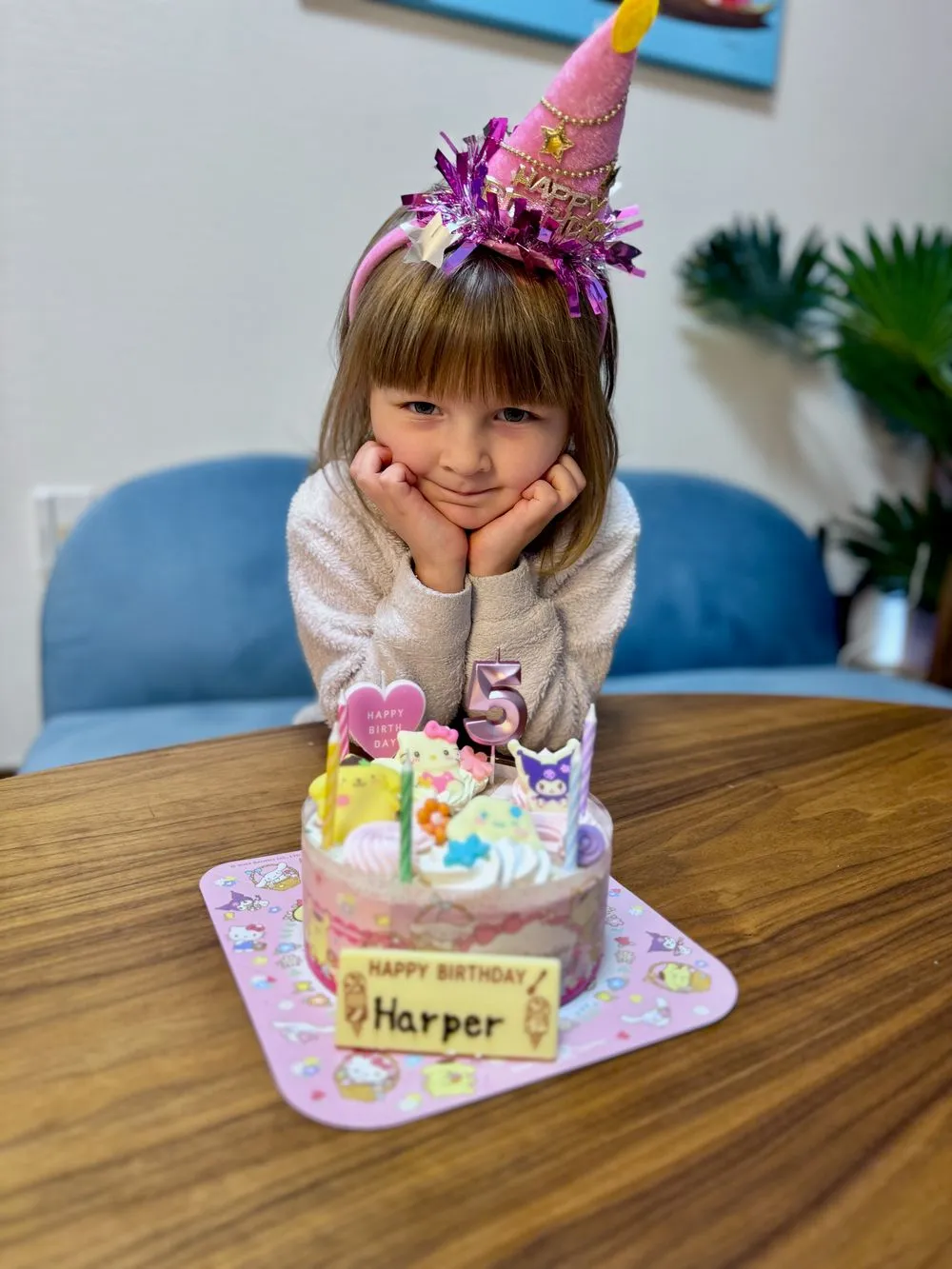
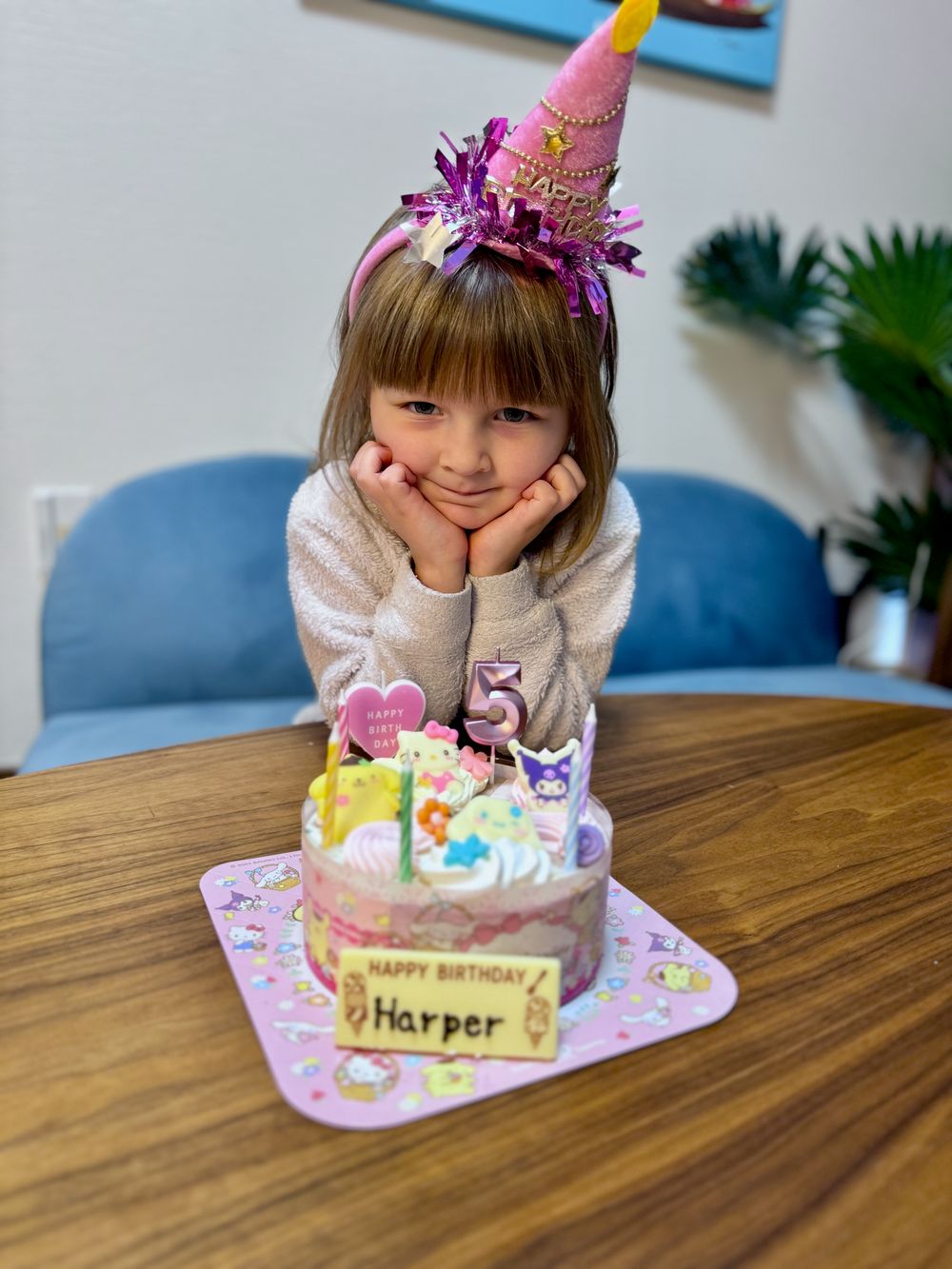
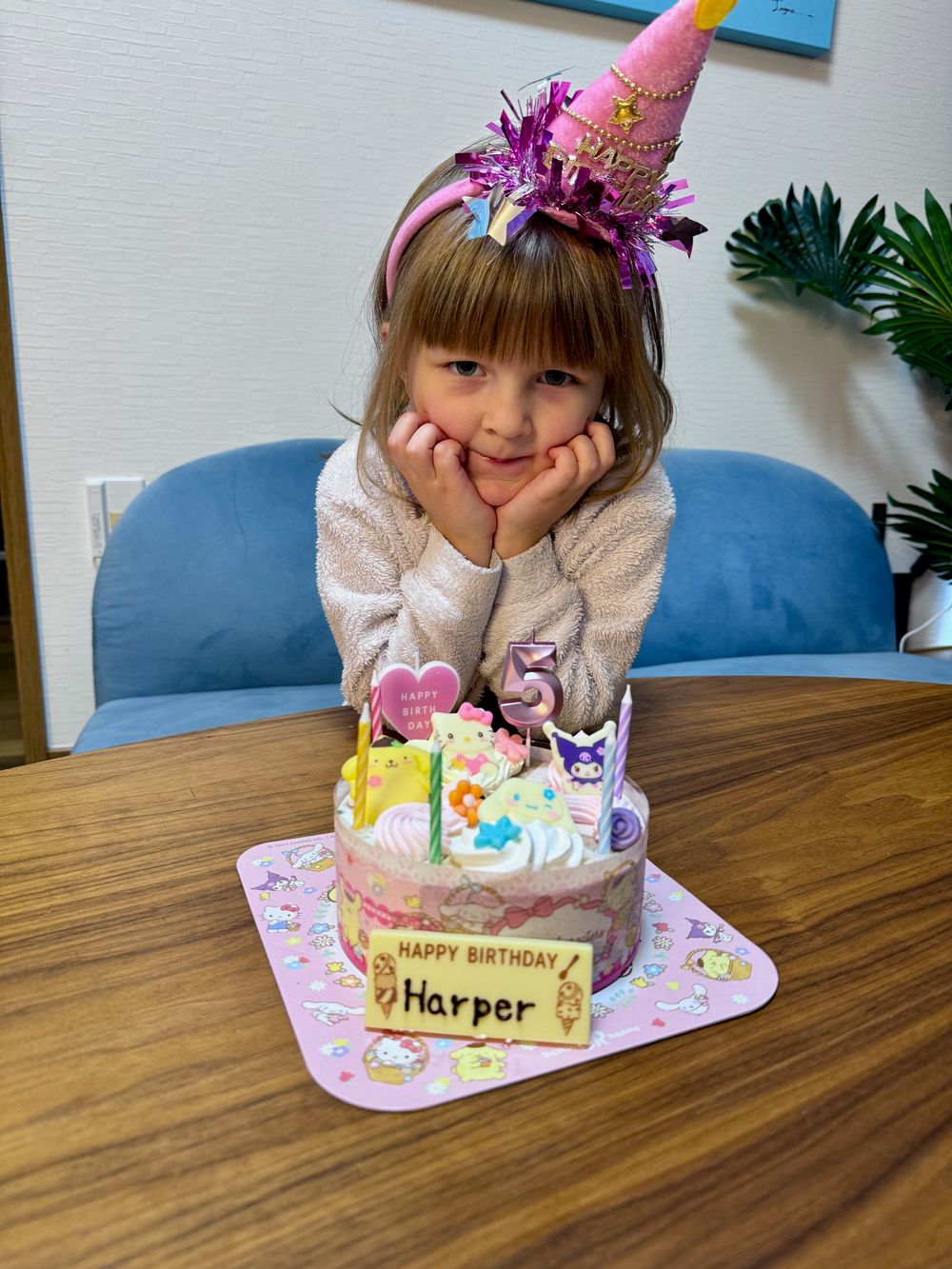
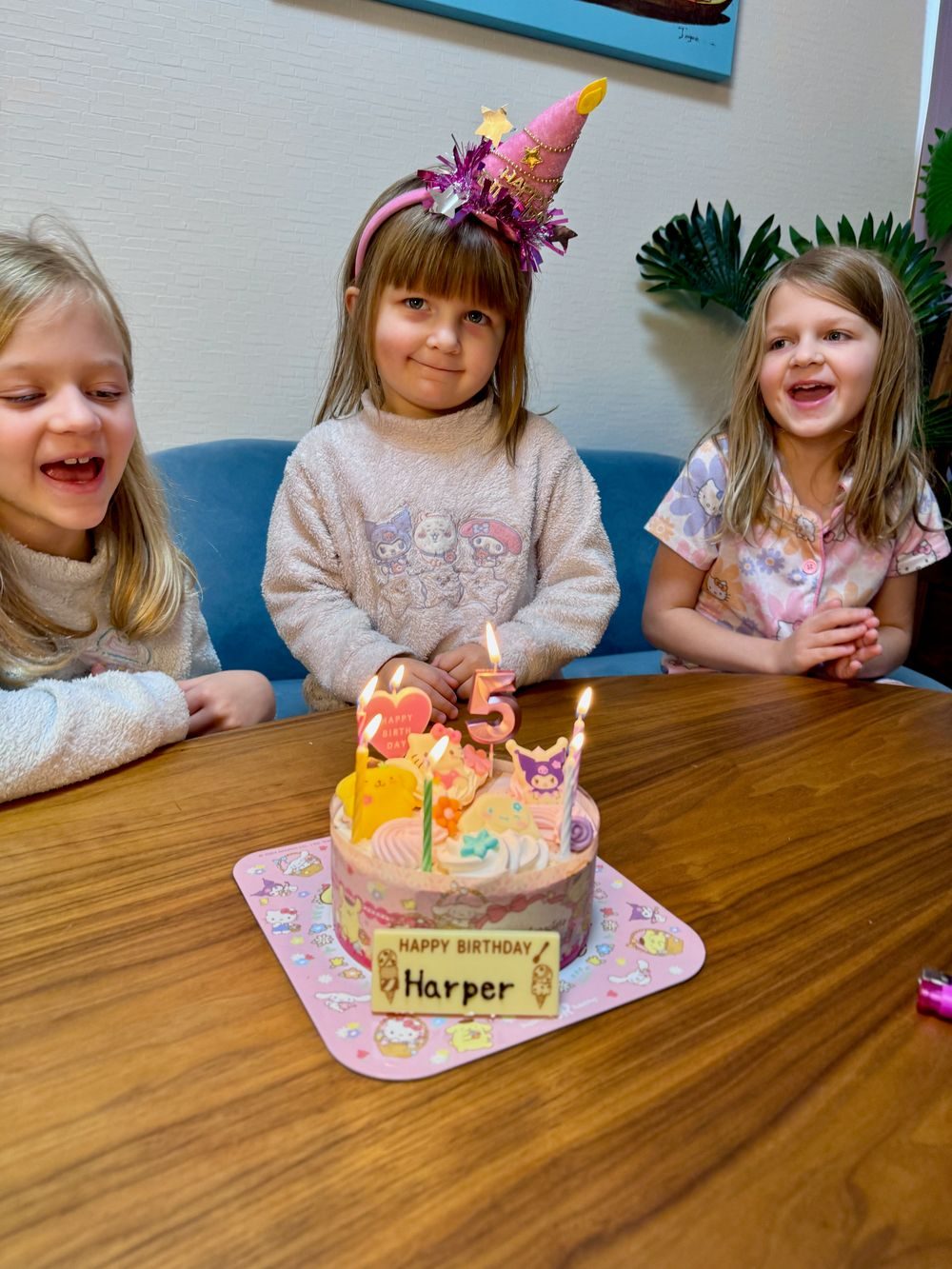
The artifact this time isn’t a receipt, it’s a small pink cardboard plaque wedged into the side of a cake, printed with a Sanrio character border and the words “HAPPY BIRTHDAY Harper.” June 25, 2024, our youngest turning 5 at home in Katsushika, and that plaque is the kind of small, deliberate detail that doesn’t show up on a generic store-bought cake. It’s a sign the cake was ordered, not grabbed off a shelf, and that distinction turns out to be the whole cost story in Japan.
The baseline: a 500 yen cake nobody has to order ahead
Japan’s default celebration cake isn’t a generic buttercream sheet cake, it’s strawberry shortcake, specifically: sponge layers, whipped cream, sliced strawberries, nothing more elaborate than that unless you ask for it. It’s been the standard since the 1920s, when the Japanese pastry company Fujiya introduced it and the format stuck hard enough that “cake” in Japan still defaults to this exact image, white sponge, white cream, a strawberry on top, whether the occasion is a birthday or Christmas. A basic version runs 400 to 600 yen, sold by the slice or as a small whole cake at convenience stores and ordinary patisseries, no advance order required, no personalization, no plaque.
Where the 500 yen version comes from
The strawberry shortcake tradition traces back to one specific company, not a generic national habit that emerged on its own. Fujiya opened its first shop in Yokohama in 1910, founded by Rin’emon Fujii as Japan’s first confectionery dedicated entirely to Western-style sweets, and it built British-style Christmas cakes into its early identity before the strawberry shortcake version became the format that stuck. The company expanded into Ginza in 1922, helping popularize a Western lifestyle image that was still a novelty in Japan at the time, and in 1950 introduced its own mascot, Peko-chan, a child figure that still stands outside Fujiya shops today and anchors the company’s branding a century on. The basic cake sitting in a convenience store cooler for 500 yen carries all of that history whether or not the shopper buying it knows it, a direct descendant of a specific Yokohama bakery’s early 20th century bet that Japan would take to Western-style cake.
The custom tier: where the nameplate comes from
Harper’s cake isn’t that 500 yen version. It’s a small, custom, character-decorated cake with its own category in Japan, built around pre-ordering through a bakery or an online cake service rather than walking in and buying one off a shelf. We don’t have a receipt for this specific cake, so we’re not claiming an exact total, but the real current market for this category is well documented: Cake.jp, one of Japan’s major online cake ordering services, runs an official Sanrio collaboration called the Custom Cake Maker, letting a customer pick a character (Hello Kitty, Cinnamoroll, Pompompurin, and several others), a cake size, and add-ons like a chocolate character plate or icing cookies, starting at 4,000 yen tax included for the smallest size and climbing from there. That’s roughly seven to ten times the price of the basic strawberry shortcake sitting in the same convenience store a five minute walk away.
Why the gap is that wide
The jump isn’t padding, it’s a different product entirely. A basic shortcake is a same-day, walk-in purchase with zero customization. A character cake like Harper’s requires advance ordering, lead time bakeries build into the price the same way a custom suit costs more than one off the rack, a licensed character design (Sanrio collaborations aren’t generic clipart, they’re paid licensing built into the cake’s cost), and actual decorating labor beyond slicing strawberries onto whipped cream. The nameplate itself is part of that labor, a small printed or hand-lettered card specific to one kid’s name and nobody else’s, which is exactly the kind of detail a 500 yen cake was never built to offer.
What’s being licensed
The character side of that price gap has its own real history too. Sanrio started in 1960 as the Yamanashi Silk Center, a gift shop founded by Shintaro Tsuji, and didn’t take the Sanrio name until 1973. Hello Kitty wasn’t part of the original lineup, she was designed by Yuko Shimizu and added to the character roster in 1974, debuting on a vinyl coin purse the following year, more than six decades after Fujiya had already made strawberry shortcake the default Japanese celebration dessert. By the time a company like Cake.jp builds an official Sanrio collaboration into its custom cake service, a customer is paying for more than the extra cream and decorating labor, there’s a licensing fee on top of all of it, a cut going back to a character business that’s grown from one silk-region gift shop into one of Japan’s biggest entertainment exports. Sanrio’s roster has grown well past Hello Kitty since, too: Cinnamoroll, Pompompurin, and the rest of the characters offered through Cake.jp’s custom maker each carry their own separate debut years and their own fan bases, which is part of why the service lets a customer choose among nine different characters rather than selling one single design. That licensing cost is baked into the 4,000 yen starting price the same way a branded T-shirt costs more than a blank one of identical cotton.
What this means for planning a birthday abroad
If a trip happens to land on a kid’s birthday, the practical lesson from our own plaque is to decide early which tier you’re aiming for. Grabbing a 500 yen strawberry shortcake same-day at a conbini works fine if simple is the goal, candles can be added separately and nobody will blink. Wanting something closer to what Harper had, character-themed, personalized, built around a specific design, means ordering ahead, often several days out, through a bakery or a service like Cake.jp rather than assuming you can walk in the same afternoon and leave with a custom plaque in hand. We didn’t plan around this distinction ourselves going in, Harper’s cake came together through family already living nearby who knew where to order, but a traveling family without that local knowledge would need to build the lead time into the trip itself.
Side by side
| Basic strawberry shortcake | Custom character cake | |
|---|---|---|
| Price | 400 to 600 yen | From 4,000 yen, size and add-ons push it higher |
| Where | Convenience store, ordinary patisserie | Bakery or online service (e.g. Cake.jp) |
| Lead time | None, walk in same day | Advance order required |
| Personalization | None | Character design, nameplate, size choice |
| Origin | Fujiya, 1920s, Japan’s default celebration cake | Character licensing collaborations, a newer category built on top of the original |
Was it worth the upgrade
For a 5th birthday, yes, without hesitation. The plaque and the character decoration turned a dessert into something Harper still mentions, which a same-day 500 yen shortcake almost certainly wouldn’t have managed on its own. That said, the comparison itself is the more useful takeaway than a verdict on any one cake: Japan’s cake culture isn’t one price point, it’s a wide range running from a no-notice convenience store slice to a pre-ordered, licensed, personalized centerpiece, and knowing which tier you’re walking into, and how far ahead it needs to be booked, matters more than the yen total either way. The next time a trip lands on one of the girls’ birthdays, we’ll know to ask the question earlier than we did this time, not because the 500 yen version is a worse choice, but because by the time we realized a plaque like Harper’s needed ordering days in advance, the window to decide had already mostly closed.