Free Face-Cutout Board or 400-Yen Purikura: Two Ways to Get a Souvenir Photo
A free kao-hame face-cutout board in Osaka's Shinsekai versus the roughly 400-yen purikura booth we've already covered. Real photos, real history, side by side.
Published on 3 min read
On this page
Stick your face through a hole in a painted board in Osaka’s Shinsekai neighborhood and it costs nothing. Feed a purikura machine in nearly any arcade in Japan and it runs about 400 yen. Both hand you a souvenir photo by the end, and we’ve now done enough of each, three kids in tow, to put the real difference side by side.
The free version: a kao-hame board
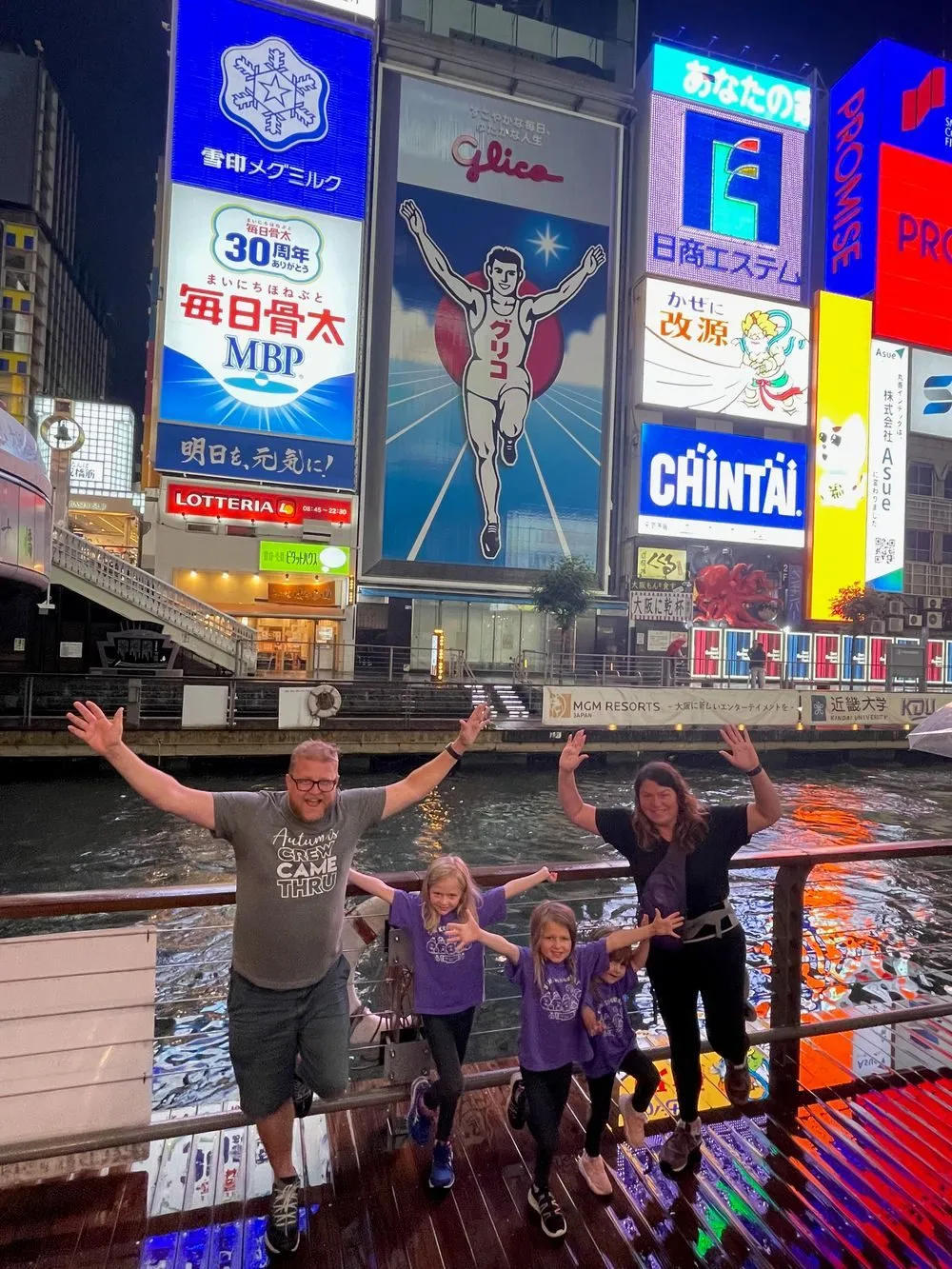
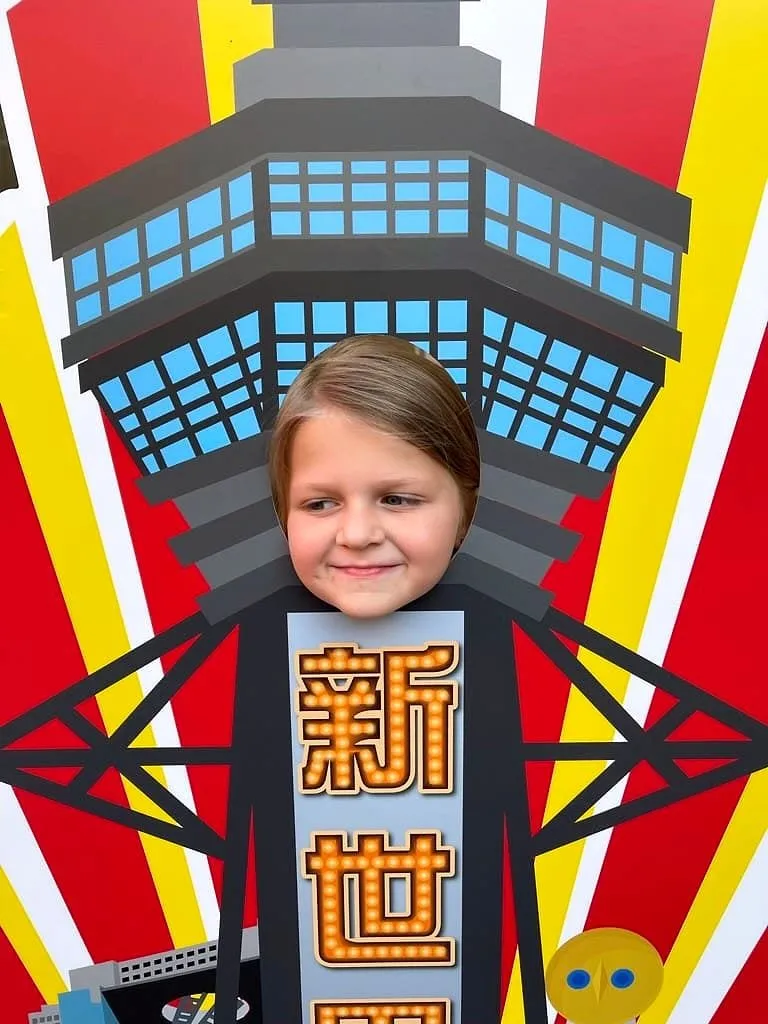
Walking Shinsekai under Tsutenkaku’s shadow in June 2023, the girls found a tall illustrated board shaped like the tower itself, a hole cut where a face goes, kanji spelling out the neighborhood’s name down the side. No fee, no attendant, no line beyond whoever’s ahead of you. Line a face up with the hole, someone else holds the phone, that’s the whole transaction.
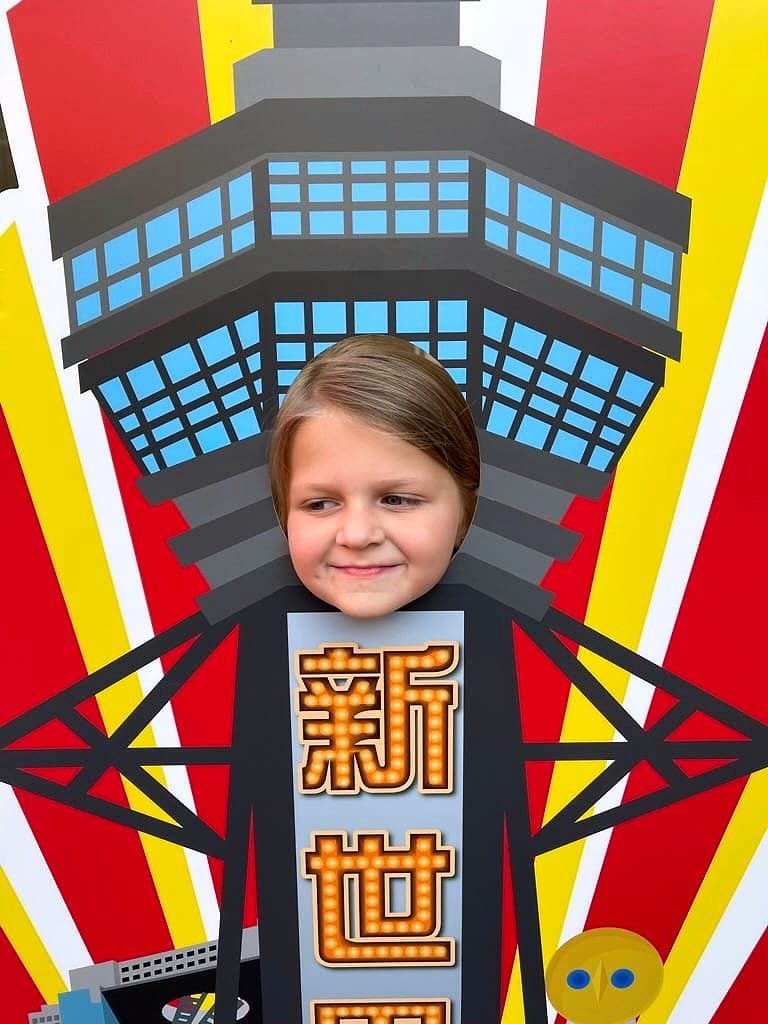
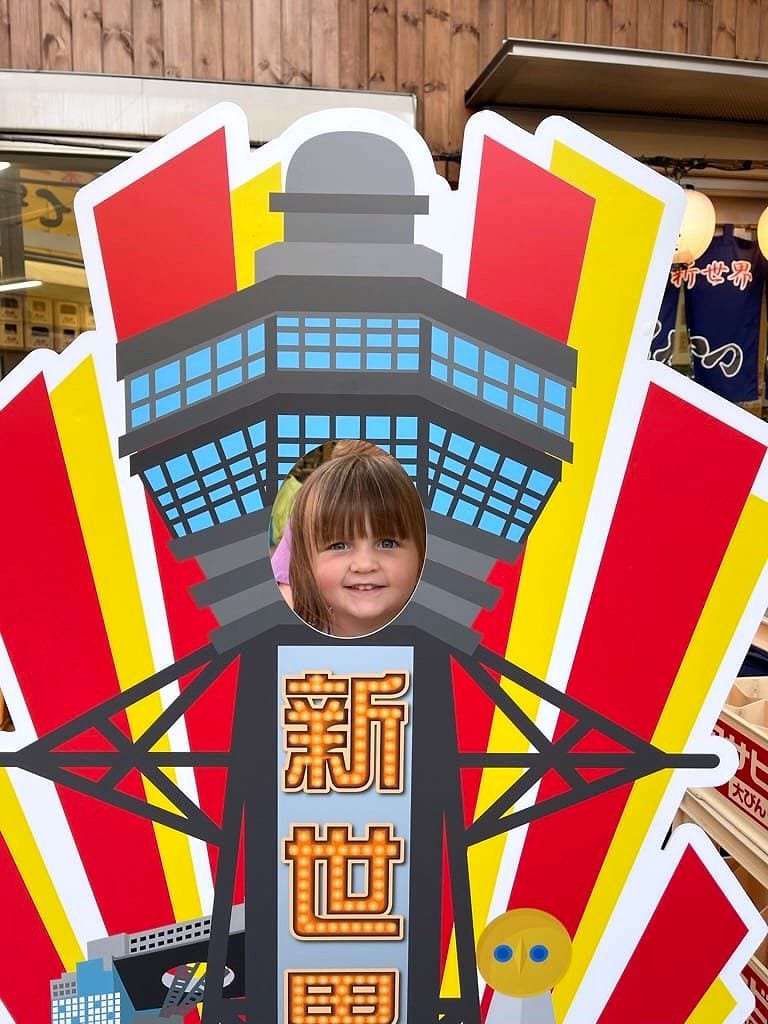
These boards (kao-hame kanban, literally “face-insert signboard”) are everywhere once you start noticing them: train platforms, festival grounds, highway rest stops, not just tourist spots like Shinsekai. Japan doesn’t even have one settled name for them. A researcher named Ijichi Hiroyuki coined “kaohame” for a 2001 book on the subject because the format had never carried a proper one before that. And despite reading as a distinctly Japanese roadside habit, the concept itself isn’t Japanese at all: an American illustrator named Cassius Coolidge patented what he called “comic foregrounds” back in 1874, painted canvases with head-sized holes that photo studios used for novelty portraits. Somewhere between then and now the format crossed the Pacific and settled permanently into Japan’s tourist landscape, cheap enough to show up at nearly every spot worth a photo.
The paid version: purikura
We’ve already written up the real cost and mechanics of a purikura session from an earlier Kyoto stop, so the short version here: about 400 yen, coins only at most booths, a countdown that doesn’t wait for anyone. Where the free board is a thirty-second stop on a sidewalk, purikura is closer to a five-minute production: pick a theme, pose through several timed shots, then crowd around a touchscreen decorating the results before anything prints out as a sheet of stickers.
What each one gets you
The cutout board costs nothing and gives you one photo, whatever you can capture on your own phone, no print, no frame, no decorating. Purikura costs real money and hands back a tangible object, the printed sticker sheet, something a phone photo from a free board can’t replace. Neither beats the other: the free board wins on convenience every single time, worth stopping for on pure impulse, while purikura earns its 400 yen specifically through the physical souvenir and the decorating process, a different kind of fun rather than a lesser version of the free option.
Was it worth stopping for
Both. A kao-hame board costs nothing to try, so there’s no reason to walk past one, and we’ve found them scattered well beyond Shinsekai since that first afternoon. Purikura is worth the small spend specifically for the sticker sheet it leaves you holding. Between the two, a family can walk away from a single day in Japan with a free goofy photo and a proper paid souvenir, for well under the price of most single attraction tickets in the country.