Seven Stops on Dotonbori Street, and What Each One Costs
A real stop-by-stop walkthrough of Dotonbori: the free Glico sign, the paid Ebisu Tower Ferris wheel at Don Quijote, the riverboat cruise, street food, and a beer by the canal.
Published on 4 min read
On this page
Our first night on Dotonbori Street hit seven real stops in a few hours, and the honest range on what they cost runs from completely free to a real line item worth budgeting for. Here’s each one, in order.
Getting there
Dotonbori sits a short walk from Namba, itself less a single station than a cluster of connected ones: Nankai Namba (the line that runs straight to Kansai Airport), the Osaka Metro stop shared by the Midosuji, Yotsubashi, and Sennichimae lines, plus nearby Kintetsu, Hanshin, and JR stations all within the same general station complex. If you’re landing at Kansai Airport specifically, we’ve written up the real Nankai Rapi:t fare breakdown separately, since Namba is exactly the station that train runs to.
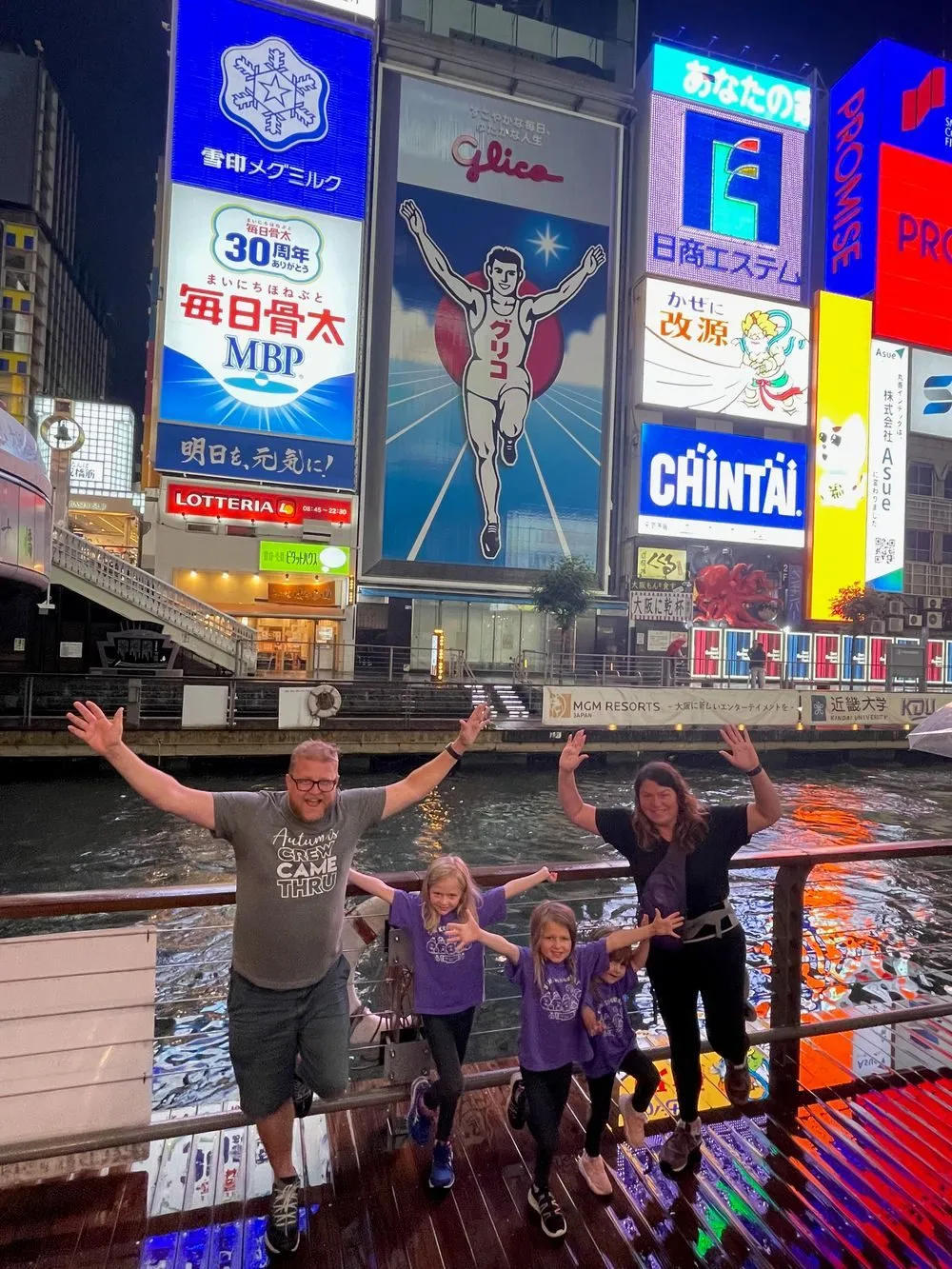
1. The Glico Man sign
Free, 24 hours a day, and the single most photographed spot in Osaka. We’ve written up the full free Dotonbori walk separately if this is the only stop on your list, the running man billboard alone is worth the trip down to the canal.
2. The Ebisu Tower Ferris wheel at Don Quijote
This is the real splurge of the night, and the one stop from this visit no other post on the site covers yet: a 1,000 yen ticket per person, cash only at the Don Quijote Dotonbori store, for a ride on what’s billed as the world’s first oval-shaped Ferris wheel. The gondolas rotate horizontally partway through the roughly 15-minute loop, and the car exterior is decorated with Ebisu, one of Japan’s Seven Lucky Gods. It climbs to about 77 meters, high enough for a real panoramic view over Minami, and it’s a five-minute walk from Namba Station if you’re not already standing in Dotonbori. Hours run later on weekends (11am to 10:30pm Saturday and Sunday, to 10pm on weekdays), and Tuesdays open late, 1pm, for scheduled maintenance, worth checking before building an afternoon around it on that specific day.
3. The Tombori River Cruise
A 20-minute canal boat ride departing from the pier right next to the same Don Quijote store. We’ve compared this paid cruise against the free canal-side walk in a separate post with the real current pricing and booking details, since that comparison doesn’t change based on which night you’re there.
4. A kawaii-themed cafe stop
A quick stop at one of the character or novelty cafes that cluster around Dotonbori’s side streets, the kind of five-minute curiosity break that doesn’t need a full write-up or a fixed price, menus and themes change too often location to location to quote a number that would still be accurate by the time anyone reads this.
5. Okonomiyaki, Osaka-style
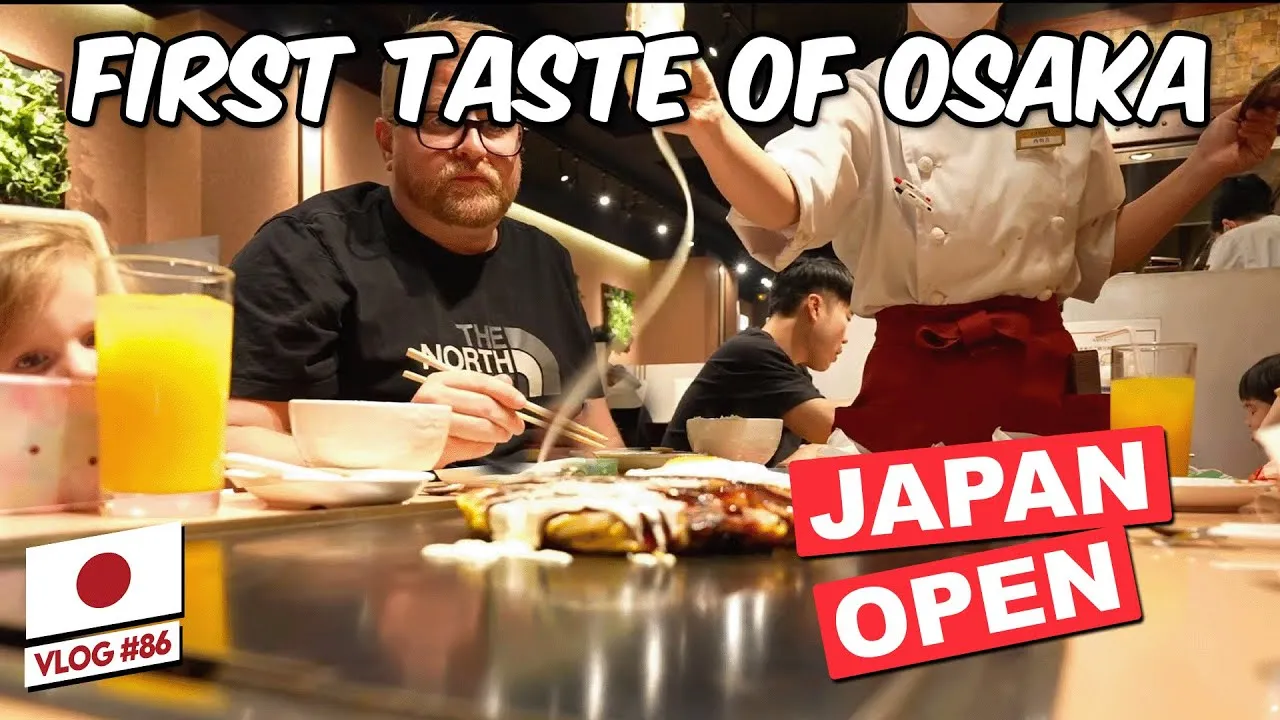
Dinner was Osaka-style okonomiyaki, worth distinguishing from the layered Hiroshima version we’ve also written about separately: Osaka-style mixes the batter, cabbage, and fillings together before it ever touches the griddle, cooked as one thick pancake rather than built in stacked layers. A standard plate at a casual Dotonbori counter runs in a similar range to what we found in Hiroshima, roughly 900 to 1,500 yen depending on the fillings, pricier for a seafood-loaded version.
6. Street food along the canal
Takoyaki stalls, skewers, and the general grazing-while-walking culture that Dotonbori is built around. Real current prices by item: an 8-piece takoyaki order runs roughly 650 to 960 yen depending on the stall, kushikatsu skewers go for about 120 to 450 yen each or 1,000 to 2,000 yen for a mixed set, grilled squid (ikayaki) runs 200 to 400 yen, and gyoza lands around 300 to 600 yen for six pieces. None of it is one big line item, it’s the kind of grazing spending that adds up in small increments across a walk rather than a single number worth budgeting around in advance.
7. A beer on the banks of the canal
The free part of the night: sitting canal-side with a drink, watching the crowd and the lit-up signs, costs nothing beyond whatever’s in your hand. It’s also, honestly, the best value stop on the list, zero yen for the same view everyone else is paying a boat ticket to see from the water.
Was it worth it
Yes, and the real lesson from stacking all seven stops into one night is how lopsided the actual spending ends up: one 1,000 yen Ferris wheel ticket and a river cruise fare did almost all the real work, while four of the seven stops, the sign, the cafe browse, the street food grazing, the canal-side beer, cost next to nothing individually. Pick the one or two paid stops your group cares about rather than assuming a night on Dotonbori requires paying for everything on this list, the free half carries most of the atmosphere either way.