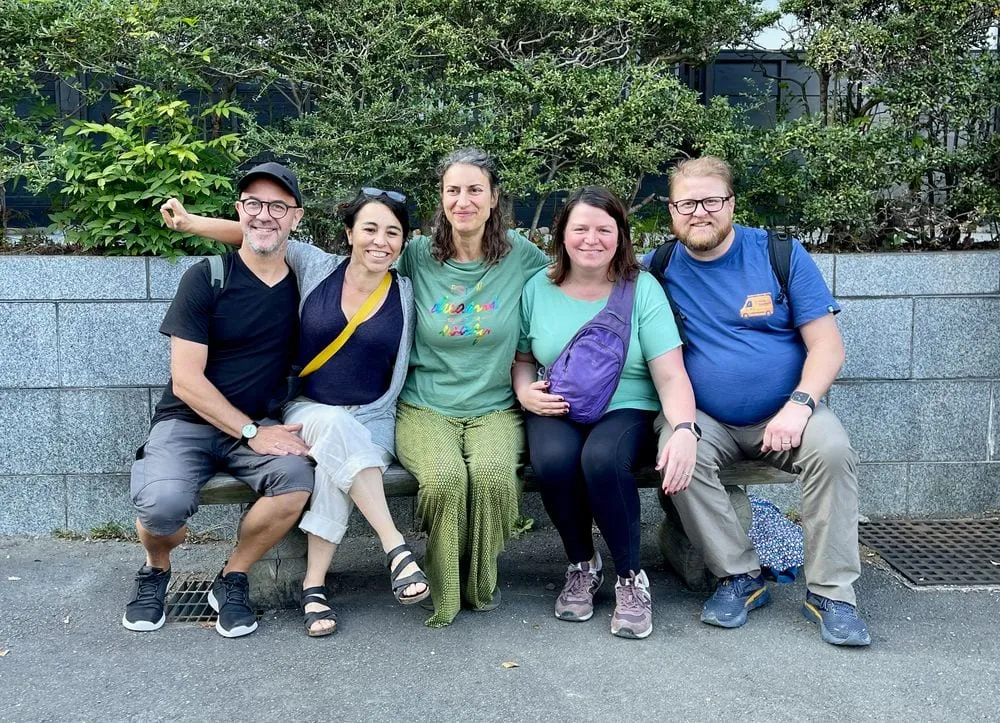
The Thanksgiving We Cooked a Chicken Instead of a Turkey in Tokyo
Turkey in Japan runs 8,000 to 12,000+ yen from a handful of specialty importers. Here's what we cooked instead, and what a real Tokyo apartment Thanksgiving looked like.

Published on 4 min read
On this page
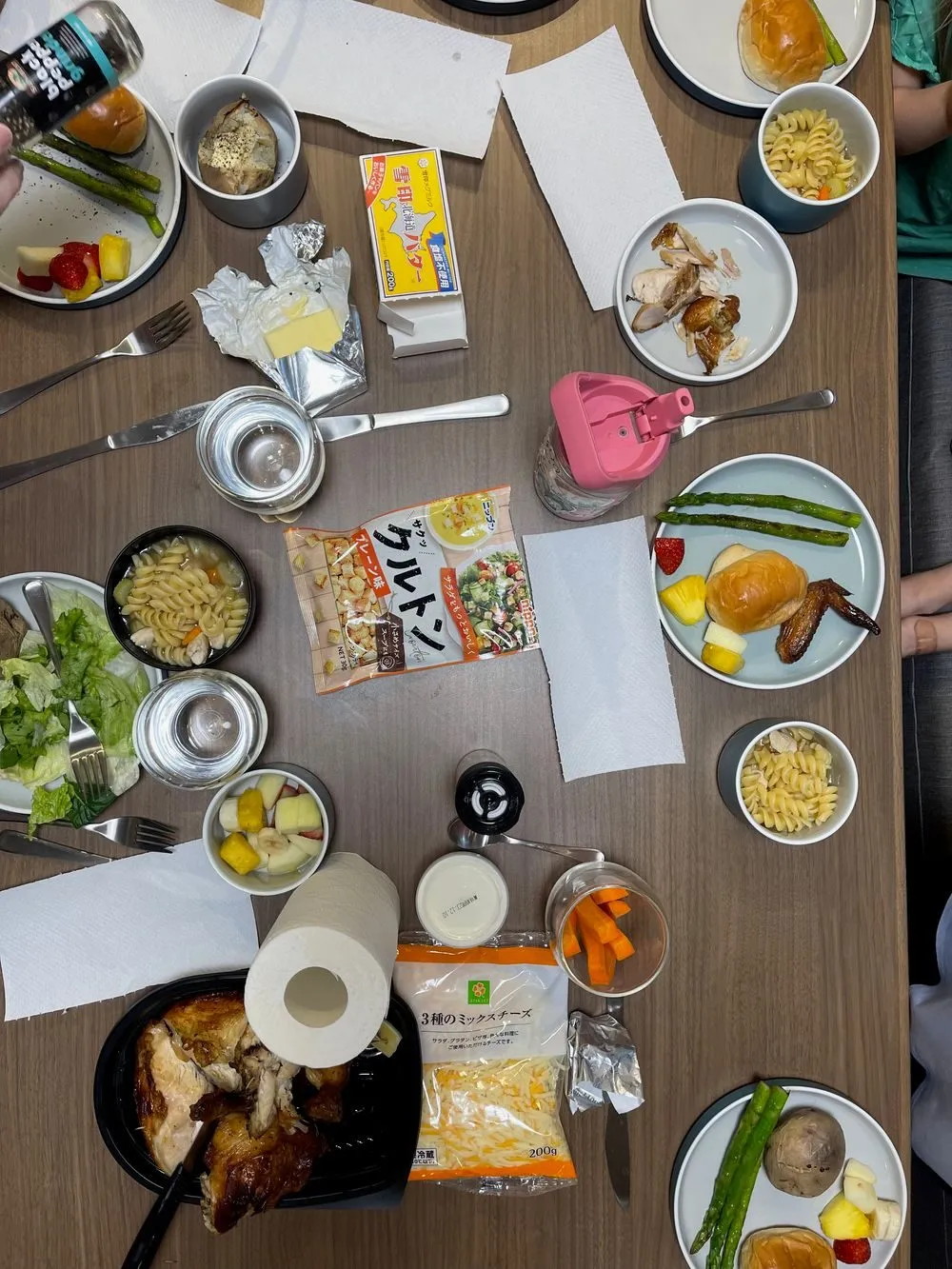
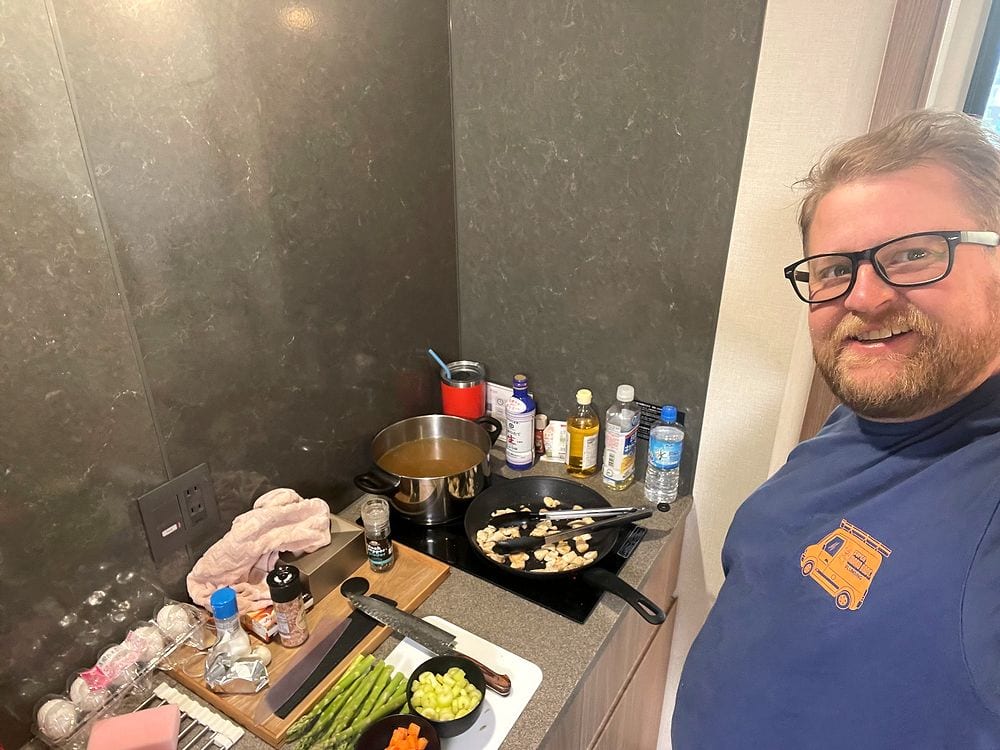
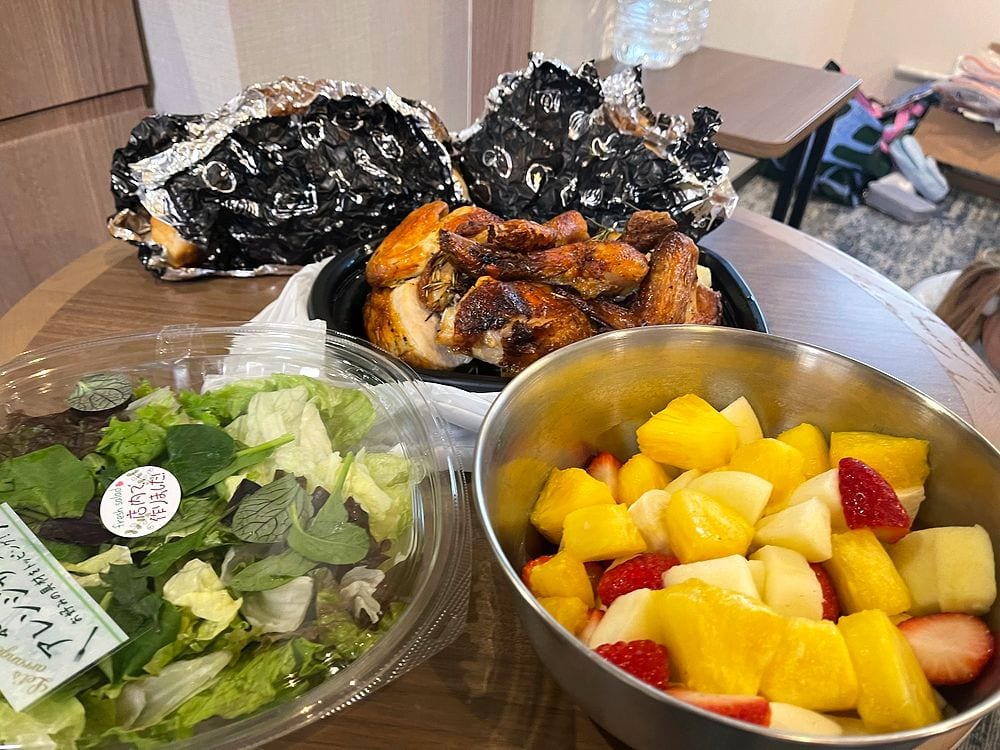
November 23, 2023, a small apartment kitchen in Taito, Adam working a frying pan of asparagus while a pot of chicken noodle soup simmers behind him, Lindsay’s parents visiting from the US and sitting in the next room. Baked potatoes steaming in a stockpot, a plastic tub of store-bought pasta salad, a bowl of pineapple and strawberries standing in for the usual pumpkin pie. It looked like a real holiday table by the time everyone sat down. What wasn’t on it was a turkey.
Why turkey wasn’t an option
Turkey just isn’t a Japanese supermarket staple the way it is in the US every November. A handful of specialty importers carry it, Costco, National Azabu, and Nissin World Delicatessen among the names that keep coming up, along with online sellers like The Meat Guy and The Flying Pig, and the pricing reflects how niche it is here: a small 2 kg bird runs around 8,000 yen, a mid-size 3 to 4.5 kg turkey 8,500 to 9,500 yen, and a large 5 to 6 kg one climbs past 11,000 to 12,000 yen. None of that is close to what a turkey costs in an American grocery store the same week, where it’s often the one item priced as a loss leader to get shoppers in the door.
What a whole chicken costs instead
A whole chicken from an ordinary Japanese supermarket runs a small fraction of even the cheapest imported turkey, easily under 1,000 yen depending on size, no special ordering, no specialty store trip required. It’s not a traditional Thanksgiving centerpiece back home, but it roasts the same way, carves the same way, and did the job for a table that cared more about everyone being together than about which bird was on the platter.
It wasn’t just the bird
Turkey was the headline substitution, but the rest of a traditional American Thanksgiving table doesn’t sit on an ordinary Japanese supermarket shelf either. Canned cranberry sauce and the specific pie-ready canned pumpkin most American recipes call for both show up at import-focused chains like Kaldi and Seijo Ishii rather than a regular grocery store, and even then it’s not guaranteed stock, more the kind of thing worth checking for ahead of the holiday than counting on same-day. Japan has its own pumpkin, kabocha, sold everywhere and worth eating in its own right, but it’s a different vegetable in texture and flavor from the canned pie filling most of us grew up with, close enough to use in a pinch, not a true swap. None of that made it onto our table that year, the fruit bowl did the pie’s job instead, one more small substitution on top of the chicken.
A small kitchen, a full table anyway
None of this was really about the chicken. It was a tiny apartment kitchen, not built for cooking a holiday spread for seven, and a mix of what a nearby Japanese supermarket had on the shelf that week rather than a shopping list planned around tradition. The sides leaned on what traveled well and didn’t need an oven we didn’t have room to use twice: boiled potatoes instead of a second roast, a prepped pasta salad from the store, fruit cut up instead of a pie that would’ve meant hunting down ingredients we weren’t sure existed nearby.
Was it worth skipping the turkey
Completely. Nobody at that table remembers it as the year we didn’t have turkey, they remember it as the Thanksgiving Grandma and Grandpa flew to Tokyo and we all crowded into a small kitchen to make it work anyway. If a trip puts you in Japan around the holiday and a traditional bird matters to you, know the real number going in, 8,000 yen and up, and decide whether that’s worth it before assuming your usual grocery run will cover it. For us, a cheap chicken and a table full of people we love turned out to be the better trade either way.